

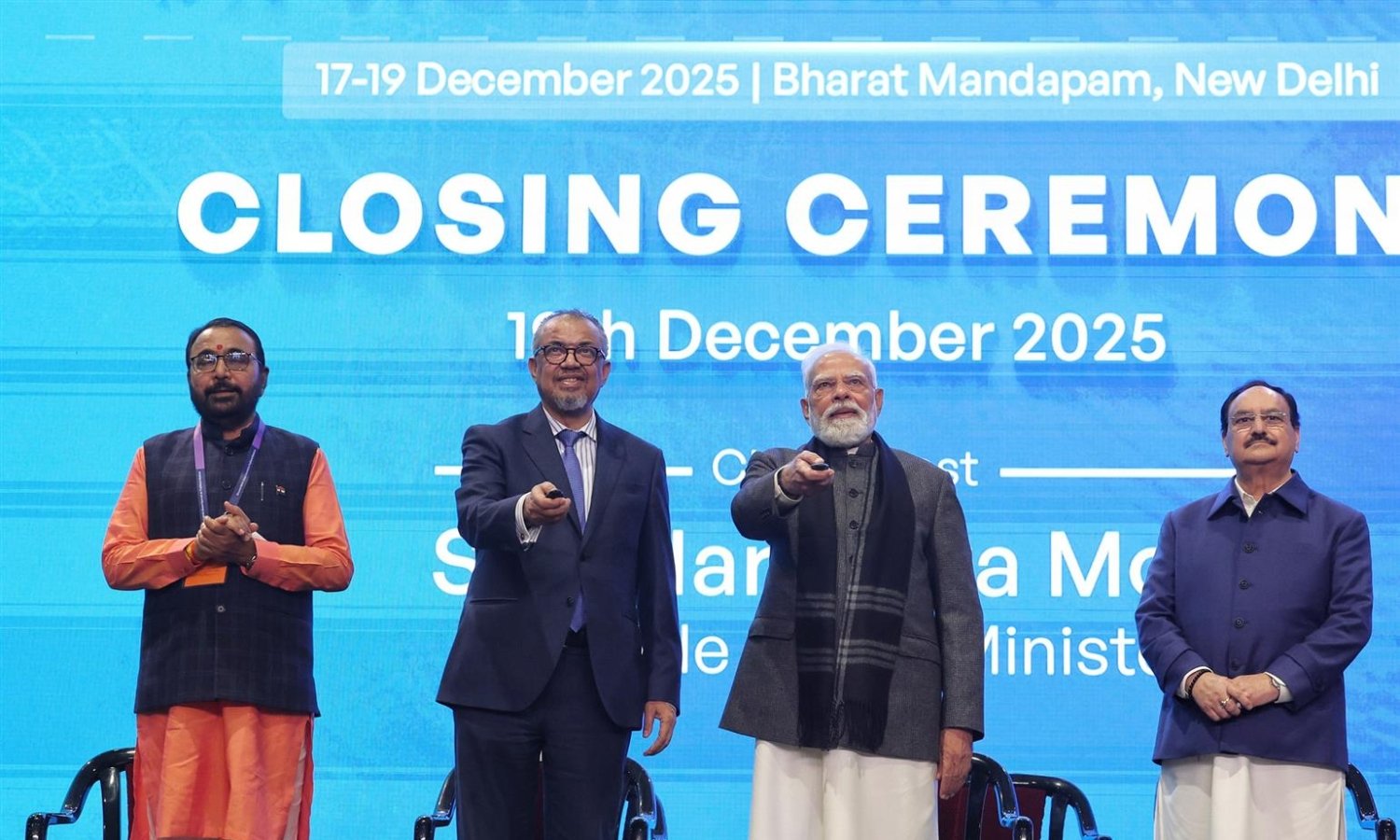
New Delhi: WHO Global Summit on Traditional Medicine set a shared global roadmap to strengthen research, safety standards and international cooperation, Prime Minister Narendra Modi said on the final day of the event.
Addressing health ministers, WHO officials and global delegates, PM Modi said the agreement reflected growing international trust in traditional medicine systems. At the same time, he thanked the World Health Organization, the Union Ministry of Ayush and participating countries for supporting India in hosting the summit.
The Prime Minister said India felt honoured to host the WHO Global Centre for Traditional Medicine in Jamnagar. India established the centre after the first summit in 2022. Since then, he said its influence has expanded steadily from local outreach to global engagement. Accordingly, the success of the second summit reflected that progress.
PM Modi said the summit created a platform where traditional knowledge aligned with modern medical practices. In particular, he said discussions among ministers and experts encouraged joint research, simpler regulations and structured training. As a result, these steps would improve safety and strengthen public confidence in traditional medicine.
He said participating countries reached consensus on priority areas. These included stronger research ecosystems, wider use of digital tools and regulatory frameworks trusted across regions. In addition, Modi highlighted the summit expo, which showcased digital health technologies, AI-based tools, research innovation and modern wellness infrastructure.
Through this collaboration, he said tradition and technology demonstrated their combined potential to strengthen global health systems.

Traditional medicine goals highlighted
The Prime Minister said the Delhi Declaration will guide future work on standards, safety and investment. Importantly, he described it as a shared roadmap for the coming years. Meanwhile, he praised health ministers from different countries for shaping the agreement through sustained dialogue and cooperation.
Modi also welcomed the launch of the Traditional Medicine Global Library. According to him, the platform will store scientific data and policy documents in one place. This way, it will ensure equal access to reliable information for all countries. Earlier, India announced the initiative during its G20 Presidency at the first WHO Global Summit.
He further referred to the inauguration of the WHO South-East Asia Regional Office in Delhi. In this context, he said India offered the office as a contribution to global health cooperation. Going forward, the office will support research, regulation and capacity building across the region.
Modi then outlined India’s focus on partnerships of healing. First, he said India will set up a Centre of Excellence for BIMSTEC countries in South and South-East Asia. Second, he announced a collaboration with Japan to link science, traditional practices and healthcare systems.
Referring to the summit theme, “Restoring Balance: The Science and Practice of Health and Well-being,” Modi said balance formed the foundation of Ayurveda. However, he said lifestyle imbalances increasingly contributed to diabetes, heart disease, depression and cancer. Therefore, restoring balance had become a global urgency.
The Prime Minister said India was also addressing safety and evidence concerns through focused research. For example, he cited ashwagandha, which saw rising global demand during the COVID-19 pandemic. Consequently, India has strengthened validation of its quality and safety through evidence-based studies.
During the summit, international experts discussed the herb in a dedicated global session focused on safety, quality and usage.
Modi said traditional medicine was no longer limited to wellness alone. Instead, he said the Ayush Ministry and the WHO Global Centre are working together to strengthen integrative cancer care in India. Alongside this effort, institutions are conducting clinical studies on anaemia, arthritis and diabetes.
At the same time, startups and young professionals are driving innovation in the sector by linking ancient knowledge with modern science.
Concluding his address, PM Modi said traditional medicine stood at a decisive stage. Ultimately, he said science, trust and shared responsibility would shape its future. Taken together, the participation and commitment seen at the summit showed global readiness to move forward together.
In traditional healthcare, our focus must extend beyond present needs. We carry an equally important responsibility towards the health and well-being of the future generations. pic.twitter.com/XqNlu3KsWZ
— Narendra Modi (@narendramodi) December 19, 2025
