

New Delhi: India secured near-universal duty-free market access for its exports to Oman under the India–Oman CEPA, improving competitiveness and providing certainty to exporters from the first day of implementation.
Under the India–Oman CEPA, India receives 100 per cent duty-free access across 98.08 per cent of Oman’s tariff lines. These lines cover 99.38 per cent of India’s export value. As a result, exporters gain immediate clarity on pricing and market entry.
Earlier, many Indian products faced import duties of up to 5 per cent under the MFN regime. However, with the agreement now in force, exports worth about USD 3.64 billion gain stronger price competitiveness in the Omani market.
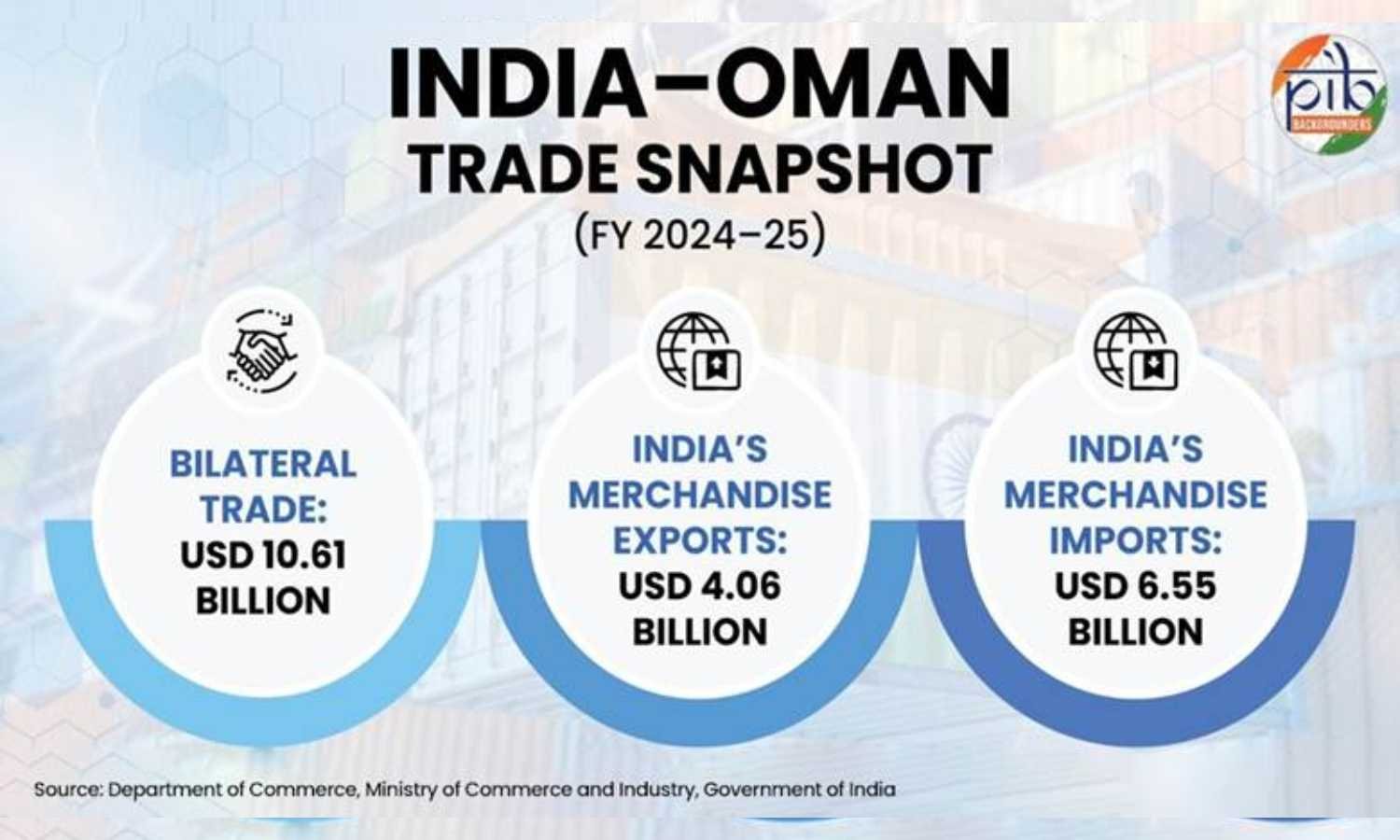
Meanwhile, bilateral trade between India and Oman stood at USD 10.61 billion in FY 2024–25, rising from USD 8.94 billion in the previous year. Trade during April–October 2025 reached USD 6.48 billion, reflecting sustained momentum.
India exported goods worth USD 4.06 billion to Oman in FY 2024–25. At the same time, imports from Oman stood at USD 6.55 billion. Services trade also expanded steadily during this period.
In particular, India’s services exports to Oman rose to USD 617 million in 2023. Telecom, IT, business, transport, and travel services led this growth. Similarly, services imports from Oman increased to USD 159 million.
The India–Oman CEPA brings trade in goods and services, investment, professional mobility, and regulatory cooperation under one framework. Importantly, the agreement balances liberalisation with safeguards to protect sensitive domestic sectors.
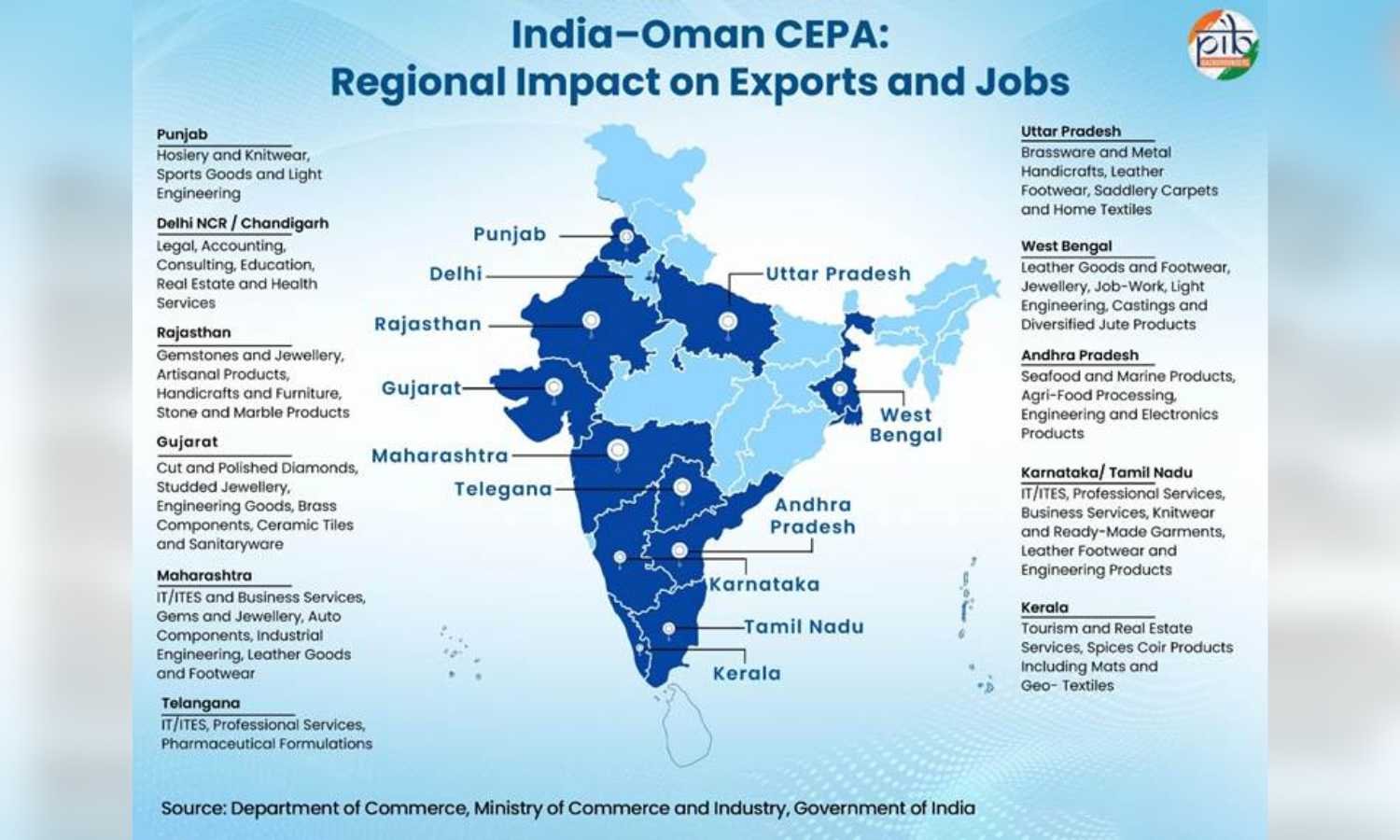
India–Oman CEPA drives sector-wise export expansion
The India–Oman CEPA opens export opportunities across engineering goods, pharmaceuticals, agriculture and processed food, marine products, textiles, chemicals, electronics, plastics, and gems and jewellery.
Engineering exports to Oman reached USD 875.83 million in FY 2024–25. Under the agreement, Oman removed tariffs of up to 5 per cent on all engineering products. Consequently, Indian suppliers gain improved margins and demand visibility.
Industry estimates now project engineering exports to rise to USD 1.3–1.6 billion by 2030. Iron and steel, machinery, vehicles, and copper products are expected to lead this growth. Moreover, MSMEs benefit from deeper integration into infrastructure and industrial supply chains.
The agreement also strengthens access for pharmaceutical exports. Oman grants zero-duty entry for finished medicines, vaccines, and key APIs. In addition, regulators will fast-track approvals for products cleared by recognised global authorities.
Marine products receive immediate duty-free access as well. Therefore, exports of shrimp and fish gain price advantages. Given the sector’s labour-intensive nature, this expansion supports employment in coastal regions.
Agricultural and processed food exports also gain from tariff elimination on selected products. These include bovine meat, eggs, sweet biscuits, butter, honey, and mixed condiments. At the same time, India retained an exclusion list to protect sensitive farm interests.
Textile and apparel exports now enter Oman at zero duty, replacing earlier tariffs of around 5 per cent. As a result, India strengthens its position against competitors such as China, Bangladesh, and Türkiye.
Chemicals, plastics, electronics, and gems and jewellery also receive duty-free access. Therefore, exporters gain improved certainty and competitiveness. Industry estimates suggest gems and jewellery exports alone could rise by up to USD 150 million over three years.
Services form a core pillar of the India–Oman CEPA. Oman committed market access across 127 services sub-sectors, including professional, IT, health, education, and tourism services. Moreover, the ceiling for intra-corporate transferees increased from 20 per cent to 50 per cent.
For the first time under an FTA, Oman also committed to defined professional categories. Additionally, regulatory cooperation on TBT and SPS promotes transparency and acceptance of Indian certifications. Together, these measures support MSMEs, boost labour-intensive exports, and generate employment across India.
