

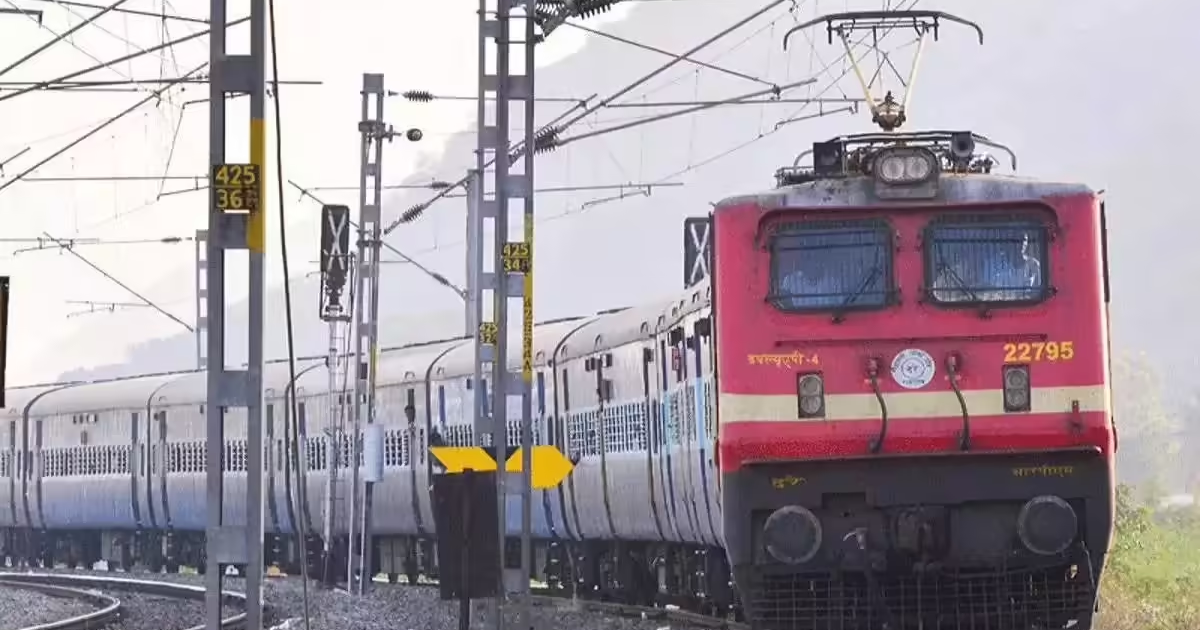
New Delhi: Railway electrification helped Indian Railways cut diesel consumption by 178 crore litres in 2024-25, marking a 62% reduction compared to 2016-17, Union Minister Ashwini Vaishnaw told the Lok Sabha.
He said Indian Railways electrified about 99.4% of its Broad Gauge network in mission mode. The remaining sections are under progress. Since 2014, Railways electrified 46,900 route kilometres, compared to 21,801 route kilometres before 2014.
Since 2023-24, Railway electrification covered 10,932 route kilometres till January 2026. Moreover, Railways spent ₹29,826 crore on electrification projects during the last five years, including works in Tamil Nadu.
At present, 25 States and Union Territories have achieved 100% electrification of railway lines. Most railway zones, including Central, Eastern, Northern and Western Railways, reported full electrification. A few zones such as North Western, Northeast Frontier and Southern Railways reported electrification levels between 96% and 99%.
Railway electrification reduces diesel use and import dependence
The minister said Railway electrification reduced crude oil import dependence and lowered energy costs. Indian Railways spent ₹32,378 crore on total traction energy consumption in 2024-25.
He explained that project completion depends on forest clearances, shifting of utilities and statutory approvals. In addition, geological conditions, law and order issues and climate factors also affect timelines. Nevertheless, Railways sanctioned all new line and multi-tracking projects with electrification.
Railways is moving towards electric traction due to environmental and cost benefits. Although it tested bio-diesel, electric traction proved more efficient and sustainable.
Apart from electrification, Indian Railways strengthened waste management systems. Authorities dispose of waste collected in trains at designated stations. On-board staff must not throw garbage on tracks, and officials impose penalties for violations.
Railways installed plastic bottle crushing machines and two-bin systems for waste segregation at stations. It also commissioned sewage treatment plants, effluent treatment plants and material recovery facilities where required. Furthermore, it conducts regular passenger awareness drives and surprise inspections.
Under Swachh Bharat campaigns, Railways organised special cleanliness drives across zones. It also eliminated direct discharge of human waste by installing bio-toilets in coaches. Between 2004 and 2014, Railways fitted 9,587 bio-toilets. Since 2014, it installed 3,61,572 bio-toilets.
