

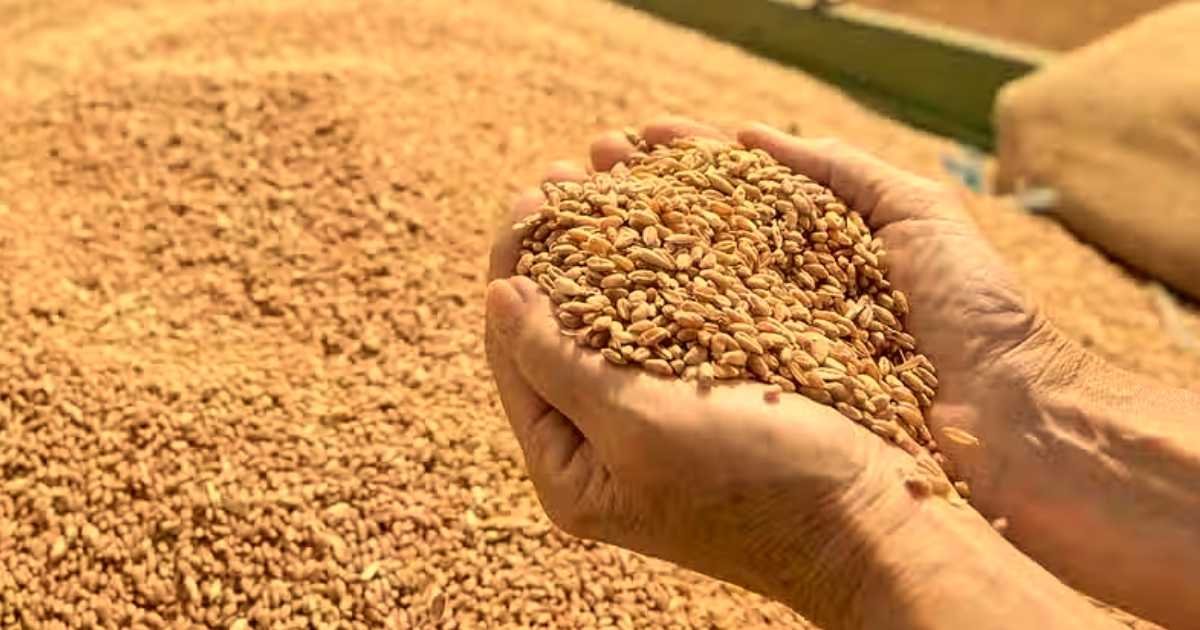
New Delhi: Wheat exports approval for 25 lakh metric tonnes (LMT) has been granted by the Union Government, along with permission to export 5 LMT of wheat products, in a move aimed at supporting farmers and stabilising markets.
The government said it took the decision after assessing stock levels and price trends. Officials stated that the step will help ensure remunerative returns to farmers while maintaining domestic food security.
Private entities currently hold around 75 LMT of wheat stocks in 2025–26. This figure is about 32 LMT higher than the same period last year. Moreover, wheat availability in the central pool with the Food Corporation of India (FCI) is projected at nearly 182 LMT as on April 1, 2026. Therefore, authorities expect exports to proceed without affecting domestic supply.
Wheat acreage in Rabi 2026 has also increased to 334.17 lakh hectares, compared to 328.04 lakh hectares last year. The government attributed this rise to assured Minimum Support Price (MSP) and procurement mechanisms, which encouraged farmers to expand cultivation.
Additional sugar exports permitted
Alongside the wheat exports approval, the government allowed export of an additional 5 LMT of sugar for the current Sugar Season 2025–26. Earlier, authorities had permitted 15 LMT of sugar exports through an order dated November 14, 2025.
According to data from sugar mills, exporters shipped about 1.97 LMT of sugar as of January 31, 2026. Mills have also contracted around 2.72 LMT for export.
The government will allocate the additional 5 LMT quota on a pro-rata basis among willing sugar mills. However, mills must export at least 70 percent of their allocated quantity by June 30, 2026. They must also submit willingness within 15 days of the order’s issuance. Authorities clarified that mills cannot swap or exchange allocated quotas.
The Centre said the measure will help manage surplus sugar stocks and improve liquidity in the sector. At the same time, wheat exports approval aims to prevent distress sales during peak arrivals and support farmer incomes while safeguarding national food security.
