
BHAI ki CHAI: crafting a modern tea identity rooted in India’s shared daily ritual

BHAI ki CHAI was established in Hyderabad in 2017, guided by a simple yet culturally powerful insight: in India, chai is not merely consumed, it is shared. It operates as a daily ritual that transcends economic class, profession, age and social background. Tea in India functions as a pause between tasks, a reason for conversation and a consistent presence in urban routines. Recognising this embedded role of chai in everyday life, the founders built the brand not around novelty, but around cultural continuity.
Instead of attempting to elevate chai into a luxury or aspirational category, BHAI ki CHAI focused on preserving its inherent familiarity while presenting it within an organised café structure. The aim was not to redefine chai culture but to bring structure to it — to offer predictability, accessibility and comfort while remaining deeply connected to its origins. This careful balance between tradition and format became central to the brand’s identity.
Beginning with a single outlet in Banjara Hills, BHAI ki CHAI expanded steadily across Hyderabad. Its growth was not driven by aggressive scaling or fleeting consumer trends. Rather, it followed observable patterns of habitual customer behaviour. Regular tea drinkers returned consistently, integrating the brand into their daily schedules. Over time, BHAI ki CHAI became part of the city’s everyday rhythm rather than an occasional destination.

Vision and philosophy
At the heart of BHAI ki CHAI lies a philosophy built on restraint and respect for routine. The founders believed that chai, as a beverage, does not require reinvention. It requires consistency and an understanding of repetition. This belief shaped every element of the brand — from its name and flavour profile to outlet design and service approach.
The cafés were conceptualised as spaces where conversation holds equal importance to consumption. Rather than adopting the formal structure of international café chains, BHAI ki CHAI embraced informality. The environment was designed to feel approachable and flexible. Customers could sit without pressure to order repeatedly, engage in conversation or simply spend time.
This deliberate avoidance of over-engineering became a defining strength. By focusing on what customers already appreciate about chai — warmth, familiarity and daily repetition — the brand strengthened its relevance without complicating the experience.

Mohammed Sahil Taiyebi
Founder & Director
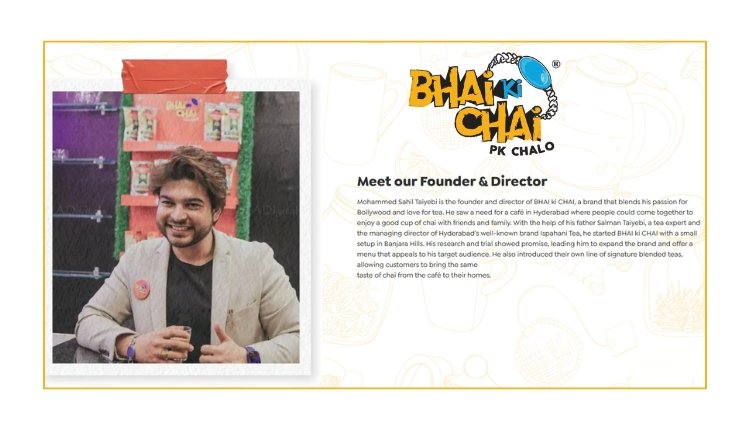
Mohammed Sahil Taiyebi founded BHAI ki CHAI with a vision shaped by both personal passion and cultural observation. A regular tea drinker himself, Sahil also held a strong interest in Bollywood and popular cinema. He recognised that cinema and chai share a common place in Indian life: both generate discussion, foster connection and create shared moments.
From the very first outlet in Banjara Hills, Sahil aimed to create an atmosphere that felt vibrant yet grounded. Cinematic references were incorporated subtly — as cultural cues rather than dominant themes. Dialogues, visual elements and expressions functioned as familiar touchpoints without overwhelming the space.
Sahil’s approach to brand development relied heavily on observation. He closely watched how customers used the space, how long they stayed, what they ordered and what drew them back. These behavioural insights shaped gradual refinements in layout, service and menu stability.
Under his leadership, BHAI ki CHAI expanded while retaining its identity. The brand appealed to a broad demographic spectrum — students, young professionals, families and senior patrons — precisely because it did not target a single segment. Cultural relatability became its anchor.

Salman Taiyebi
Strategic Advisor
Salman Taiyebi, serving as strategic advisor, brought decades of experience from the Indian tea industry. As Managing Director of the Ispahani Company, a long-established tea brand, he contributed technical expertise in sourcing, blending and flavour calibration.
His involvement ensured that the product itself matched the cultural positioning of the café. He developed BHAI ki CHAI’s signature blends, aligning them with local taste preferences: strong aroma, balanced strength and a thick liquor that resonates with everyday tea drinkers.
While the café environment emphasised cultural familiarity, Salman ensured the tea maintained technical consistency. Standardised blending and quality control anchored the brand’s expansion in product integrity.
The father-son collaboration merged intuition with expertise, emotion with execution. This balance allowed BHAI ki CHAI to scale without losing either cultural depth or flavour consistency.
The meaning of BHAI ki CHAI
The name BHAI ki CHAI reflects the informal vocabulary of Indian streets and neighbourhoods. The word “bhai” carries connotations of equality, familiarity and comfort. It removes hierarchy and creates immediate approachability.
By adopting conversational language, the brand integrated naturally into everyday speech. Customers refer to it casually, as part of routine rather than as a planned visit. This linguistic ease strengthened its presence within urban life.
The name also reinforces the broader philosophy — chai that belongs to everyone, served in spaces that feel inclusive rather than exclusive.
Taste philosophy: building loyalty through predictability
BHAI ki CHAI consciously avoided experimental flavour variations that might alienate habitual drinkers. Instead, it focused on delivering a cup that feels recognisable from the first sip.
Consistency became non-negotiable. Preparation methods, brewing durations and ingredient ratios were standardised across outlets to ensure uniform taste. This predictability enabled customers to build habits confidently.
Rather than frequently altering its core menu, the brand protected its primary offering. Over time, this stability fostered trust and repeat patronage.
Adapting formats to urban geography
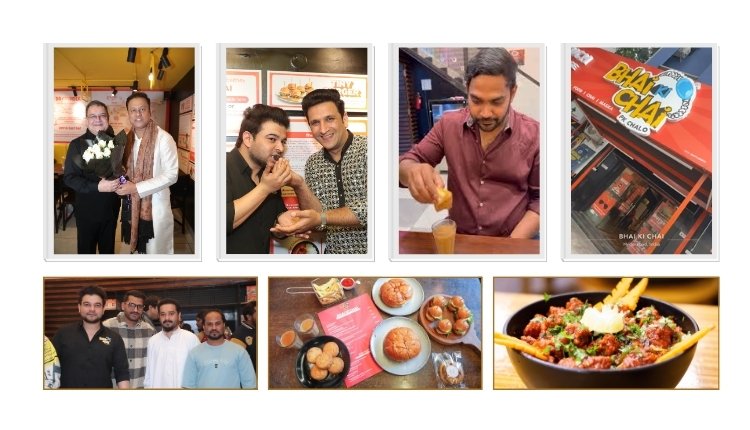
As expansion continued, BHAI ki CHAI introduced varied outlet formats. Compact kiosks catered to high-footfall areas where customers sought quick pauses. Full-service cafés were developed in neighbourhoods where longer conversations were common.
Despite format differences, the identity remained unified. Taste, tone and service approach carried across locations. Each outlet adapted to its physical environment without fragmenting the brand experience.
Bollywood as shared cultural vocabulary
Bollywood references play a subtle but meaningful role in the brand’s identity. Rather than decorative themes, they function as shared language across generations.
Cinema influences everyday dialogue in India much like chai punctuates daily schedules. By incorporating film cues carefully, BHAI ki CHAI created cross-generational familiarity without associating itself with a specific era.

The café as pause point
In a fast-moving city like Hyderabad, unstructured pauses are limited. BHAI ki CHAI operates as a pause point rather than a destination.
Customers stop briefly during commutes or spend extended evenings with friends. The absence of expectation allows flexibility — conversation, solitude or observation coexist naturally.
Chai as equaliser
Historically, chai bridges social boundaries. BHAI ki CHAI preserved this characteristic through accessible pricing, informal language and open seating.
Students, traders, professionals and families occupy the same space without segmentation. The brand does not curate experiences for niche audiences, allowing inclusiveness to remain organic.
Extending into homes
The introduction of packaged blends extended the brand into domestic routines. Designed to replicate outlet flavour profiles, these blends allowed customers to recreate familiar taste at home.
This extension complemented café visits, maintaining continuity between public and private consumption.

A brand shaped by restraint
BHAI ki CHAI avoided rapid, trend-driven expansion. Growth decisions prioritised sustainability and behavioural consistency.
Today, it stands as a Hyderabad-rooted brand defined by repetition, cultural familiarity and dependable everyday relevance — offering the same consistent cup as part of the city’s daily life.