

New Delhi: Centre said India strengthened dam safety systems through rehabilitation projects, digital monitoring platforms, and institutional reforms. Officials stated that ageing infrastructure and climate variability increased the need for long-term management. India currently has 6,628 specified dams, making it the third-largest dam-owning country globally.
The government said more than 26 per cent of these dams are over 50 years old. Around 291 dams have crossed 100 years. Officials noted that sedimentation, ageing structures, and changing rainfall patterns created operational risks. They added that the Dam Rehabilitation and Improvement Project aimed to improve structural stability and operational efficiency.
Under DRIP Phase I, authorities rehabilitated and modernised dams across seven states between 2012 and 2021. The programme focused on structural repairs, spillway upgrades, emergency action plans, and inspections. Officials also introduced the Dam Health and Rehabilitation Monitoring Application, known as DHARMA, during this phase.
Dam safety reforms and monitoring systems expanded
The government operationalised DRIP Phases II and III in October 2021. The combined project outlay stands at ₹10,211 crore. Authorities approved rehabilitation proposals for 191 dams at a cost of ₹5,053 crore. Officials said major rehabilitation works were completed at 43 dams by March 2025. The programme currently covers 736 dams across 19 states and three central agencies.
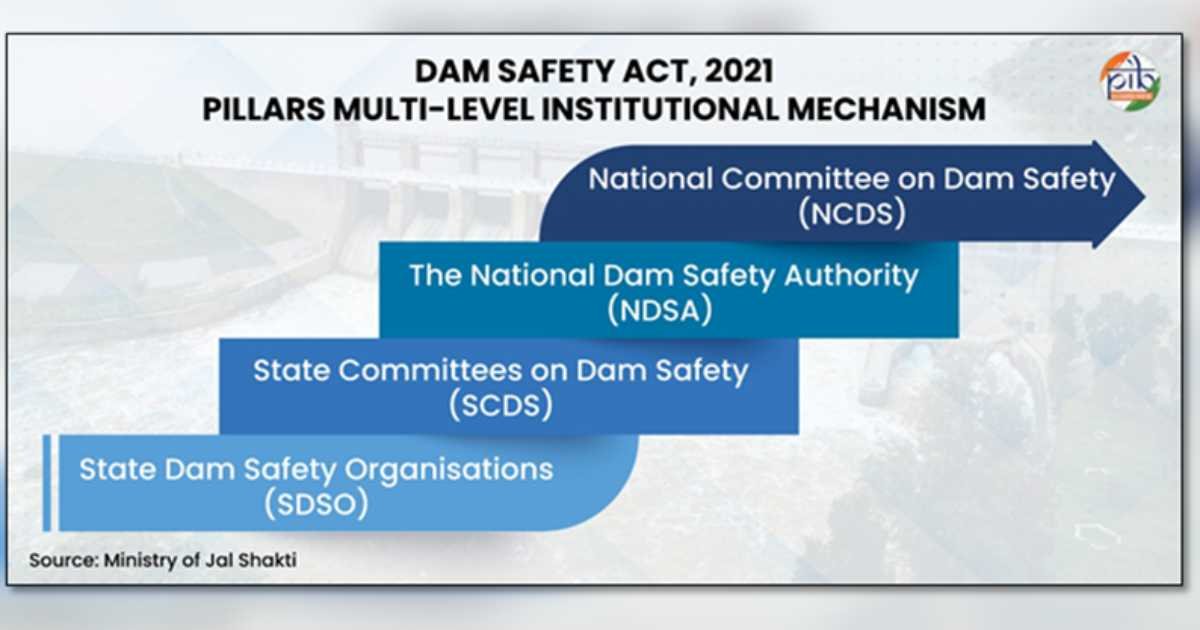
The Dam Safety Act, 2021 came into force on 30 December 2021. The law established the National Committee on Dam Safety and the National Dam Safety Authority. Officials said all 31 dam-owning states have now formed State Dam Safety Organisations.
Authorities registered all specified dams on the DHARMA platform for digital monitoring and inspection management. Officials conduct nearly 13,000 inspections every year and maintain records digitally. They also completed rapid risk screening for 5,553 specified dams. The government said these systems improved monitoring, data management, and risk assessment capabilities.
The Centre also expanded technical training and research programmes. Centres of Excellence were established at Indian Institute of Technology Roorkee and Indian Institute of Science Bengaluru. Officials said the institutions focused on seismic studies, reservoir sedimentation, rehabilitation methods, and infrastructure resilience linked to dam safety management.
