

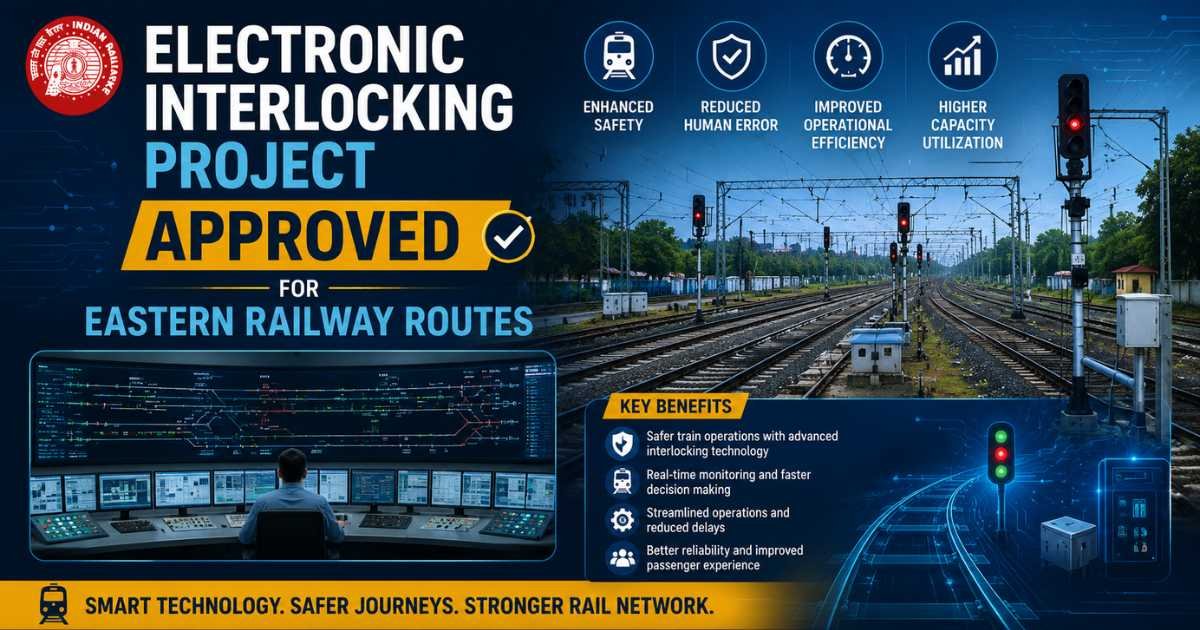
New Delhi: Indian Railways has approved a ₹432 crore Electronic interlocking project to replace ageing relay-based signalling systems with modern Electronic Interlocking technology at 27 stations and cabins in the Asansol Division of Eastern Railway.
The sanctioned project covers 28 relay-based interlocking installations, including 27 Panel Interlocking/Route Relay Interlocking (PI/RRI) systems and one Intermediate Block Signalling (IBS) location. The upgrade targets High Density Network (HDN) and Highly Utilised Network (HUN) routes to improve railway safety, operational reliability and train movement.
Railway officials said the Electronic interlocking project will introduce advanced computer-based signalling systems capable of delivering faster fault detection, improved operational flexibility and easier maintenance than conventional relay-based systems.
Electronic interlocking project to strengthen railway safety
The project forms part of Indian Railways’ nationwide modernisation programme aimed at upgrading signalling infrastructure across critical rail corridors. It also supports the implementation of advanced technologies such as Kavach, Automatic Block Signalling (ABS) and Centralised Traffic Control (CTC) on busy routes.
Electronic Interlocking replaces traditional relay-based systems with digital, computer-controlled technology that enhances signalling accuracy and reduces the risk of operational failures. The modern system also enables quicker restoration of services during technical issues and supports higher traffic volumes.
Officials said the upgraded signalling infrastructure will strengthen train operations on one of the busiest sections of the Eastern Railway network. It will improve communication between signalling equipment, increase line capacity and help ensure safer train movement.
The project also aligns with Indian Railways’ broader strategy to modernise critical infrastructure, improve network efficiency and support future expansion of high-capacity rail operations across the country.
By replacing outdated signalling systems with advanced digital technology, Indian Railways expects to improve reliability, reduce maintenance requirements and provide a safer operating environment for passengers and railway personnel.
