

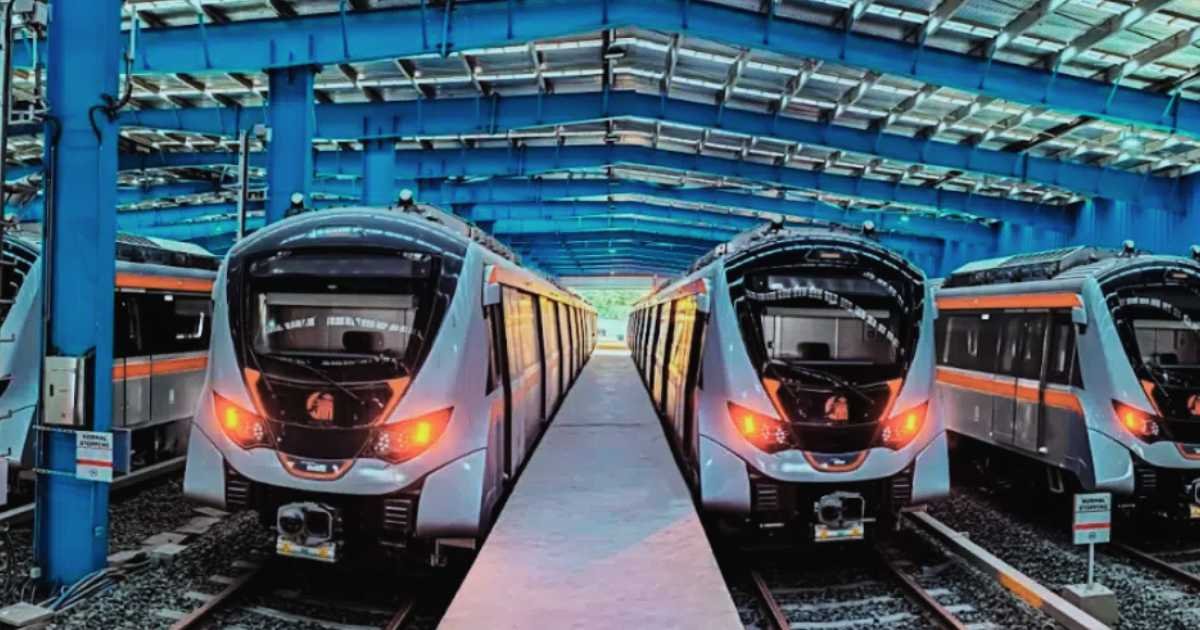
New Delhi: The Union Cabinet approved the Ahmedabad Metro extension from GIFT City to Shahpur, adding 3.33 kilometres and three elevated stations.
Prime Minister Narendra Modi chaired the meeting that cleared the proposal on February 24, 2026. The project will require an investment of ₹1,067.35 crore. Authorities aim to finish the work within four years.
Importantly, the Ahmedabad Metro extension will improve connectivity between Ahmedabad and the GIFT region. Several multinational companies, educational institutions and commercial centres lie along the proposed route. Therefore, these establishments will gain direct access to rapid transit.
In addition, daily commuters travelling for business, employment and education will benefit from faster travel. As a result, the corridor will strengthen network integration and ease passenger movement.
Officials estimate that 23,702 passengers will use the corridor in 2029. Subsequently, ridership may rise to 58,059 passengers by 2041 as the region expands.
Ahmedabad Metro extension to generate jobs and expand reach
The construction phase will create nearly 1,000 jobs. After completion, operators will hire around 250 people for operations and maintenance. Moreover, allied sectors will create further indirect employment.
Gujarat Metro Rail Corporation Limited will execute the project. The Government of India and the Government of Gujarat jointly own GMRC in equal partnership.
At present, the Ahmedabad Metro network covers 68.28 kilometres under Phase I and Phase II. The North-South corridor connects APMC and Motera Stadium. Meanwhile, the East-West corridor links Thaltej Gam and Vastral Gam. Phase II further connects Motera Stadium with Mahatma Mandir and GNLU with GIFT City.
Authorities launched Phase I operations in September 2022 and started Phase II in January 2026. Currently, the system operates 53 stations and serves about 1.6 lakh passengers daily.
With this approval, the Ahmedabad Metro extension will further strengthen urban mobility and support economic growth in the region.
