

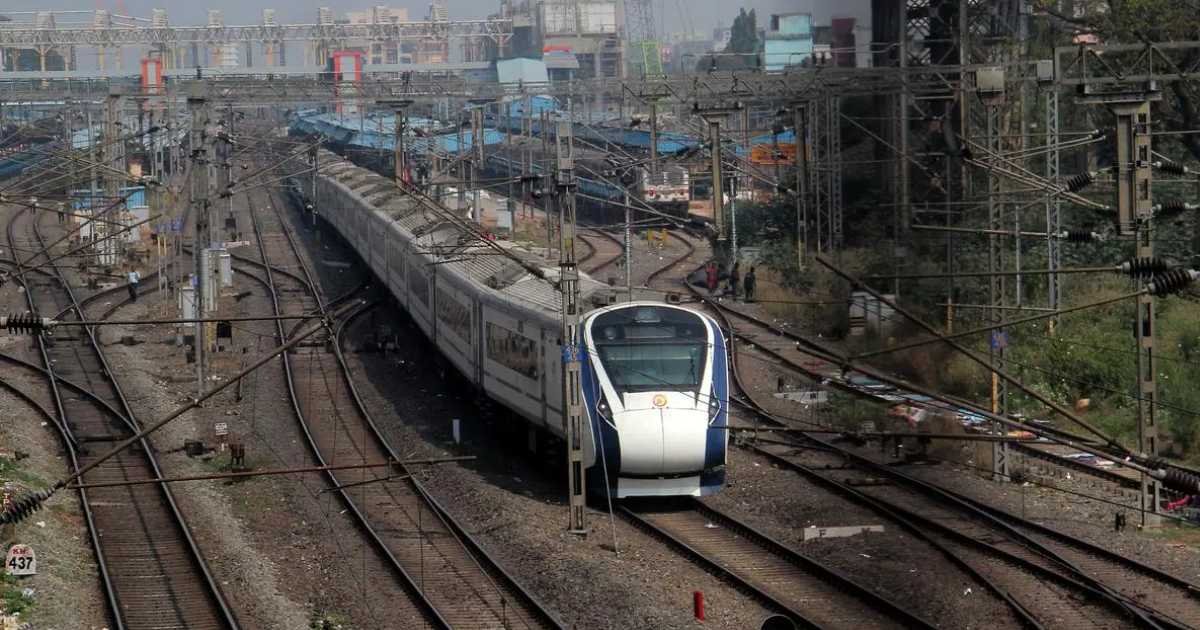
New Delhi: The Cabinet Committee on Economic Affairs, chaired by Narendra Modi, approved three railway multitracking projects with a total estimated cost of Rs 18,509 crore.
The projects include the Kasara–Manmad 3rd and 4th line, the Delhi–Ambala 3rd and 4th line, and the Ballari–Hosapete 3rd and 4th line. Together, these railway multitracking projects will add about 389 km to the existing network of Indian Railways.
Officials said the projects will be completed by 2030-31. They will also generate about 265 lakh human-days of direct employment during construction. The capacity expansion aims to ease congestion and improve service reliability on key routes.
The projects cover 12 districts across Delhi, Haryana, Maharashtra and Karnataka. They will enhance connectivity to around 3,902 villages with a combined population of nearly 97 lakh. As a result, passengers and freight operators are expected to benefit from smoother movement.
Railway multitracking projects to add 389 km capacity
The Ministry of Railways planned the railway multitracking projects under the PM Gati Shakti National Master Plan. The focus remains on integrated planning, multi-modal connectivity and better logistics efficiency. Authorities said the added lines will streamline train operations and reduce delays.
The routes serve as vital corridors for commodities such as coal, steel, iron ore, cement, limestone, bauxite, containers, foodgrains, sugar, fertilisers and petroleum products. The enhanced capacity will enable additional freight traffic of 96 million tonnes per annum.
Tourist destinations along these corridors will also gain improved rail access. These include Trimbakeshwar Jyotirlinga, Shri Mata Vaishno Devi Katra, Hampi, Ballari Fort, Daroji Sloth Bear Sanctuary and the Tungabhadra Dam. Improved connectivity is expected to support local economies.
Officials stated that rail transport remains energy efficient and environment friendly. The projects will help reduce logistics costs and cut oil imports by 22 crore litres. They will also lower carbon dioxide emissions by 111 crore kg. This reduction equals the environmental benefit of planting four crore trees.
The government said the railway multitracking projects align with the vision of comprehensive regional development. By expanding rail capacity, it aims to improve travel convenience, support industry and strengthen sustainable transport infrastructure across the four states.
