

New Delhi: The Centre on February 12 outlined steps taken for expanding satellite launch services and increasing India’s share in the global space economy.
Minister of State Dr. Jitendra Singh shared the details in a written reply in the Rajya Sabha. He said that after the June 2020 space sector reforms, NewSpace India Limited (NSIL) took several measures across the space value chain. These steps aim to involve private industry and startups and strengthen satellite launch services.
NSIL, with technical support from ISRO, initiated the building of five PSLV-XL vehicles through a HAL–L&T consortium. In addition, NSIL engaged Indian industries and startups to build micro Earth Observation satellites under ISRO supervision. It also partnered with industry to establish ground stations and gateways on a turnkey basis.
Moreover, NSIL signed 100 Technology Transfer Agreements through ISRO and IN-SPACe. These agreements allow private entities to commercialise technologies developed by ISRO and the Department of Space. Key technologies transferred include the IMS-1 Satellite Bus and the Small Satellite Launch Vehicle.
NSIL also enabled Indian industry to adopt ISRO’s Mobile Satellite Service technology. As a result, industry scaled up production of S-band terminals for installation on 1 lakh marine fishing vessels. This supports a pan-India vessel communication and monitoring system.
Strategy to boost satellite launch services share by 2033
NSIL undertook commercial communication satellite missions based on customer demand. So far, it deployed GSAT-N1 and GSAT-N2 to support DTH and broadband services. It is also working towards realising GSAT-N3. These missions are expected to generate demand for user terminals manufactured by Indian industry.
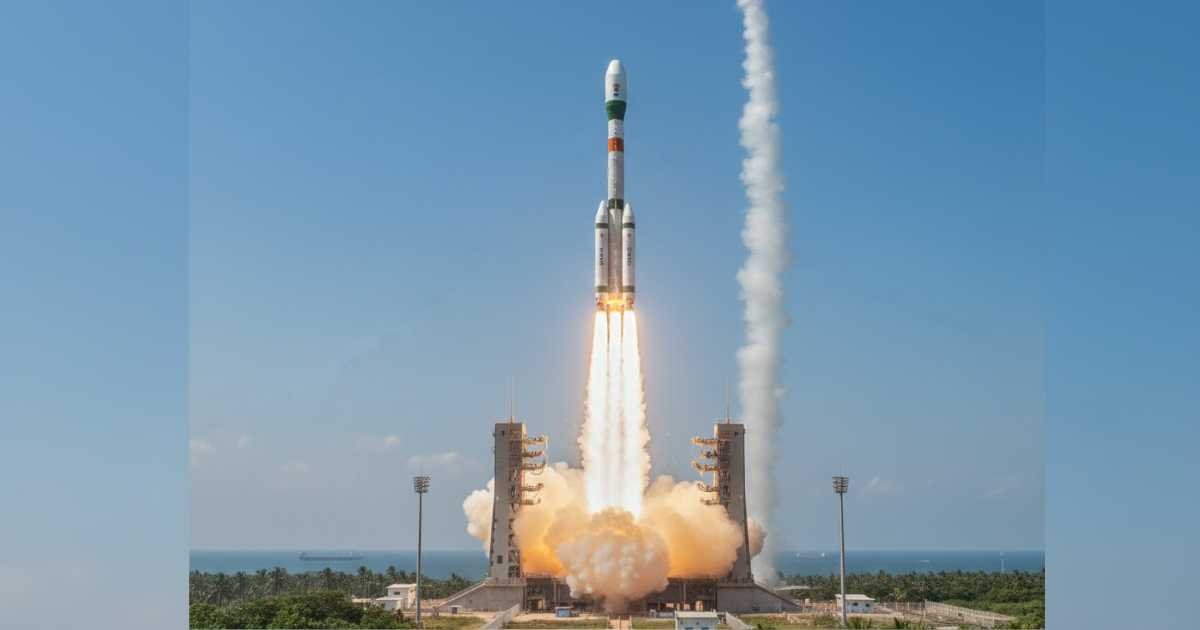
Furthermore, NSIL continues to provide satellite launch services to international customers using PSLV, SSLV and LVM3 vehicles. These efforts aim to increase India’s contribution to the global launch market.
Meanwhile, IN-SPACe has prepared a strategy to expand India’s global share in the satellite launch services segment. According to projections, the launch segment could contribute $3.5 billion to a projected $44 billion Indian space economy by 2033.
The Minister said these coordinated steps will build capacity in the domestic space industry. Consequently, Indian firms are expected to play a stronger role in both domestic and international markets.
