

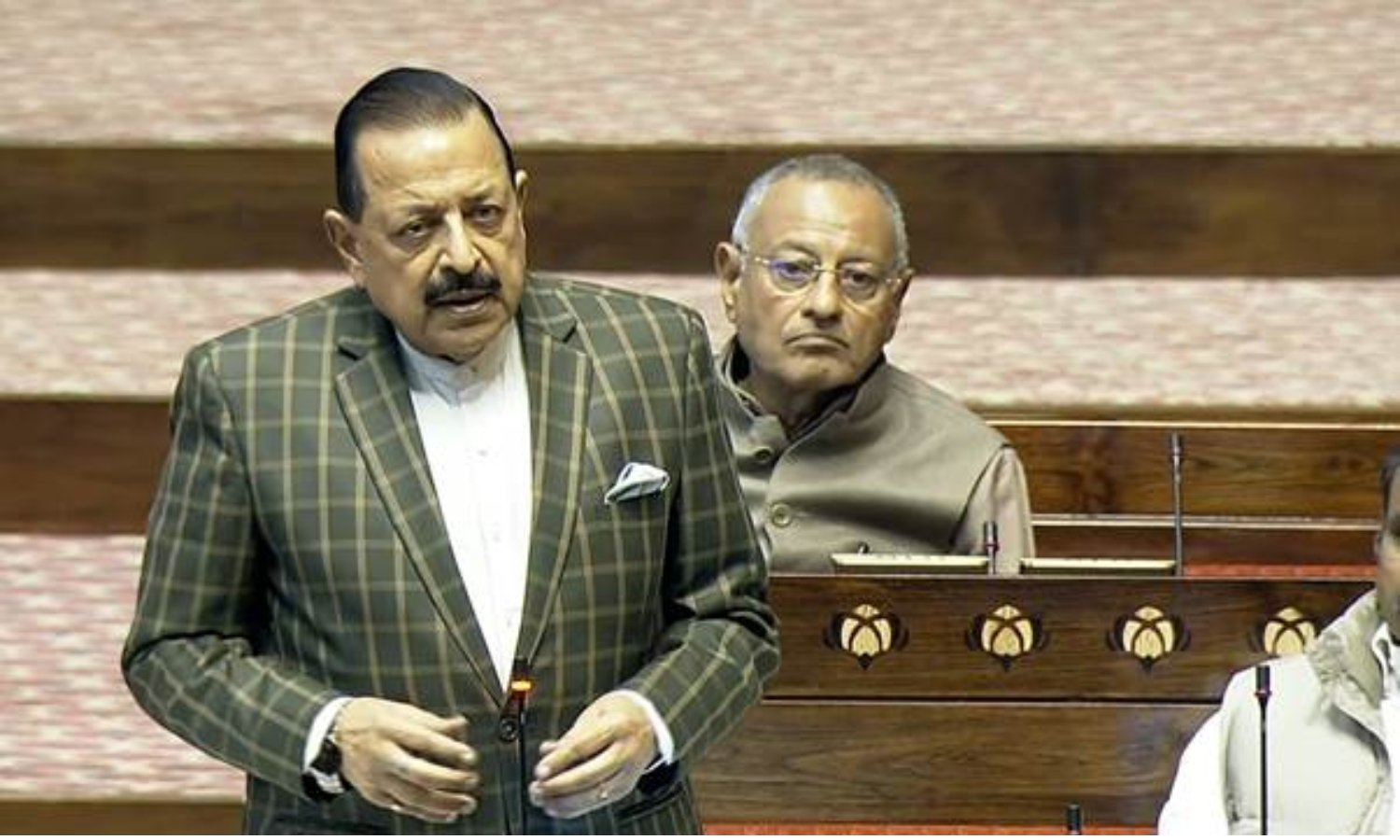
New Delhi: Union Minister of State (Independent Charge) for Science and Technology Dr. Jitendra Singh said the government had adopted a multi-pronged cancer care strategy to strengthen prevention, diagnosis, treatment, research, and affordability nationwide.
During Question Hour in Parliament, the minister said the government aimed to move cancer care from selective excellence to universal access. To achieve this, he said the approach relied on research, technology, and public health integration.
Addressing concerns raised by members, Dr. Singh spoke on hospital admissions, rising cancer incidence, treatment costs, vaccines, global collaboration, and nuclear therapies. According to him, the government was acting simultaneously across these areas.
Noting patient hardship, the minister said cancer patients and families often faced emotional and logistical stress during hospital admissions. Therefore, the government was streamlining admission procedures. At the same time, it was expanding district-level oncology facilities to reduce pressure on tertiary hospitals.
Since 2014, Dr. Singh said the government had established 11 Tata Memorial Centre hospitals across the country. In addition, a national cancer care grid now linked more than 300 hospitals. As a result, patients could access standardised services closer to home. Meanwhile, major expansions, including a Platinum Block at Navi Mumbai, were underway.
On disease trends, the minister said cancer incidence was rising globally due to longer life expectancy, environmental exposure, lifestyle changes, and early non-communicable diseases. However, he said early diagnosis had turned several cancers from fatal illnesses into curable conditions.
Research, affordability and indigenous cancer innovations
Turning to research, Dr. Jitendra Singh said institutions such as BRIT, Tata Memorial Centre, and teaching hospitals were driving innovation. Importantly, the work focused not only on treatment but also on reducing side effects. Researchers were developing radioprotective agents and precision-targeted technologies.
Affordability, the minister said, remained central to the cancer care strategy. At Tata Memorial Centre, nearly 60% of patients received free or subsidised treatment. Moreover, schemes such as Ayushman Bharat supported poor patients. In contrast to corporate hospitals, public institutions charged significantly lower fees.
On medicine availability, Dr. Singh said the government ensured timely access through public hospitals. Additionally, indigenous manufacturing had reduced reliance on costly imports. He highlighted India’s first indigenous HPV vaccine, developed by the Department of Biotechnology. Notably, the vaccine helped prevent cervical cancer among young Indian women.
Referring to global engagement, the minister cited Tata Memorial Centre’s partnership with the International Atomic Energy Agency. Under the “Rays of Hope” initiative, the programme trained healthcare professionals from low- and middle-income countries. Furthermore, Tata Memorial functioned as a deemed university, offering super-specialty training across states, including Assam.
Finally, responding to questions on theranostics such as Lutetium-177 PSMA-617 for prostate cancer, Dr. Singh said India had developed 24 indigenous radioisotopes over the past decade. These advances supported diagnosis and treatment of prostate cancer and childhood blood cancers. Consequently, advanced nuclear medicine had become affordable and scalable, even in rural areas.
