

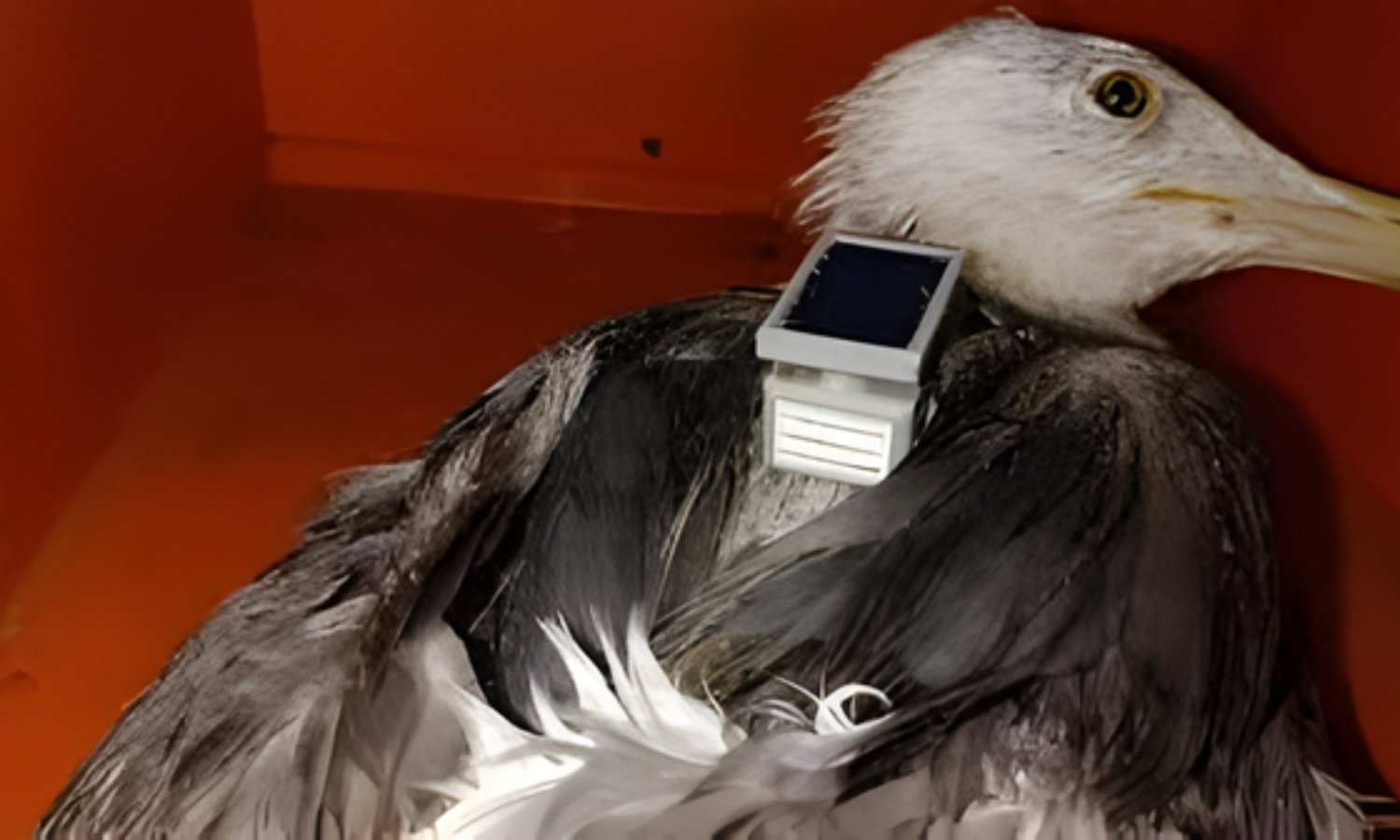
Karwar: A GPS-tagged seagull found on Karwar beach on Wednesday briefly raised security concerns before forest officials clarified that the device formed part of a scientific study tracking bird migration.
Locals first noticed the unusual device attached to the exhausted bird and alerted authorities. Subsequently, forest department officials rescued the seagull and shifted it to their office for examination.
Officials observed that the bird appeared tired and had suffered minor injuries. After inspection, they confirmed that the attachment was a GPS tracking device used for research purposes to study long-distance migration patterns.
Forest department sources then contacted the Wildlife and Nature Protection Society of Sri Lanka. The organisation confirmed that it had tagged the bird as part of a long-term migration study. Although the tracker was manufactured in China, officials ruled out any surveillance or espionage angle.
A section of the media speculated that the device could be a spy camera due to the proximity of the INS Kadamba naval base. However, officials clarified that the tracker contained no camera or recording equipment.
GPS-tagged seagull traced to long-distance migration study
Data retrieved from the tracker showed that the GPS-tagged seagull had flown more than 10,000 km before reaching Karwar. Moreover, the migration route included travel across Arctic regions, highlighting the scale of the bird’s journey.
Officials said the findings reinforced the importance of scientific tracking in understanding migratory behaviour and dismissed all security-related concerns linked to the incident.
