

New Delhi: Scientists reported that Greenland cooling about 8,200 years ago weakened the Indian Summer Monsoon, highlighting a strong climatic link between the North Atlantic region and India.
Researchers from the Birbal Sahni Institute of Palaeosciences, an autonomous institute under the Department of Science and Technology, identified signs of this ancient climate shift in central India. Their findings were published in the journal Quaternary International.
The cooling episode, known as the “8.2 ka event,” marked one of the largest climate disruptions of the Holocene period. During this time, temperatures in Greenland dropped by about 3°C. Methane levels also declined by around 80 parts per billion by volume, signalling major changes in the global hydrological cycle.
Scientists linked the event to a massive glacial outburst flood. Freshwater from Lake Agassiz flowed through Hudson Bay into the North Atlantic. This influx disrupted ocean circulation and triggered abrupt climate changes across regions.
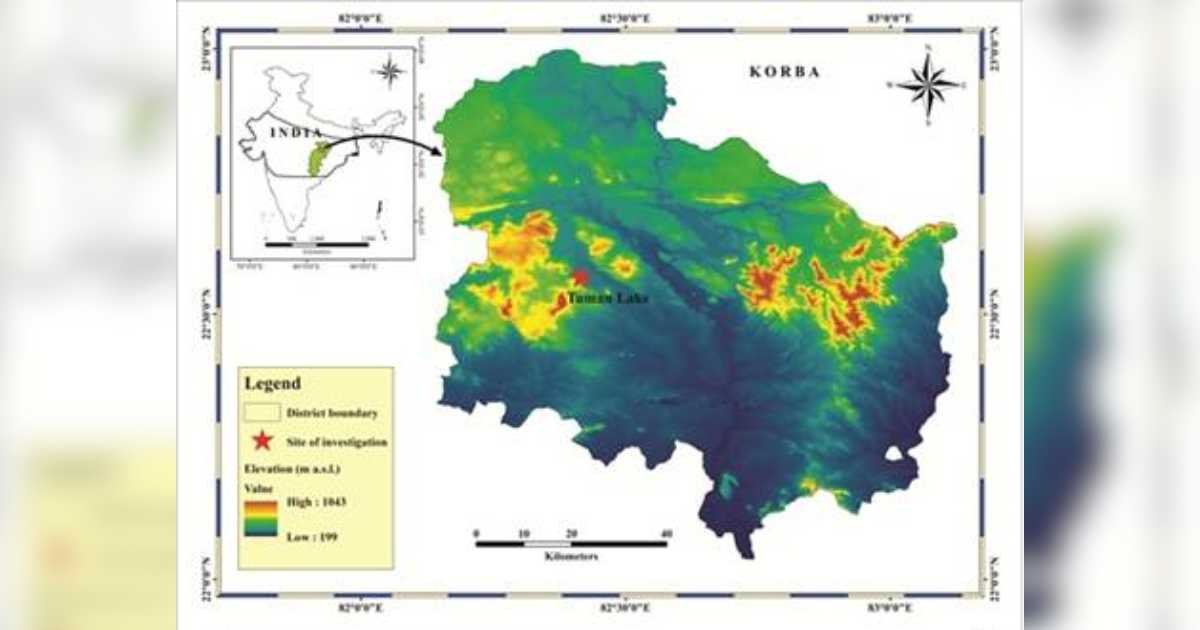
To examine the impact on India, the research team collected a 1.2-metre sediment core from Tuman Lake in Korba district of Chhattisgarh. The site lies within the Core Monsoon Zone, a region that strongly reflects changes in the Indian Summer Monsoon.
Evidence of Greenland cooling found in Indian monsoon records
Researchers analysed fossil pollen preserved in lake sediments to reconstruct past vegetation and climate patterns. Each plant species produces distinct pollen grains, which allowed the team to identify changes in vegetation over thousands of years.
The scientists counted about 300 terrestrial pollen grains in each sample to build a high-resolution climate record. Increased tropical moist deciduous forest pollen indicated stronger monsoon rainfall. In contrast, more dry deciduous and herbaceous pollen suggested weaker monsoon conditions.
Using radiocarbon dating and statistical age-depth modelling, the team developed a climate timeline covering more than 8,200 years.
Their analysis showed a clear weakening of monsoon rainfall during the 8.2 ka interval. This pattern indicated a powerful climatic teleconnection between the North Atlantic and the Indian monsoon system.
The researchers concluded that Greenland cooling likely disrupted Atlantic ocean circulation and shifted global wind patterns. As a result, monsoon strength declined across the Northern Hemisphere, reducing rainfall over India.
The study also found that even during the Middle Holocene, India’s monsoon remained sensitive to both high-latitude ocean changes and tropical Pacific variability.
