

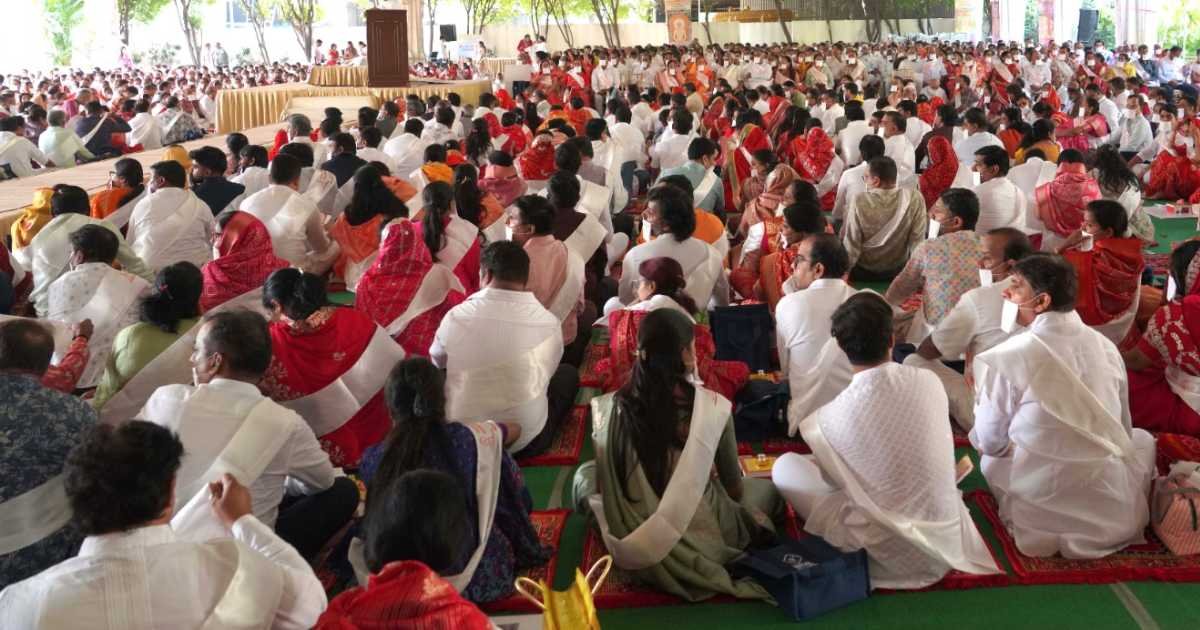
Hyderabad: The Namoththunam Jain prayer brought together around 1,200 couples at Imperial Gardens in Secunderabad on Sunday morning. Couples from Hyderabad and neighbouring towns, cities and states took part in the collective prayer. More than 3,000 devotees joined in, said Manoj Kothari, Prachar Manthri for the event, in a press note.
Jain monk 1008 Pujya Acharya Sri Gyanchandra Ji Marasab Sahib guided the programme. Shri Vardhaman Sthanakvasi Jain Shravak Sangh, Greater Hyderabad, Kachiguda, organised it.
Namoththunam is a prayer with a difference, according to the press note. Across religions, prayer can be a way of seeking, thanking, remembering or transforming oneself. Namoththunam stands out because it combines reverence with an aspiration to cultivate the qualities of spiritually accomplished beings.
The press note said many people approach prayer with a wish for strength, success or happiness. Namoththunam offers another dimension. It asks the devotee to recognise greatness, learn from it and cultivate those qualities.
Annraj Bafna, President, and Pavan Katariya, Mahamanthri, of the Sangh described the prayer in similar terms. They said, “Namoththunam is a prayer that doesn’t ask, ‘What will I get?’ but ‘What can I learn and become?'”
Namoththunam Jain prayer encourages self-improvement
Unlike prayers centred on material benefits, Namoththunam encourages self-reflection and self-improvement. It cultivates patience, compassion, humility, discipline and control over anger and ego. “This gives the programme a strong human-interest and social relevance,” said Dr. Archana Ranka, Gynaecologist and participant.
The message goes beyond the Jain community, the organisers said. Families and individuals face stress, impatience, anger and increasing individualism today. Siddharth Pokarna, who is into corporate gifting, said husbands and wives coming together to pause, pray and reflect has wider relevance to contemporary society.
Jainism encourages people to understand the qualities that make a person worthy of admiration. Suresh Sisodiya, Chief Convenor, and Ashok Tated, Chief Convener of Chaturmas, spoke on this point. They said, “We often teach children whom to admire; perhaps we should also teach them what qualities to admire.”
The programme was more than a religious gathering or a recitation, the press note said. It became a collective experience of prayer, self-reflection and the aspiration to become better human beings.
Participants describe the prayer as calming
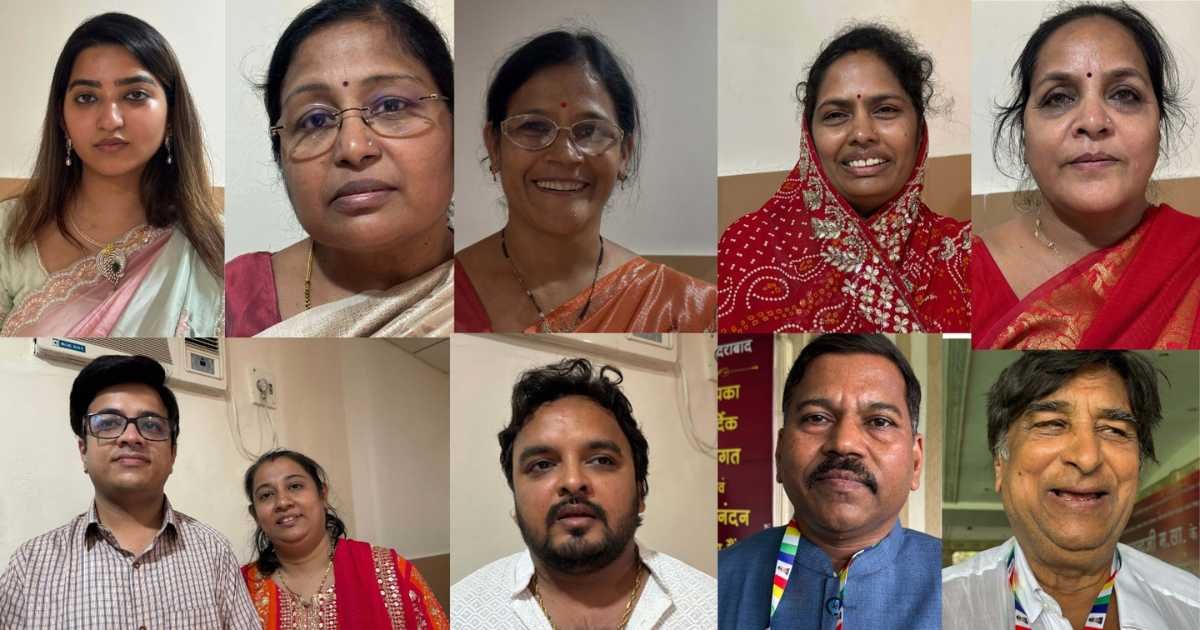
Trishla, a newly married 24-year-old Gen-Z participant, attended Namoththunam for the first time. She said, “It was so calming. I felt as if I was seated next to God and facing Him while praying.”
Mrs. Lalita, a homemaker from Jalgaon, Maharashtra, prayed along with around 90 other women. She said, “Bhakti mein shakti hai,” which means there is power in devotion.
Prateek Jain and Raksha Jain work with multinational IT companies. They said Namoththunam offered a different perspective on prayer. “We usually pray for something. Namoththunam makes us ask: ‘What can I become?’ It teaches us to admire good qualities in others and consciously cultivate those qualities in ourselves,” they said. They added, “We usually pray for what we want. Namoththunam reminds us to become what we admire.”
Participants said the learning from the prayer is wide-ranging. Surender Jain, Mahender Kumar Jain and Jyothi Lalwani from Jalgaon, Maharashtra, highlighted several qualities. Mrs. Shakuntala Pokarna and Harsh Jain from Bengaluru did the same. These included humility, self-control, patience, compassion, discipline, contentment, detachment and self-reflection. They also named choosing better role models and the shift from “getting” to “becoming”.
The gathering of around 1,200 couples praying together created a powerful visual and spiritual experience, the press note said. It also highlighted a simple message for everyone. Prayer can be not only about what people seek, but also about who they aspire to become.
