

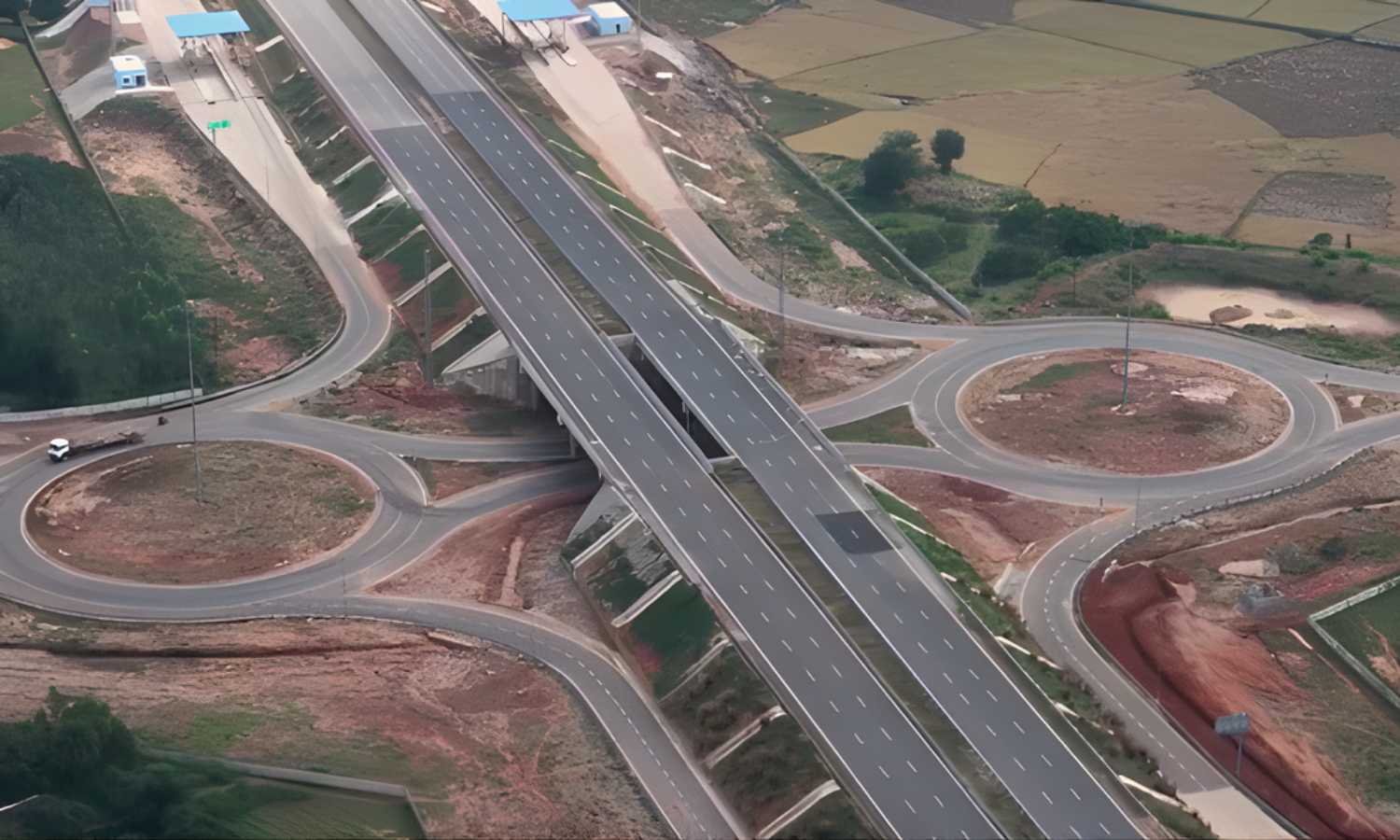
Hyderabad: The Raipur–Visakhapatnam corridor is emerging as one of the most important highway projects in eastern and central India. The Ministry of Road Transport & Highways is building the 465-kilometre greenfield expressway at a sanctioned cost of Rs 16,482 crore. The new route will shorten the existing 597-kilometre stretch by 132 kilometres. As a result, travel time will drop from nearly twelve hours to about five. This improvement will cut fuel use, lower operational expenses and make long-distance movement easier for freight and public transport.
Mid-project updates reflect strong progress on the Raipur–Visakhapatnam corridor
The corridor aims to improve mobility across districts such as Dhamtari, Keshkal, Kanker, Borigumma, Nabarangpur, Koraput, Ramabhadrapuram and Araku. It also provides direct connectivity to Visakhapatnam Port and the Chennai–Kolkata National Highway. Consequently, exporters, industries and agricultural producers expect faster logistics and better access to national and international markets. Farmers and local communities report rising land values along the alignment, while residents say improved connectivity is already shaping new economic expectations.
Transport operators foresee smoother vehicle flow, fewer delays and reduced wear. They also expect better scheduling once the corridor becomes fully operational. Likewise, logistics companies anticipate that the new route will soon become a preferred freight line between Chhattisgarh’s mineral belt and the eastern coastline.
Raipur–Visakhapatnam corridor aims to ease congestion and accelerate regional growth
The project covers fifteen construction packages. Its access-controlled, six-lane design with a 100 km/hr speed limit will divert heavy traffic from the older two-lane NH-26. Officials plan to complete the work by December 2026 and open the corridor to the public in FY 2026-27.
Once in service, the Raipur–Visakhapatnam corridor will act as a key economic link across three states. It will support tourism, agriculture, trade and industrial growth and reinforce India’s wider push to modernise highways and strengthen regional development corridors.
