

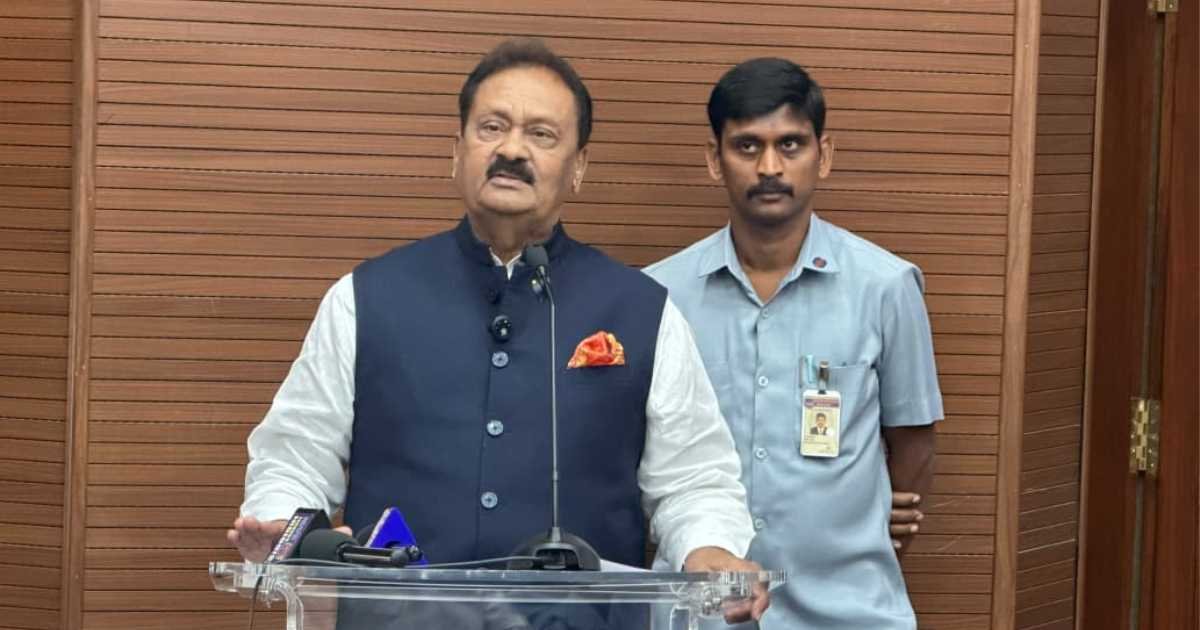
Hyderabad: Telangana Government Advisor Mohammed Ali Shabbir on Saturday urged Urdu journalists to strengthen their Urdu journalists presence at government programmes, political events and public forums. He asked media professionals to question those in power without fear and expand their reporting beyond limited subjects.
Shabbir made the remarks at the 10th anniversary celebrations and Annual Awards 2026 organised by the Telangana Urdu Working Journalists Federation (TUWJF) at the Telangana Media Academy in Nampally. He said Urdu journalism could progress only when journalists improved professional standards and played a wider role in public affairs.
He said journalists should cover governance, administration, development, politics and issues affecting all communities. According to him, Urdu journalists were journalists first and should not restrict their work only to minority, religious or community matters.
The advisor expressed concern over the limited participation of Urdu journalists at press conferences by the Chief Minister, ministers, Collectors and senior officials. He also pointed to their lower presence at District Development Committee meetings and major government events.
Shabbir assured journalists that they could contact him if officials prevented them from attending public programmes. He encouraged them to participate actively, ask questions and demonstrate their professional ability.
Urdu journalists presence needs wider public engagement
Shabbir recalled his long association with Urdu and said he could read and write Urdu, Telugu and English. He said his attachment to the language encouraged him to continue raising issues related to its development.
He recalled that Hyderabad had a strong Urdu education system before Independence. Medical and higher education were available in Urdu during that period. However, the language gradually lost its position after 1947.
The advisor said government recognition alone could not protect Urdu. He urged citizens and organisations to actively pursue implementation of existing rights instead of depending only on official announcements.
Shabbir recalled that he noticed the absence of Urdu signage at Kasu Brahmananda Reddy National Park. After raising the matter with officials, Urdu was added along with Telugu and English.
He asked organisations to remain alert whenever Urdu was missing from government offices, public institutions or official boards. He also recalled that he ensured government performance material was translated and published in Urdu during his tenure as Information and Public Relations Minister.
Urdu journalism growth depends on community efforts
Shabbir urged journalists to respect senior colleagues who dedicated their careers to Urdu journalism. He said the profession needed to regain the confidence and influence associated with leading Urdu publications.
He also spoke about the Special Intensive Revision of electoral rolls. He said cooperation between officials, citizens and community representatives produced encouraging results in several districts, including Nizamabad.
The advisor explained the background of the Telangana Government’s Family Register Certificate. He said religious scholars suggested the idea after seeing Karnataka’s Permanent Resident Certificate system.
He discussed the proposal with Chief Minister A. Revanth Reddy, who directed senior officials to examine it. The government later introduced the Family Register Certificate through online and MeeSeva services.
Shabbir advised families to maintain identical names across school, college, marriage and official records. He said differences in names often created administrative difficulties.
He urged Urdu organisations to follow peaceful democratic methods when the language faced neglect in government offices, Collectorates, bus depots or other institutions. He suggested submitting representations first and taking further action if officials ignored their concerns.
The advisor said Urdu’s future depended on both government support and community participation. He noted that many parents preferred English-medium education and avoided selecting Urdu as a subject for their children.
He recalled an instance where a college required 12 to 14 students to introduce Urdu classes and appoint a teacher. He said many people earned their livelihood through Urdu but did not encourage younger generations to learn the language.
Shabbir praised field journalists and photographers who reported during difficult weather conditions. He said journalists must regain the courage shown by earlier generations who questioned political leaders directly.
He urged Urdu journalists to raise their professional standards and ensure the language remained visible at major public forums.
