


New Delhi: The Union Health Ministry organised a two-day Chintan Shivir on influenza preparedness to strengthen surveillance, response systems, and surge capacity ahead of the upcoming flu season.
The Chintan Shivir took place in New Delhi from December 22 to 23, 2025. The National Centre for Disease Control convened the event under the Ministry of Health and Family Welfare. It partnered with the World Health Organization India. The objective was to improve interministerial and intersectoral coordination for influenza preparedness and response.
Addressing the inaugural session virtually, Union Health Minister Jagat Prakash Nadda said preparedness remained central to influenza resilience. He stressed the need for strong surveillance and adequate surge capacity. Moreover, he said response measures must stay aligned across sectors and all levels of government. He also highlighted the role of the Integrated Disease Surveillance Programme. According to him, close Centre–State coordination was vital for effective disease monitoring.
The Chintan Shivir brought together nearly 110 participants from various ministries and institutions. These included officials from the Ministry of Environment, Forest and Climate Change, the Department of Animal Husbandry and Dairying, and the Directorate General of Health Services. Representatives from ICMR, ICAR, and the National Institute of Virology also attended. In addition, partner organisations and officials from States and Union Territories participated.
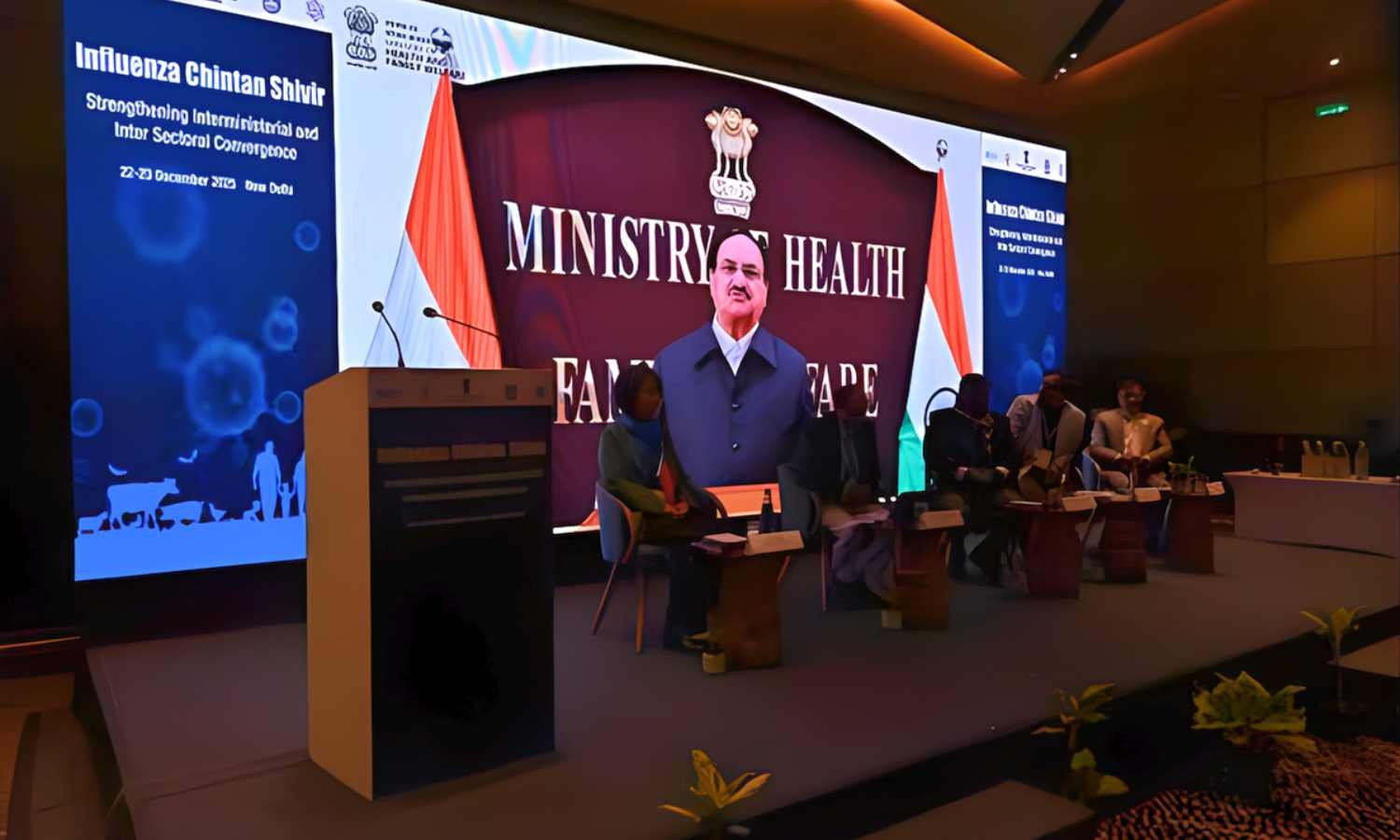
Influenza preparedness needs whole-of-government approach
Eleven States joined the discussions in person, while others participated virtually. As a result, participants exchanged best practices and field experiences. The deliberations noted that influenza remained a major public health concern. Periodic outbreaks continued to cause significant illness and deaths. Vulnerable groups faced higher risks, especially children, older adults, pregnant women, and people with chronic conditions.
Officials emphasised that influenza preparedness could not work in silos. Instead, it required convergence across sectors. These included early warning systems, laboratory readiness, clinical preparedness, and risk communication. Meanwhile, the Health Ministry said it continued real-time monitoring of seasonal influenza trends. It relied on the Integrated Disease Surveillance Programme network for this effort.
A key outcome of the Chintan Shivir was progress towards a more structured preparedness review. States, Union Territories, and institutions agreed to adopt a practical checklist. This tool would help assess readiness, identify gaps, and guide timely corrective actions. Furthermore, discussions stressed the importance of clear roles, timely data sharing, and coordinated implementation.
Overall, the Chintan Shivir marked a significant step towards strengthening One Health-based influenza preparedness. By linking human, animal, and environmental health systems, officials said the approach would improve pandemic readiness. It would also support India’s national and global health security goals.
