

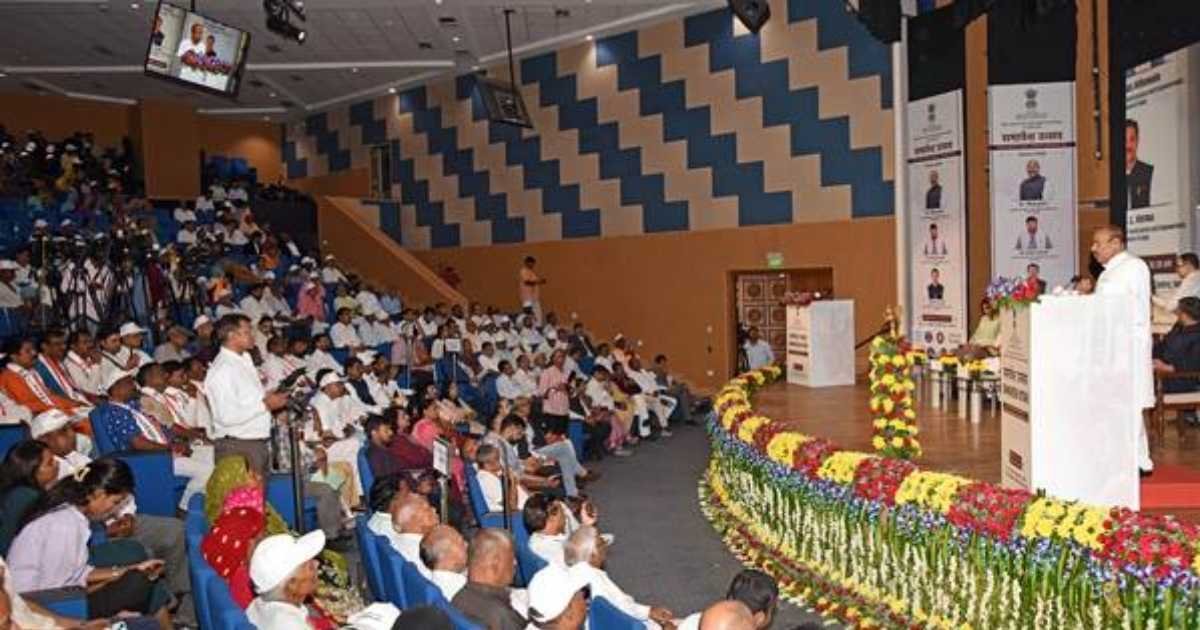
New Delhi: The SEED Scheme was highlighted at SAMAVESH UTSAV as a key initiative supporting the inclusion and empowerment of DNT communities. More than 700 beneficiaries, community leaders and artisans took part in the event.
The Development and Welfare Board for De-notified, Nomadic and Semi-Nomadic Communities (DWBDNC) organised the programme at Dr. Ambedkar International Centre in the National Capital on September 1.
The event showcased success stories from the Scheme for Economic Empowerment of DNTs. It also highlighted traditional skills, craftsmanship and products made by DNT artisans.
Union Minister of Social Justice and Empowerment Dr. Virendra Kumar addressed the gathering. He shared experiences from his interactions with DNT communities across the country.
Dr. Virendra Kumar appreciated the impact of the SEED Scheme on DNT communities. He said its interventions covered education, healthcare, livelihood and housing.
The Minister of State for Social Justice and Empowerment Shri B. L. Verma also attended the programme. Senior Ministry and DWBDNC representatives joined the event.
The officials included CEO Board Shri Rajan Sehgal and Members Shri Bharatbhai Babubhai Patni and Shri Pravin Shivajirao Ghuge.
Shri B. L. Verma highlighted the role of the SEED Scheme in improving socio-economic conditions among DNT communities. He also reaffirmed the Government’s commitment to their holistic welfare and inclusion.
The programme combined welfare achievements with a display of traditional community skills. It gave artisans an opportunity to showcase their products and craftsmanship.
SEED Scheme supports DNT artisans and traditional crafts
A major attraction at SAMAVESH UTSAV was an exhibition featuring traditional skills and products of DNT artisans. Twenty stalls represented artisans from six States and the National Capital Territory of Delhi.
The participating States were Maharashtra, Uttar Pradesh, Madhya Pradesh, Rajasthan and Gujarat. Delhi also formed part of the exhibition.
The stalls represented several DNT communities. These included Banjara, Chamar, Nat, Sutar, Vadar, Lohar, Gadiya Lohar, Waghri and Naik communities.
Artisans displayed a wide range of handmade and traditional products. These included godhadis, jute bags, traditional jhulas and hand embroidery.
The exhibition also featured blue pottery and iron products. Visitors could see appliqué and block-print work at the stalls.
Food products also formed part of the display. Artisans showcased pickles, spices and fruit jams.
The exhibition highlighted the craft heritage and creative skills of DNT communities. It also provided a platform to present their entrepreneurial potential.
The Government constituted the DWBDNC through a notification dated 21st February 2019. The Board works to implement welfare and development programmes for De-notified, Nomadic and Semi-Nomadic communities.
The SEED Scheme was later launched to supplement these efforts. It focuses on the holistic welfare and socio-economic empowerment of DNT communities.
SAMAVESH UTSAV brought beneficiaries, community leaders and artisans together to highlight these efforts. The programme also presented community achievements and traditional skills before visitors.
The event underlined the Government’s stated focus on inclusion, empowerment and progress among DNT communities. It also showcased the role of traditional crafts in their economic and social development.
