

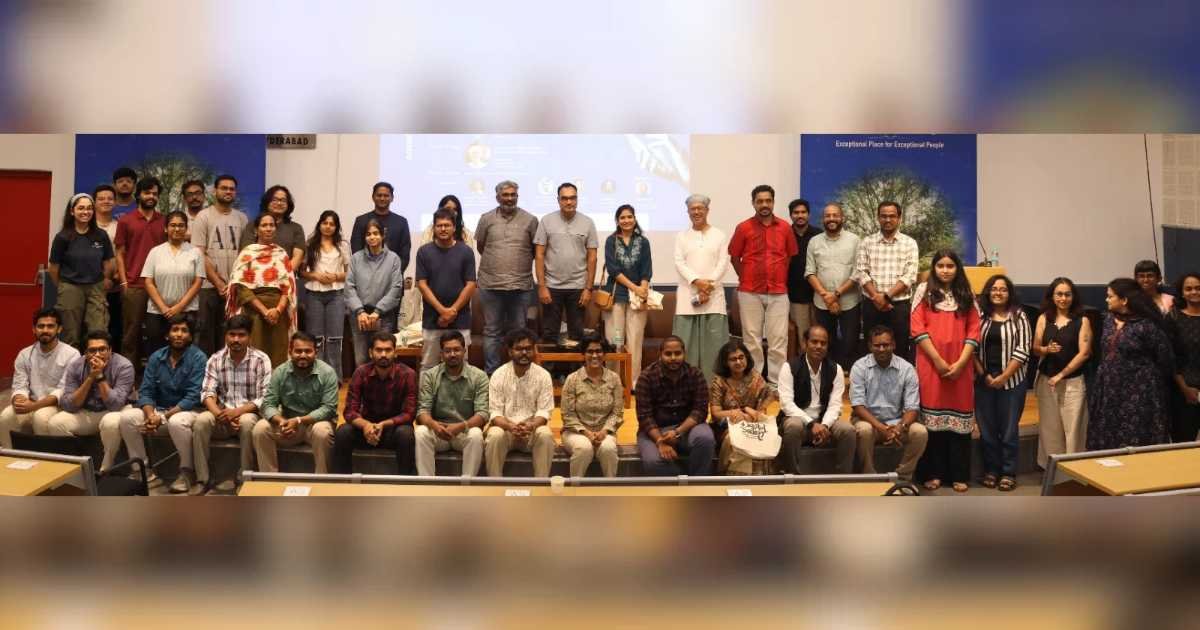
Hyderabad: The International Institute of Information Technology Hyderabad (IIIT Hyderabad) hosted the Digital Citizen Summit on October 28, 2026. The regional dialogue focused on making India’s digital public infrastructure more inclusive, accountable and accessible.
The summit, titled Regional Dialogues: Digital Public Infrastructures for Governance, brought together representatives from government, civil society, technology, research and communities. Digital Empowerment Foundation (DEF), IIIT Hyderabad’s Human Sciences Research Centre and Code for Good Tech jointly organised the event.
India’s digital public infrastructure includes Aadhaar, the Unified Payments Interface (UPI) and DigiLocker. These systems have transformed access to public services, financial services and welfare benefits. However, their growing role in governance has raised questions about equitable access, accountability and citizen participation.
Digital systems can also create barriers when their design does not reflect people’s needs and experiences. Rural women, migrant workers, persons with disabilities, linguistic minorities and informal-sector workers may face several challenges. These include biometric authentication failures, limited language support and unreliable internet connectivity. In addition, inaccessible grievance-redressal systems can make it harder for citizens to seek support.
The summit featured a panel discussion and a workshop to examine how digital public infrastructures and digital public goods can better serve citizens. Osama Manzar, Founder-Director of DEF, stressed the need to make digital systems accessible to everyone.
“If DPI is like a road, then everyone must be able to walk on it, not just those with smartphones or bandwidth,” Manzar said.
Summit examines accountability and citizen participation
A panel discussion examined digital public infrastructure governance, accountability and grievance redressal in Telangana and beyond. It brought together government officials, civil society representatives, technologists, researchers and community representatives.
The panellists included Sam Kummary, Technical Director at the Mojaloop Foundation; Aakansha Natani of IIIT Hyderabad’s Human Sciences Research Centre; and Ajitha Sindhe, Program Coordinator at Code for Good Tech. Rakesh Dubbubu, Founder of Factly, and SQ Masood of Hyderabad Urban Labs also participated.
The summit also featured a workshop on co-creating and contributing to digital public infrastructure. Participants received training in DPI tools and an introduction to DPI code. The workshop also covered ways to contribute to the design and development of these systems.
The discussions and practical sessions encouraged engagement between technology developers, policymakers, researchers and communities. They explored ways to design digital infrastructure that reflects diverse user experiences and supports meaningful access to governance.
For IIIT Hyderabad, the regional dialogue reflected its commitment to research and innovation addressing societal challenges. The institute also highlighted technology’s role in improving public service delivery.
