

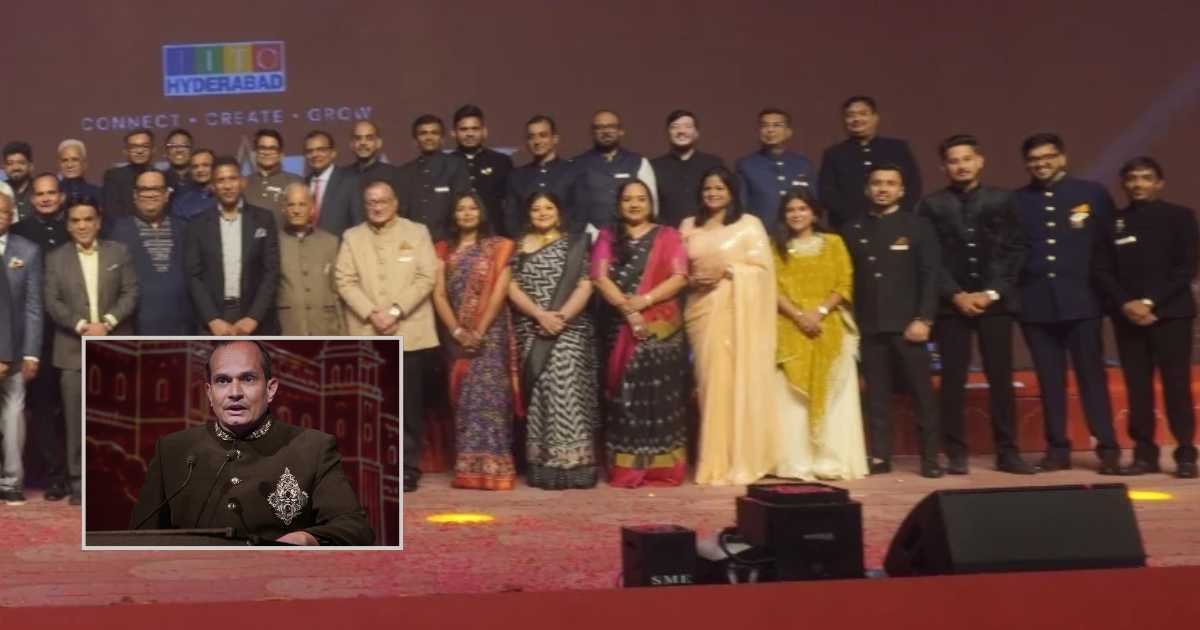
Hyderabad: The Jain International Trade Organisation (JITO) Hyderabad Chapter has installed its new managing committee for the 2026–28 term, with B L Bhandari taking charge as chairman. The new leadership will focus on business networking, economic empowerment, knowledge sharing and community service over the next two years.
The committee succeeds the outgoing team led by Rohit Kothari as chairman and Lalith Chopra as chief secretary. Senior JITO national leaders attended the installation ceremony, including Chairman Sanjay Dangi, Vice Chairman Pramod Chordia and JITO Apex President Himanshu Shah. The senior leadership administered the oath of office.
Bhandari will lead the chapter alongside four vice chairmen: Goutam Sehlot, Anil Bohra, Rahul Pokarna and Varun Munot. Rahul Surana has been appointed chief secretary. He will be supported by secretaries Sudhir Sethia, Lalit Bhandari, Tapasvi Deora, Nikhil Shah and Ajit Shrishrimal. Vishal Anchaliya will serve as treasurer, while Amit Sancheti and Rahul Shyamsukha will be joint treasurers.
Bhandari outlined his priorities for the new term, including membership expansion, new opportunities and the JITO Awas Yojana for affordable housing. He announced a target to increase membership from 748 to 1,008. He also stressed inclusive growth and wider participation.
Sanjay Dangi said JITO had evolved into a trusted global organisation and encouraged more members of the Jain community to join its initiatives. He called for stronger networking, greater women’s participation and increased investment in education. JITO has disbursed ₹5 crore in educational loans to Jain youth, he said, describing education as a key driver of future progress.
Ganpatji Choudhary, former JITO Apex chairman, highlighted the growing demand for affordable student accommodation. He said JITO Apex plans to build hostels with 10,000 rooms across India over eight years. The project involves an estimated investment of ₹2,000 crore, based on an approximate construction cost of ₹20 lakh per room.
Mayur Jain, president of JITO Administrative Training Foundation (JATF), said the organisation prepares young aspirants for competitive examinations, particularly the Civil Services. Its efforts have helped 37 Jain youth enter these services. Moreover, 10 candidates secured ranks among the top 100 in UPSC examinations.
JITO Hyderabad expands healthcare and global outreach
JITO’s Shraman Arogyam initiative provides healthcare to Jain Sadhus and Sadhvis across India. The programme has registered more than 10,700 beneficiaries and facilitated 10,850 medical treatments, spending over ₹96 crore. In addition, it operates through a network of more than 12,000 hospitals offering cashless treatment. More than 8,000 Guru Bhagwants have also received Ayurvedic, Panchakarma and physiotherapy services through Jivanand Ayurveda centres.
Jaswant Munoth, chairman of Shraman Arogyam, said the initiative reflected JITO’s commitment to organised philanthropy and seva. He described it as a nationwide healthcare model rooted in the Jain tradition of Vaiyavachch, or care and service.
Hemant N Shah, secretary general, said JITO had grown from a single chapter in Ahmedabad into a global network. It now has 156 chapters in India and 38 overseas chapters across 20 countries. Meanwhile, the organisation plans to expand into 12 additional countries to strengthen its international presence.
Himanshu Shah described JITO as a “network ka khazana”, highlighting its business and professional connections. Pramod Chordia said Hyderabad offered significant opportunities for business and entrepreneurship. He also referred to the city’s historic association with Golconda diamonds.
The Hyderabad Chapter has dedicated Ladies and Youth Wings. Tina Shah will lead the Ladies Wing as chairperson, promoting women’s leadership, networking and community engagement. Architect Nilesh Nahar will head the Youth Wing, with Darshan Lunawat as chief secretary and Girish Bothra as treasurer. The wing will focus on young entrepreneurs and professionals.
JITO brings Jain businessmen, industrialists, entrepreneurs and professionals together through three pillars: Economic Empowerment, Knowledge and Seva. Through these areas, its initiatives support business growth, education, professional development, social welfare and community service.
