
PM Modi to inaugurate Pune Metro Line 3 and lay foundation for Phase-II on November 3

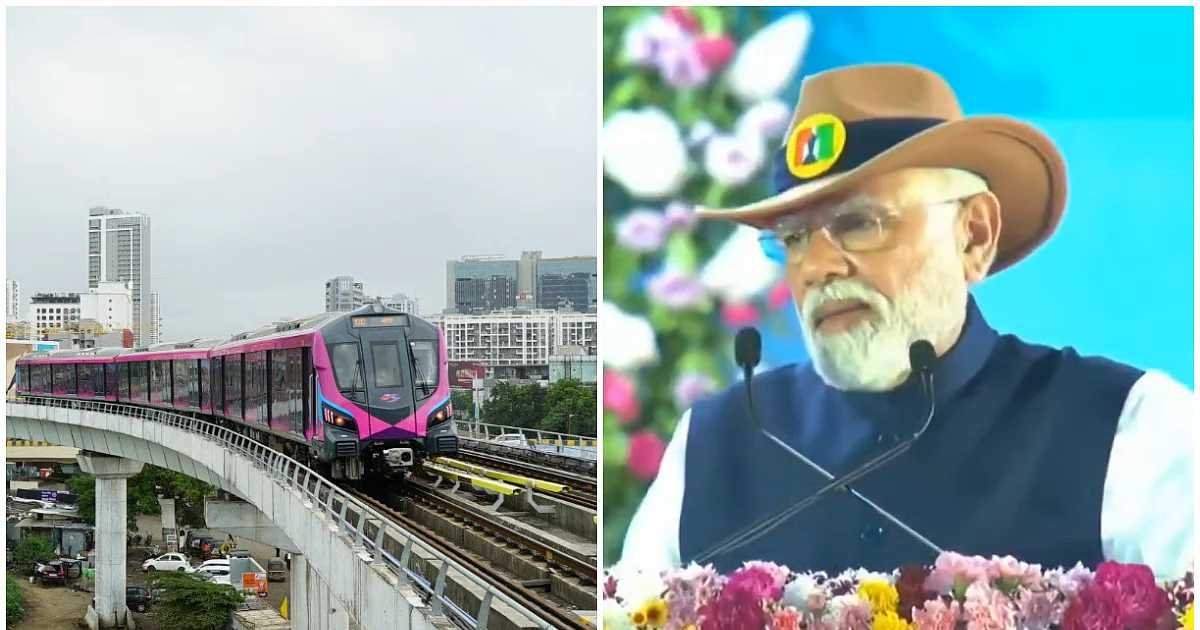
New Delhi: Prime Minister Narendra Modi will inaugurate Pune Metro Line 3 and launch Phase-II works on November 3. Together, the Pune Metro projects involve an investment of around ₹21,800 crore. Modi will join the event through video conferencing at 12.30 pm and address the gathering.
The Prime Minister will inaugurate Line 3, also known as the Pink Line. This 23-km corridor connects Maan with District Court Metro station. It will link the Hinjewadi IT hub with Shivajinagar. The project has a cost of more than ₹8,300 crore.
The new corridor will improve access to Pune’s major employment centre. As a result, thousands of IT professionals and other commuters will benefit from better connectivity. It will also link with the existing Metro network, making journeys across the city easier.
Moreover, the Pink Line aims to reduce dependence on private vehicles. This could ease traffic congestion and reduce vehicular emissions. The corridor will also improve access to major commercial and residential areas.
Pune Metro Phase-II to expand connectivity
Modi will also lay the foundation stone for Phase-II, estimated to cost around ₹13,500 crore. The expansion includes Lines 2A, 2B, 4 and 4A. Together, these corridors will extend Metro services across key residential, commercial and IT hubs.
Lines 2A and 2B will cover around 12.75 km. Line 2A will connect Vanaz with Chandani Chowk. Meanwhile, Line 2B will link Ramwadi with Vitthalwadi and extend the existing east-west Metro network.
Line 4 will span around 25.52 km between Kharadi and Khadakwasla. In addition, Line 4A will cover 6.12 km, connecting Nal Stop with Manik Baug.
The expanded network will serve Kharadi, Magarpatta, Hadapsar and Swargate. It will also connect Manik Baug, Nanded City, Pune Cantonment and Warje. Furthermore, the eastern extension from Ramwadi to Vitthalwadi will improve access to developing areas in Kharadi and Wagholi.
Interchange facilities at Swargate, Nal Stop and Kharadi Bypass will connect the new corridors with the existing Metro network. They will also link the system with intercity bus services. Consequently, commuters will have better options for integrated journeys across Pune.
The Pink Line will also promote women’s participation in public transport. Women train operators will run the entire corridor, marking a first-of-its-kind initiative. Additionally, solar power is expected to meet around 30% of the line’s electricity needs.
Together, the projects aim to strengthen Pune’s public transport system. They will expand urban connectivity and provide commuters with more efficient travel options.
