

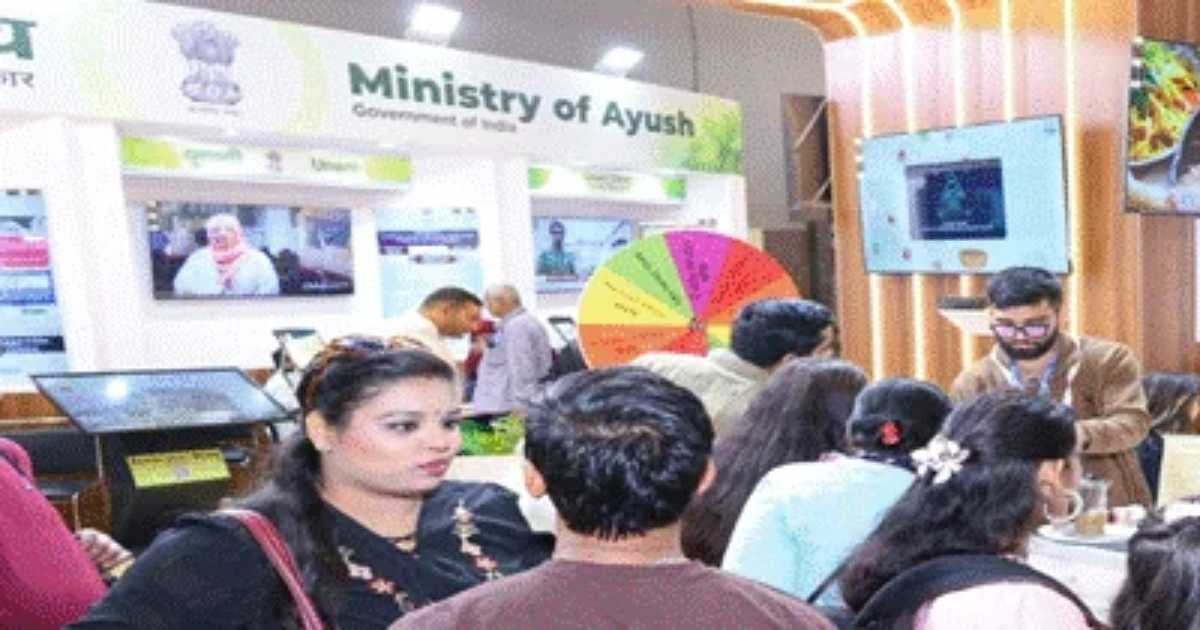
New Delhi: Ayush Pavilion has emerged as a major attraction at the 45th India International Trade Fair (IITF) 2026 in New Delhi. The pavilion is drawing visitors with free healthcare consultations, yoga sessions and interactive wellness activities. It is showcasing India’s traditional healthcare systems at Hall No. 2, Bharat Mandapam, from November 13 to 27.
The pavilion features medicinal plant displays, traditional dietary preparations and educational presentations. Its theme is “Ayush Ki Virasat Se Swasth Bharat Ka Vikaas”, aligned with IITF’s broader theme, “Development and Heritage”. The activities aim to explain the role of Ayush systems in preventive healthcare and healthy living.
Institutions and research councils under the Ministry of Ayush are presenting their work through demonstrations and visitor engagement. CCRAS–CARI is offering Ayurveda OPD services and Prakriti Pariksha. It is also sharing information on preventive healthcare, healthy lifestyles and Ayurvedic wellness.
The All India Institute of Ayurveda, New Delhi, is displaying herbs and spices such as Ashwagandha, Shatavari, Arjuna, Amla, Haridra and Guduchi. Visitors are learning about their traditional applications and health-related uses. The institute is also advising people to consider dosage, individual health conditions and professional guidance before using medicinal herbs.
Ayush Pavilion showcases traditional food and wellness practices
The National Institute of Ayurveda, Jaipur, is presenting Ayush Aahar products, including Ragi Cookies, Triphala Jam, Aloe Vera Gel and herbal Lip Balm. Its interactive activities include an Ayurvedic Snakes and Ladders game based on diet and lifestyle. Virtual reality experiences also help visitors explore human body systems.
The pavilion displays information on Prakruti, Panchakarma, Ayurvedic cooking and daily wellness. Rashtriya Ayurveda Vidyapeeth is showcasing food innovations such as POSHAK cookies, Ayurvedic bread and the traditional drink Pankam. Activities including “Dadi Se Puchho” and “Millets on the Wheel” are highlighting traditional diets and the nutritional benefits of millets.
The Morarji Desai National Institute of Yoga is conducting regular yoga demonstrations and sessions. Visitors can receive personalised yoga consultations based on age, health concerns and lifestyle. Yoga quizzes and asana competitions are also encouraging participation.
The Unani stall, managed by RRIUM New Delhi under CCRUM, is presenting traditional dietary preparations and healthcare practices. Visitors can sample Unani Qahwa, Hareera, Halwa Gheekawar, Gulkand and Murabba Amla. A digital Mizaj Assessment Kiosk offers temperament assessment and personalised dietary advice. The stall also features digital presentations and documentaries on Unani medicine.
The Unani OPD provided free consultations and medicines to 151 patients on November 18 and 19. Meanwhile, the Siddha stall, managed by CCRS and the National Institute of Siddha, Chennai, is explaining Siddha principles and preventive healthcare. Its displays cover nutrition, lifestyle changes, diagnostic methods, traditional formulations and therapies, including Varma therapy.
The Siddha stall also highlights academic and research activities at the National Institute of Siddha. These include BSMS, MD (Siddha) and PhD programmes. The presentations aim to encourage students to explore education and careers in Siddha.
The Central Council for Research in Yoga & Naturopathy is promoting Yoga and Naturopathy through digital content and information material. Its Ayush Aahar display features snacks such as Makhana Ladoo, Peanut Ladoo, Til Ladoo and Namkeen. Free consultations on yoga, naturopathy, diet and lifestyle changes were provided on November 17 and 18.
The National Institute of Sowa-Rigpa is introducing visitors to Himalayan healing traditions. Its stall explains Sowa-Rigpa dietary practices, therapeutic regimens and herbal formulations. Practitioners are offering guidance based on classical Sowa-Rigpa texts.
The National Medicinal Plants Board is highlighting medicinal plants through live displays and information material. It is also distributing Satavari plants. QR codes on displayed plants provide additional information, while brochures, pamphlets and the comic book “Professor Ayushman” are helping raise awareness about medicinal plants and their uses.
Through its exhibits and interactive programmes, the Ayush Pavilion is introducing visitors to traditional healthcare systems and their role in nutrition, preventive healthcare and wellness. The Ministry of Ayush is using the trade fair to promote public awareness through accessible and educational activities.
