
Railways–fertilizer coordination ensured ample supplies during Kharif and Rabi

New Delhi: Improved fertilizer supply coordination between the Ministry of Railways and the Department of Fertilizers ensured timely and adequate availability of fertilizers across States during Kharif 2025 and the ongoing Rabi season, the Centre said on January 30.
The Department of Fertilizers appreciated the Railways for faster and smoother movement of fertilizer rakes, stating that close inter-ministerial coordination helped prevent shortages during critical stages of cultivation. According to the government, seamless rail operations enabled States to receive supplies on time, while State authorities ensured last-mile delivery to farmers.
Rake loading gathered pace during the peak Kharif months, with average daily loading rising to 72 rakes in July 2025, increasing to 78 rakes in August and further to 80 rakes per day in September. The sustained momentum continued into the Rabi season through focused planning and real-time monitoring.
During April to December 2025 of FY26, the government ensured comfortable availability of all major fertilizers. Against an assessed requirement of 312.40 lakh metric tonnes of urea, availability stood at 350.45 lakh metric tonnes. Similarly, major phosphatic and potassic fertilizers, including DAP, MOP and NPKS, recorded availability of 287.69 lakh metric tonnes against a requirement of 252.81 lakh metric tonnes, consistently exceeding demand.
Fertilizer supply coordination drove record rake movement
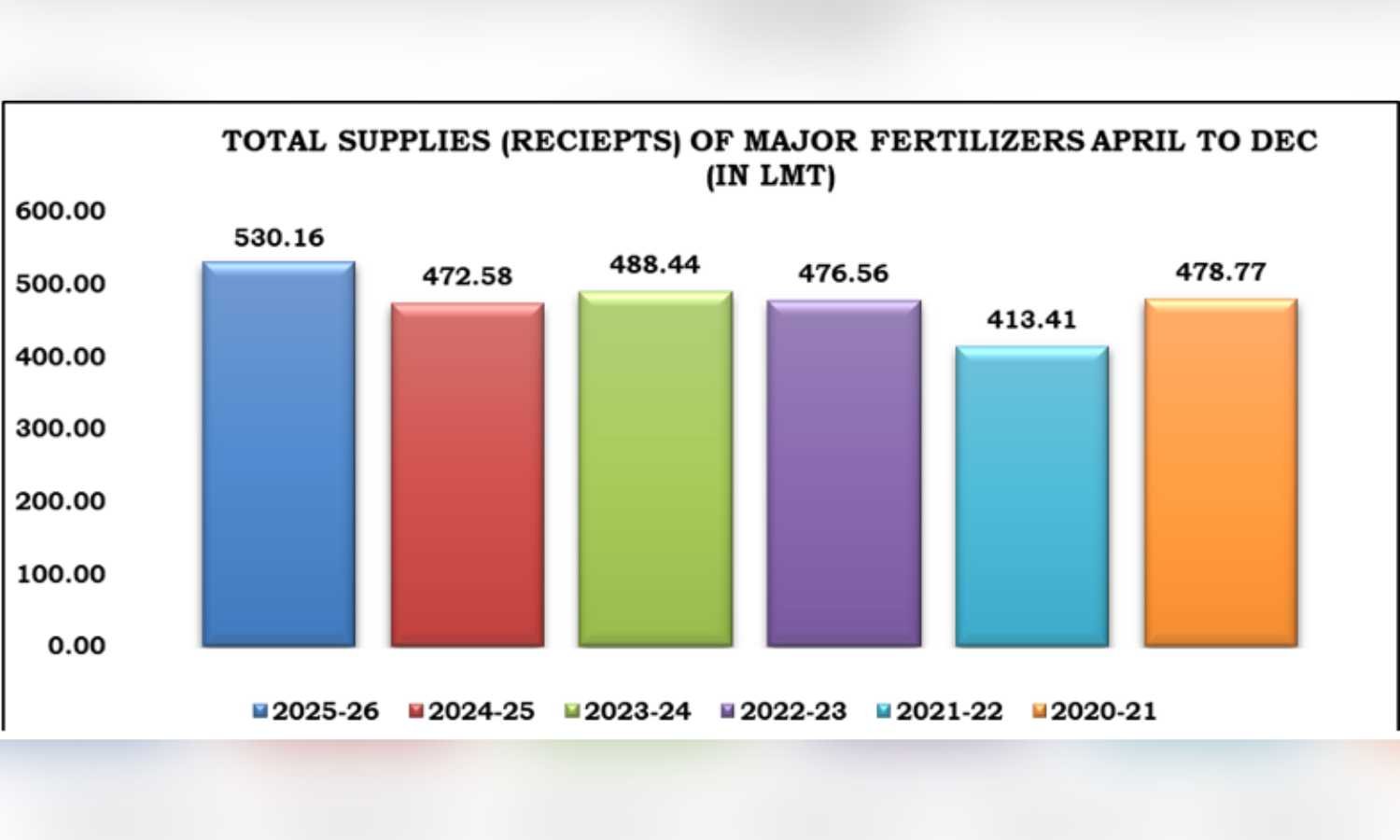
Fertilizer supply coordination resulted in record movement during April–December 2025, with total supplies crossing 530.16 lakh metric tonnes for the first time in this period. This marked a 12.2% increase over the corresponding period of FY25 and was 8.5% higher than the previous record achieved in FY24.
Urea rake movement rose to 10,841 rakes, registering an 8% increase over the previous year. P&K fertilizers recorded 8,806 rakes, reflecting an 18% growth. The government said enhanced coordination with the Railways, Ports, State Governments and fertilizer companies ensured uninterrupted supplies during peak agricultural seasons.
Month-wise data from July to January indicated sustained improvement in fertilizer movement compared to the previous year. The government attributed the performance to robust advance planning, proactive resolution of logistics bottlenecks and continuous monitoring at both State and national levels, aimed at supporting farmers and safeguarding food security.
