

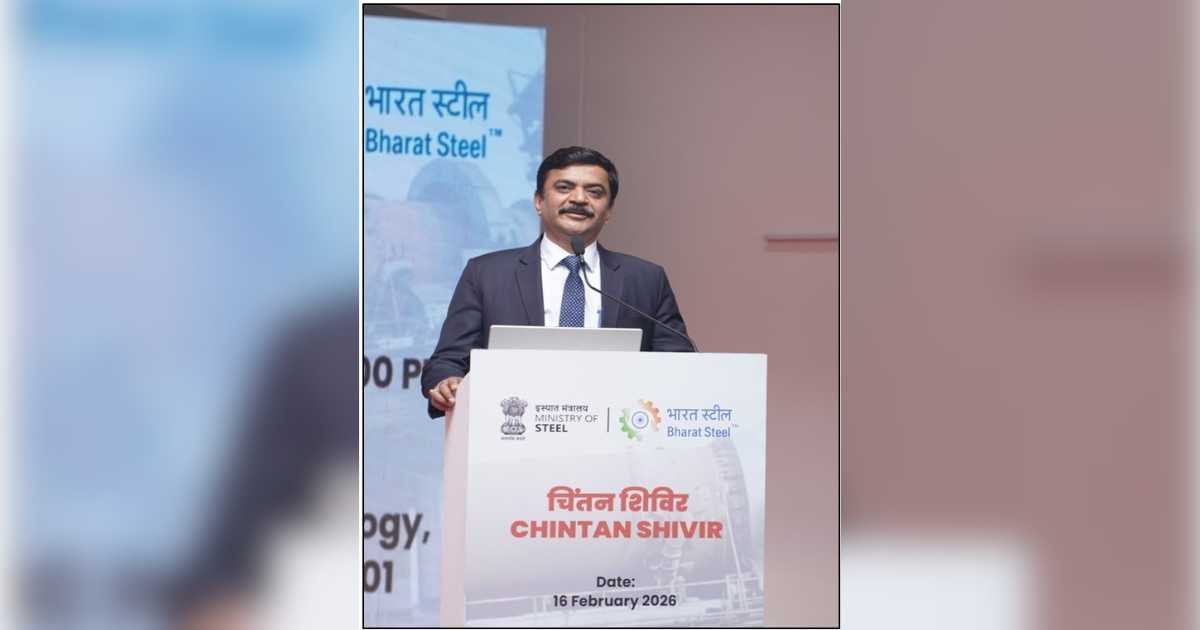
New Delhi: The Ministry of Steel organised a Green Steel Chintan Shivir at Mandi Gobindgarh to deliberate on low-carbon steel production, with a focus on the secondary steel sector. Senior officials, CPSE representatives, industry leaders and technical experts participated in the one-day event at the National Institute of Secondary Steel Technology (NISST).
Steel Secretary Sandeep Poundrik inaugurated the programme. Additional Secretary and Financial Advisor, Joint Secretary and other ministry officials also attended. Representatives from industry associations and the secondary steel sector joined the discussions.
In his address, Poundrik underlined the importance of the secondary steel sector, which contributes nearly 47 per cent of India’s total steel production. He noted that India remains the only country where production, consumption and installed capacity continue to rise each year. According to him, the sector has recorded annual growth of 8–10 per cent.
He appreciated NISST for strengthening the secondary steel ecosystem. He said the institute now conducts training programmes twice a month across major steel clusters. He added that NISST serves as the nodal agency for green steel certification and has issued certificates to 76 industries, covering 10.98 million tonnes so far.
Green Steel Chintan Shivir focuses on low-carbon technologies
The Green Steel Chintan Shivir 2026 featured detailed sessions on emerging technologies aimed at cutting carbon emissions. Experts discussed green hydrogen injection in blast furnaces to reduce CO₂ output. They also examined the use of hydrogen in rotary kiln-based iron making.
In addition, participants reviewed the deployment of Battery Energy Storage Systems in the secondary steel sector. They said BESS could reduce grid dependence and help optimise renewable power during off-peak hours. Deliberations also covered vertical shaft-based DRI production using water gas as a reductant. Speakers noted that this method allows fuel flexibility and lowers emissions.
Officials and industry leaders further discussed export opportunities for alloy steel products. At the same time, they examined challenges arising from the Carbon Border Adjustment Mechanism. Participants stressed the need to align Indian production with global sustainability standards.
Joint Secretary Daya Nidhan Pandey, who also serves as Chairman of NISST, highlighted the institute’s role in capacity building. He said the government was working on an incentive scheme to encourage technology upgrades in the secondary steel sector. According to officials, the move aims to reduce carbon emissions while supporting sustainable growth.
The discussions brought together policymakers, industry leaders and experts to chart a roadmap for green steel production. Participants agreed to pursue innovation and collaboration to strengthen India’s transition towards low-carbon steel manufacturing.
