

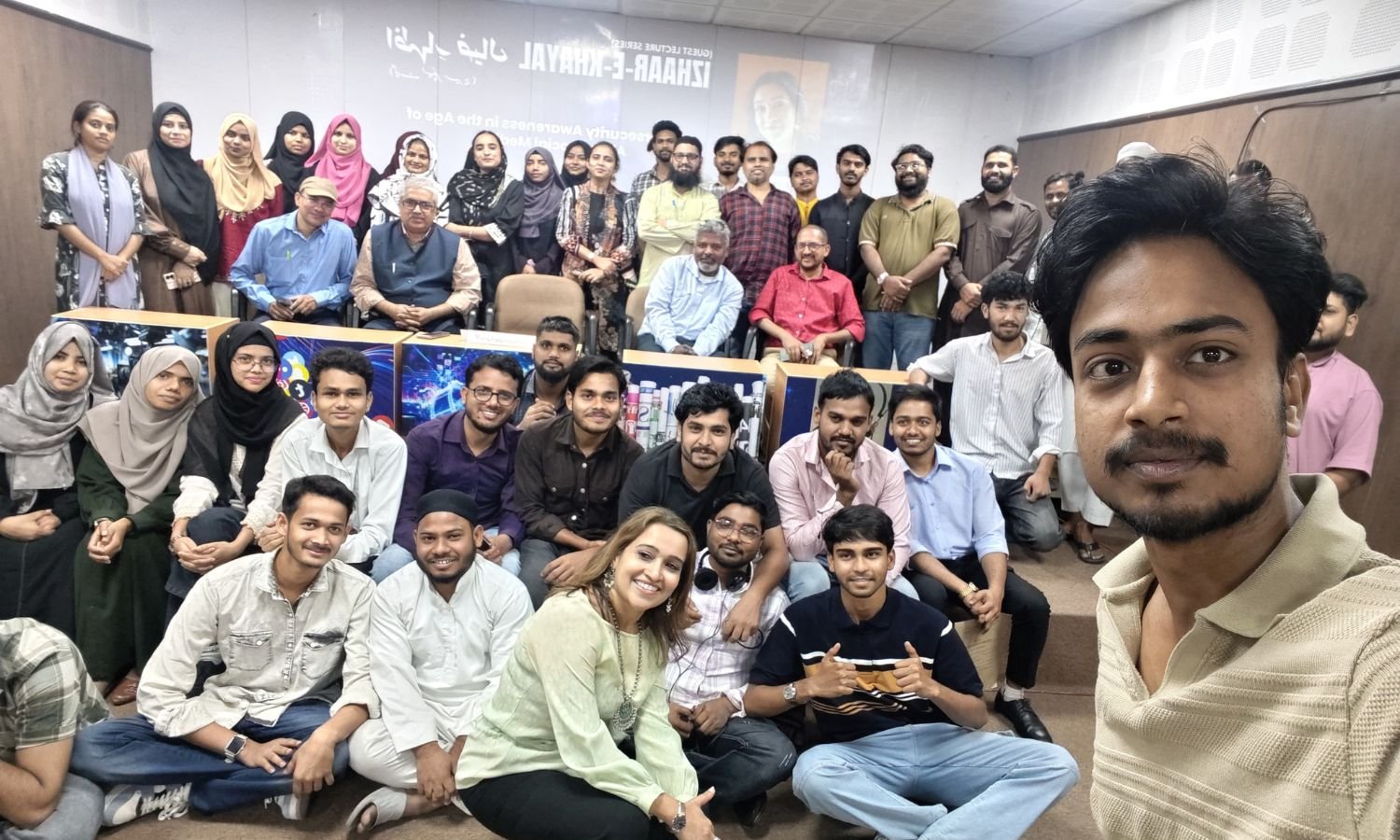
Hyderabad: Students from several institutions in Telangana completed the Gamified Cyber Security Training program. The Government of Telangana launched the initiative with US-based MASK NextGen. The program aims to improve digital awareness and cyber safety among young learners. It uses an interactive and technology-driven training model.
The initiative runs as a 36-hour certification course. Trainers deliver the course over three months. The program combines structured lessons with interactive activities. This approach makes cyber security education easier for students.
More than 100 students each from several institutions joined the first phase. Participants came from Little Flower Degree College in Uppal, the TMREIS girls’ school in Bahadurpura, and the College of Journalism at Maulana Azad National Urdu University.
Little Flower Degree College and TMREIS Bahadurpura hosted the three-month certification course. Meanwhile, the College of Journalism at MANUU held a one-day workshop under the Cyber Security and AI Internship.
Gamified Cyber Security Training Uses Stories and Games
The program stands out for its gamified learning model. Trainers explain cyber security topics through stories and interactive activities. Instead of traditional lectures, they use practical examples and real-life situations.
Students learn about online scams, cyberbullying, cyber threats, and AI ethics. Trainers also introduce characters such as Captain Fish Hook and TK Troll King. These characters help students understand online privacy, safe gaming habits, and digital hygiene.
MASK NextGen Founder and CEO Avni Trivedi interacted with students during the sessions. She also distributed certificates to participants.
During her visit, she met Minister for Minorities Welfare Mohammed Azharuddin. She also met Little Flower Degree College Director Rev. Bro. John Kallarackal and Prof. Ehtesham Ahmed Khan, Dean of Mass Communication and Journalism at MANUU.
They discussed plans to expand the initiative across more institutions in Telangana.
Avni Trivedi said the program helps students build cyber security awareness. It also encourages ethical responsibility and critical thinking in digital spaces.
Global partner Joseph Christopher said the initiative aims to build digital resilience among young learners.
In the next phase, MASK NextGen plans to provide free computers and laptops to several institutions. The move will allow more students to join the program.
