

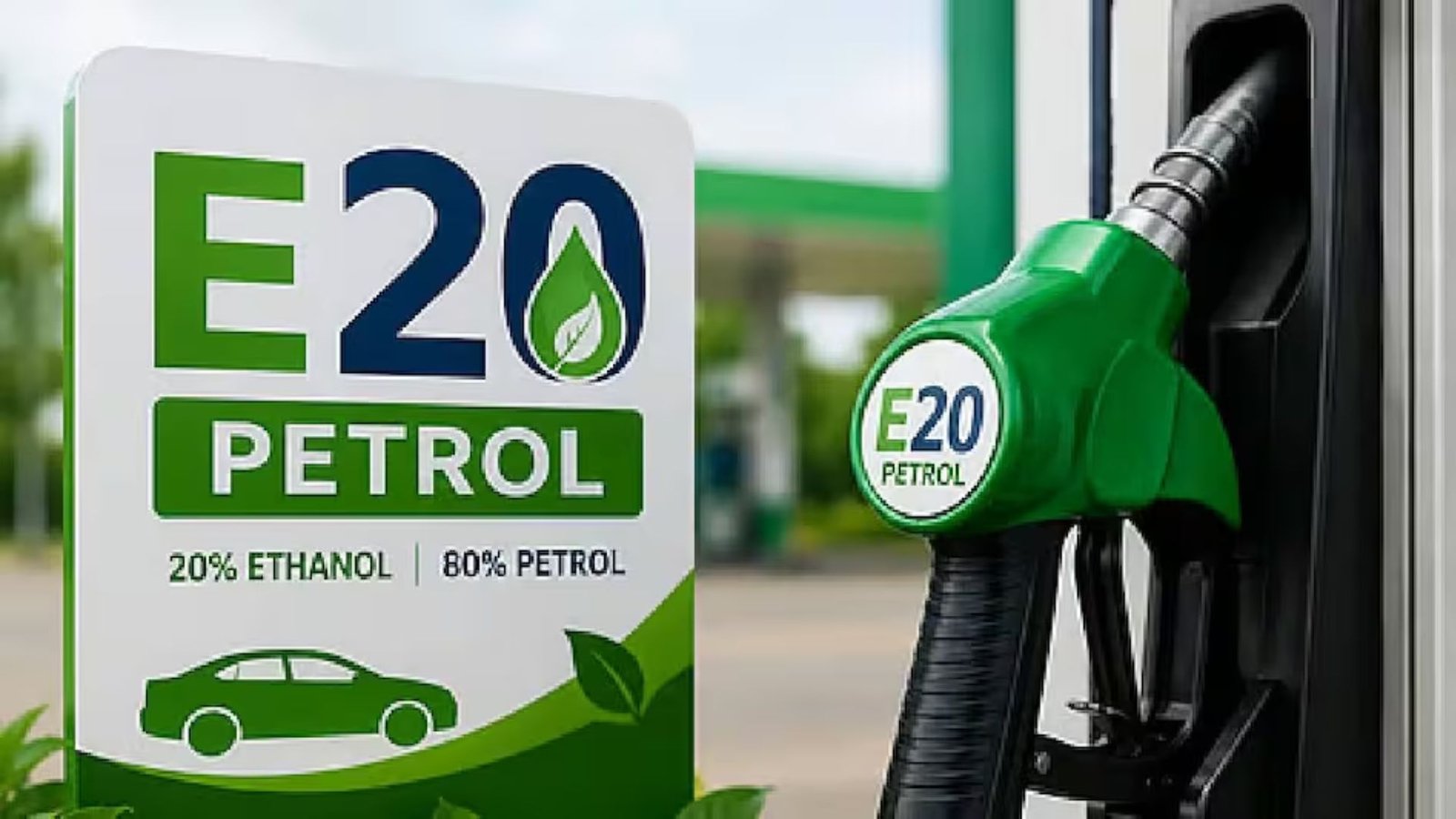
New Delhi: The ethanol blending programme has become a major pillar of India’s energy strategy, with the Government stating that it has reduced crude oil imports, strengthened energy security, increased farmer incomes and addressed concerns surrounding E20 fuel.
The Ministry of Petroleum and Natural Gas said ethanol blending increased from less than 1.5 per cent in 2013-14 to 20 per cent in 2025-26. India achieved the 20 per cent blending target five years ahead of schedule.
The Government said ethanol procurement increased from about 38 crore litres in the Ethanol Supply Year (ESY) 2013-14 to a projected 1,200 crore litres in 2025-26. Meanwhile, production capacity expanded from 421 crore litres in 2014 to nearly 2,000 crore litres in 2026.
According to the Ministry, the initiative has saved more than ₹1.90 lakh crore in foreign exchange since 2014-15. It also substituted over 310 lakh metric tonnes of crude oil and reduced carbon dioxide emissions by about 930 lakh metric tonnes. In addition, farmers earned more than ₹1.60 lakh crore through new market opportunities.
Ethanol blending programme addresses E20 concerns
The Government rejected several claims circulating about E20 fuel. It said there was no evidence that E20 reduced vehicle mileage by 30 per cent or caused widespread engine damage.
The Ministry said automobile manufacturers, the Automotive Research Association of India and Indian Oil Corporation tested E20 extensively before its rollout. It added that insurers and vehicle manufacturers continue to honour warranties for vehicles using specification-compliant E20 fuel.
The Government also clarified that ethanol is a high-octane fuel. It said E20 improves combustion in modern engines and supports smoother performance with lower emissions.
The Ministry dismissed claims that raw sugarcane juice is mixed directly with petrol. It explained that ethanol undergoes industrial fermentation and distillation before blending. It also said modern ethanol plants use only three to five litres of processed water for every litre of ethanol produced.
Industry leaders, including representatives from Toyota Kirloskar Motor, Maruti Suzuki, Hero MotoCorp and Engineers India Limited, said extensive testing and field data had confirmed the safety and reliability of E20 fuel.
The Ministry noted that countries such as the United States, Brazil, Japan, Canada and Thailand already use ethanol-blended fuel. It said the programme would continue supporting cleaner transport, renewable energy and a more self-reliant fuel ecosystem in India.
