

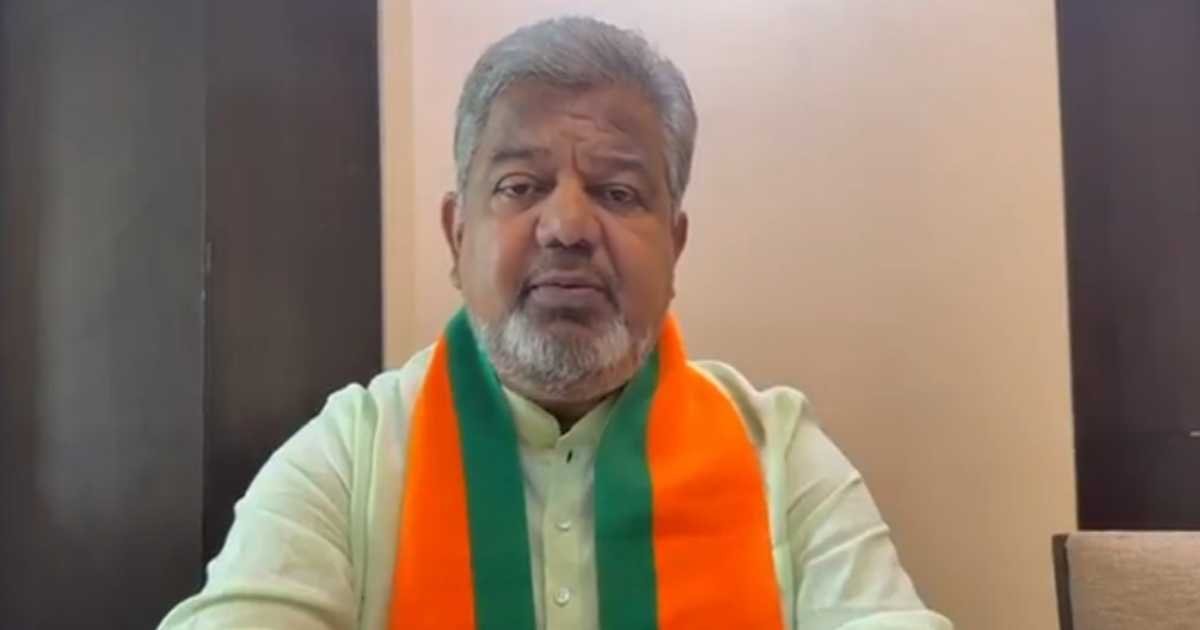
Hyderabad: BJP leader Gudur Narayana Reddy questioned Telangana’s El Niño preparedness after the State Assembly sought Central assistance over deficient rainfall. He alleged that political exchanges between the Congress and BRS were diverting attention from problems affecting nearly four crore people.
BJP raises questions over drought planning
Narayana Reddy reacted to the resolution adopted by the Telangana Legislative Assembly on September 18. The resolution sought Central assistance to address deficient rainfall in the State. He said the Congress government was shifting responsibility to the Narendra Modi-led government at the Centre instead of explaining its own response.
The BJP leader said the Congress and BRS had reduced Telangana’s governance and politics to disputes involving three or four political leaders. He argued that concerns affecting farmers, workers, students, women, businesses and other sections were being pushed aside.
He described the continuing exchanges between the Congress and BRS as “superficial politics”. According to him, public discussion had focused largely on Chief Minister A. Revanth Reddy, former Chief Minister K. Chandrashekar Rao and other senior leaders instead of issues directly affecting people.
Narayana Reddy said the two parties frequently exchanged charges over the previous BRS government and the present Congress government. However, he said such arguments offered little in terms of solutions to immediate problems.
“The political discourse is about who did what, who owns what and who should be blamed. But people want to know what the government is doing about water, crops, employment, power and their livelihoods,” he said.
The BJP leader said the El Niño situation required sustained administrative attention rather than political point-scoring. He alleged that the Congress government was using its confrontation with the BRS and criticism of the Centre to deflect scrutiny of its preparedness.
Narayana Reddy said the BJP had earlier warned that the El Niño situation could affect Telangana’s agriculture, water availability, power sector and wider economy. He recalled that he had called for an integrated water management strategy in July.
That proposal included maximum use of available Godavari and Krishna flows. He had also sought contingency planning for a prolonged dry spell.
Telangana received about 543 mm of rainfall between June 1 and mid-September, against normal rainfall of around 640 mm. Meanwhile, 19 of the State’s 33 districts recorded deficient rainfall.
Kharif cultivation also declined to 123.74 lakh acres from 139.29 lakh acres in the previous year. Narayana Reddy cited these figures while questioning the State’s response to the rainfall situation.
“The government had sufficient warning. The question is not whether El Niño exists. The question is what Telangana did with the warnings it received,” he said.
El Niño preparedness and the Assembly’s Central aid request
Narayana Reddy said the Assembly resolution itself showed the seriousness of the situation. It sought a Rs 20,000-crore special package from the Centre along with drought-related assistance.
The resolution also sought additional employment days, power and coal support, fertiliser and drip-irrigation assistance. In addition, it sought an increase in the State’s borrowing limit under the Fiscal Responsibility and Budget Management framework.
The BJP leader alleged that the resolution amounted to an acknowledgement that the State government had not adequately managed the situation with its existing plans and resources. He called for greater clarity on the State’s proposed response.
“If the State wants assistance from the Centre, it should clearly place before the people a comprehensive action plan explaining how much money is required, where it will be spent, how farmers will be protected, how drinking water will be secured and how the coming Yasangi season will be managed,” he said.
Narayana Reddy said seeking Central assistance during a difficult climatic situation was legitimate. At the same time, he argued that such assistance could not replace State-level planning.
The State government has said it began preparations in April after receiving weather warnings. A 27-member expert committee later recommended measures estimated at about Rs 803 crore.
The recommendations included support for micro-irrigation and drought-tolerant and short-duration seeds. They also covered alternative crops, fodder banks, cattle camps and contingency plans for areas where sowing could not be completed.
Narayana Reddy, however, asked the government to disclose the implementation status of these measures. He also sought details on their impact on the ground.
Water management and Yasangi concerns
The BJP leader renewed his demand for maximum use of available river flows. He also called for restoration and filling of tanks and reservoirs and stronger rainwater harvesting structures.
His proposed approach covered drinking water, agriculture, irrigation, industry and power requirements. He called for a coordinated strategy across these areas as the State dealt with the rainfall shortfall.
Narayana Reddy had also urged the government in July to continuously pump Godavari water whenever river levels permitted. He had called for maximum storage in reservoirs and tanks and sought action on issues concerning the Medigadda barrage.
He had further urged the government to operate available pumping infrastructure wherever technically feasible. These measures, he said, were needed as part of the State’s response to the developing water situation.
The BJP leader said the situation could also affect the coming Yasangi season. Low reservoir levels and greater dependence on groundwater, he said, could place additional pressure on farmers and the power system.
Narayana Reddy again criticised the political exchanges between the Congress and BRS. He said the focus should remain on water, agriculture, employment and the State economy.
“People are not interested in an endless Congress-BRS war of words. Farmers want water, people want drinking water, rural workers need employment and the State needs a plan to protect its economy. Governance should revolve around the problems of four crore people, not the politics of three or four individuals,” Narayana Reddy said.
