

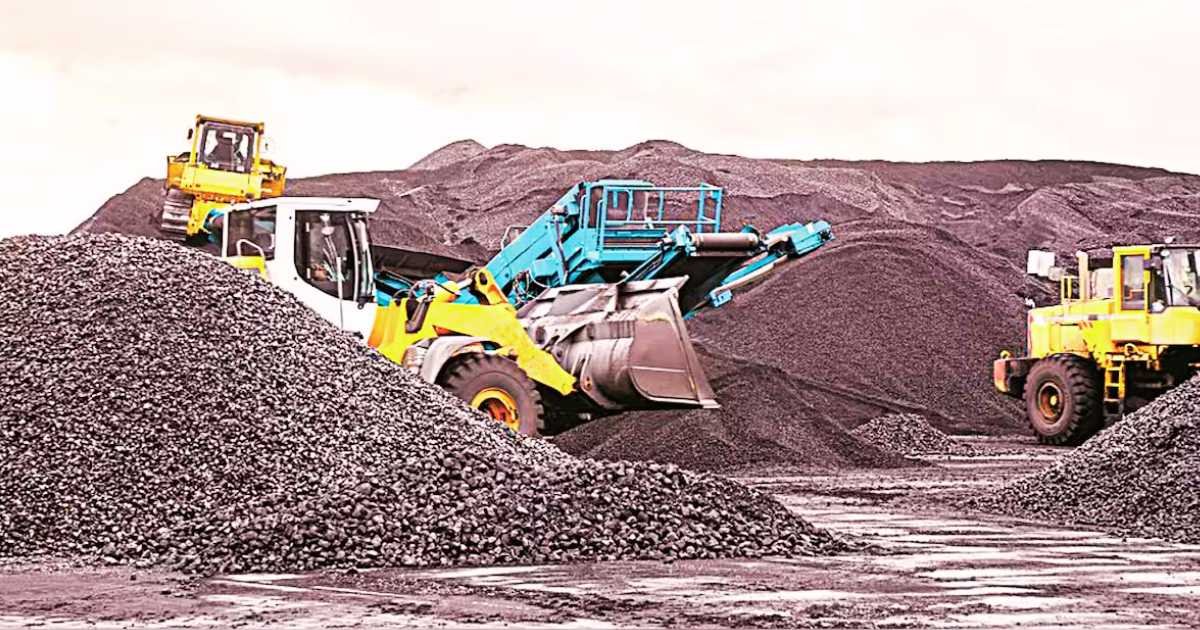
New Delhi: CCL transformation since 2014 raised Central Coalfields Limited’s coal production, mining capacity and rail connectivity while expanding technology use and community development. The Coal India subsidiary also strengthened renewable energy, environmental management and its financial position during the period.
CCL operates in the coalfields of Jharkhand and has expanded its production capacity through new mines and expansion projects. Its coal output rose from 50.0 million tonnes (MT) in FY 2013-14 to 87.5 MT in FY 2024-25, the company’s highest production level.
The increase represented nearly 75% growth over the period. New mining projects included Amrapali, with 35 MTY capacity, Magadh with 51 MTY, Chandragupta OCP with 15 MTY and Kotre Basantpur Pachmo with 5 MTY.
CCL also expanded existing mines such as Karo, Konar and North Urimari. Several other new mines and expansion projects remained in the pipeline to further increase production capacity.
Higher output also required stronger coal evacuation systems. CCL therefore invested in railway connectivity, Coal Handling Plants, silos, rapid loading systems and First Mile Connectivity projects to move coal to consumers more efficiently.
CCL transformation expands rail and coal evacuation
The Tori-Shivpur rail corridor remained a key link for the North Karanpura coalfields. Its three-line corridor had the capacity to transport around 100 MT of coal annually.
CCL also developed Coal Handling Plants and First Mile Connectivity projects to support more sustainable coal transportation. The 7.5 MTY North Urimari CHP had already been commissioned.
Major CHP projects under development included Konar with 5 MTY capacity, KDH-Purnadih with 7.5 MTY, Amrapali with 25 MTY, Karo with 7 MTY and Magadh with 51 MTY. These systems aimed to reduce dependence on road transport, improve loading efficiency and enable direct rail evacuation.
Coking coal also received greater attention because of its importance to India’s steel sector. CCL began developing five new coking coal washeries with a combined capacity of 14.50 million tonnes per year.
The company also adopted emerging technologies for operational monitoring and management. Its AI-enabled Integrated Command and Control Centre strengthened security, surveillance and operational oversight across its command areas.
The centre integrated modern technologies for real-time monitoring and more effective decision-making. This technology adoption formed another part of CCL’s broader operational changes since 2014.
CCL also increased its focus on renewable energy and energy conservation. The company currently had more than 32 MW of installed solar capacity, including three ground-mounted projects with a combined capacity of 29 MW.
A 100 MW solar power project was coming up in Giridih district along with a Battery Energy Storage System. These projects were intended to increase renewable energy use, reduce emissions and support CCL’s Net Zero commitment.
CCL also adopted modern and environment-friendly mining technologies. Surface miners and continuous miners enabled blast-free mining, while the company pursued scientific restoration of overburden dumps, rainwater harvesting, plantation and mine reclamation.
Before 2014, surface miners and continuous miners accounted for zero production. Their share had since increased to nearly 70%.
The company also used surplus mine water for local communities. This approach turned a mining-related resource into a means of supporting community development.
CCL transformation strengthens finances and community programmes
CCL’s financial position also improved during the period. Profit After Tax rose from ₹808 crore in FY 2017-18 to ₹4,035 crore in FY 2024-25.
Net worth increased from ₹3,816 crore to ₹16,464 crore during the same period. These changes accompanied the company’s expansion in production, infrastructure and technology.
The social dimension of CCL transformation was also reflected in its corporate social responsibility programmes. CSR activities expanded from basic infrastructure, drinking water, healthcare and education to larger interventions focused on sustainable social assets and opportunities.
In FY 2025-26, CCL reported CSR expenditure of approximately ₹86 crore against a target of about ₹74 crore. The company’s CCL Ke Lal & CCL Ki Laadli programme remained one of its distinctive initiatives.
The programme provided talented students from underprivileged backgrounds with free residential schooling and engineering entrance coaching. It selected 40 students each year, including 20 boys and 20 girls.
Students from rural and mining-affected communities received support to pursue higher education at institutions such as IITs, NITs and other leading engineering institutions. The initiative therefore linked community development with educational opportunities.
CCL’s Sports Academy at Khelgaon, Ranchi, represented another major social initiative. CCL established the academy through a partnership with the Government of Jharkhand using infrastructure created for the 34th National Games.
The Jharkhand State Sports Promotion Society operated the academy. It provided young athletes with structured sports opportunities along with education and life-skills support.
Athletes from the academy were winning national and international medals. The source also stated that the initiative had won the National CSR Award twice.
CCL’s transformation since 2014 therefore extended beyond increased coal output. The company expanded mining capacity, mechanised coal evacuation, strengthened rail connectivity and adopted renewable energy and modern environmental practices.
Its financial position also strengthened while its CSR initiatives expanded into education, sports and community development. The rise from around 50 MT to 87.5 MT formed one part of this wider change.
The company’s experience also included new mining capacity, modern evacuation infrastructure, integrated CHP and rail systems, renewable energy adoption and productivity improvements. Community programmes such as CCL Ke Lal & CCL Ki Laadli and the Khelgaon Sports Academy formed another part of this development.
