

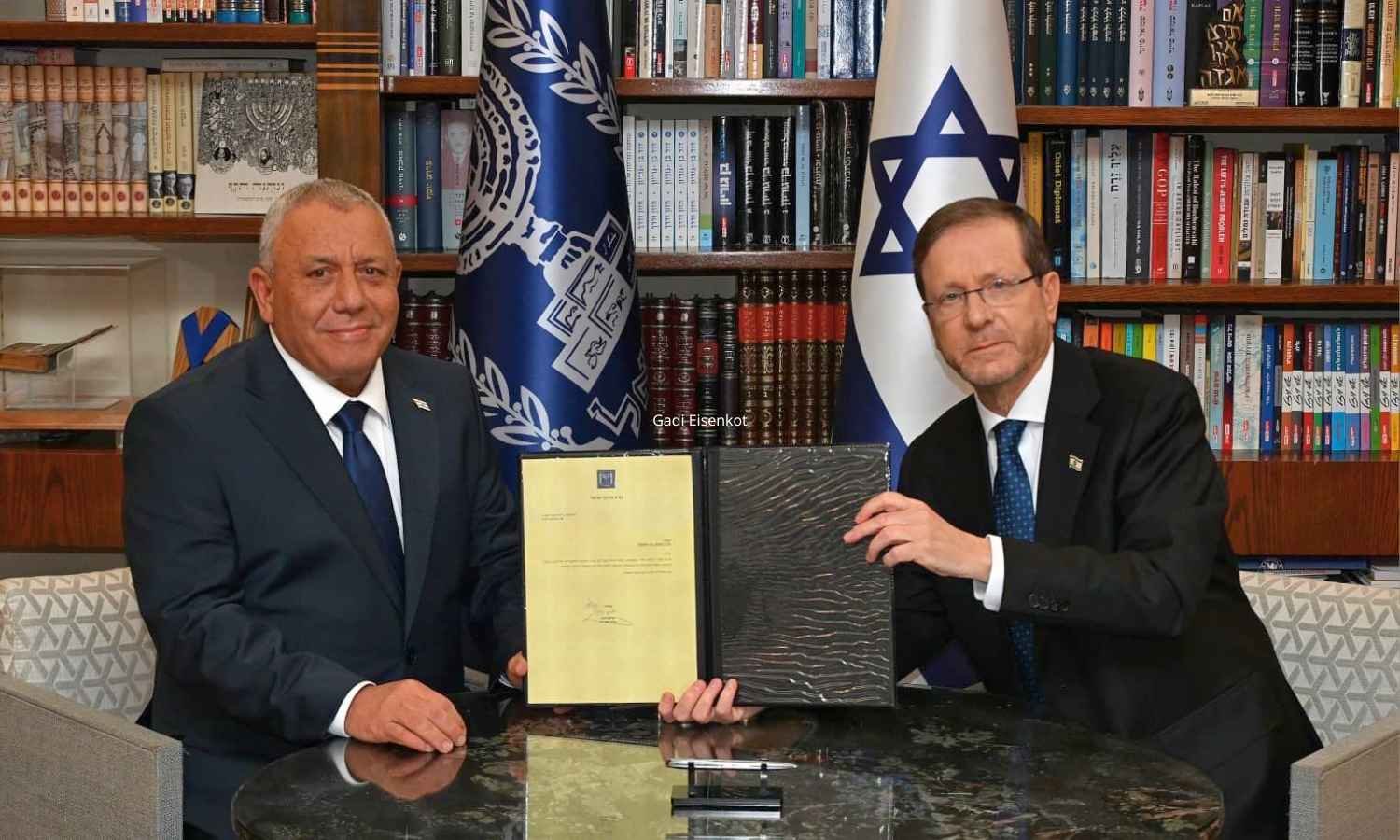
Jerusalem: Gadi Eisenkot on Monday reached out to ultra-Orthodox parties in his bid to form Israel’s next government. The former army chief received the presidential mandate on Sunday. However, both religious parties have long backed Benjamin Netanyahu. Eisenkot now needs 13 more seats, and he wants to find them without relying on Arab parties.
President Isaac Herzog gave Eisenkot the task after 67 lawmakers recommended him. Netanyahu received 46 recommendations. Eisenkot’s four-party alliance, however, holds only 48 seats. Arab-led parties won a record 19 seats and backed his nomination. Yet several of his potential partners reject a government that depends on Arab votes.
Eisenkot has therefore turned to Shas and United Torah Judaism (UTJ). Both parties usually sit in Netanyahu’s right-wing bloc, which lost its majority in the 27 October election. As a first step, Eisenkot’s Yashar party reportedly asked the two parties to help replace the Knesset Speaker. That request offers an early test of cooperation across blocs before any coalition takes shape.
Avigdor Lieberman’s shift has also drawn attention. The Yisrael Beitenu leader has long opposed religious exemptions from military service. Now, however, he has reportedly signalled that he would work with the ultra-Orthodox parties. In his view, only tough compromises can break the deadlock and end Netanyahu’s rule. Eisenkot struck a similar note on Sunday. He said parties might have to drop some campaign pledges to build a stable government. He also called for a national emergency government.
Conscription test for Eisenkot and ultra-Orthodox parties
Conscription remains the main hurdle. Eisenkot has repeatedly promised mandatory military or national service for every citizen. Ultra-Orthodox leaders, on the other hand, reject compulsory enlistment for full-time religious students. Reports suggest UTJ could move first and give Shas political cover. So far, though, neither party has confirmed any deal.
Eisenkot has also set four conditions for partners. They must recognise Israel as a Jewish and democratic state and accept its Declaration of Independence. In addition, they must support universal national service. Finally, they must commit to dismantling Hamas as a military and governing force.
Meanwhile, Netanyahu continues to push for a unity government of Zionist parties. He also rejects any arrangement that rests on Arab parties. His Likud remains the largest single party with 27 seats, while his wider bloc holds 53.
Members of the new Knesset will take their oath on Tuesday, 10 November. The contest for Speaker should give the first public sign of whether parties outside Netanyahu’s bloc can work together. Eisenkot has 28 days to form a government and may get a 14-day extension. Should he fail, the president can ask another lawmaker to try.
In the end, everything turns on one question. Can Eisenkot reconcile universal service with the demands of the religious parties? The answer will decide whether Israel gets a new government or returns to a long stalemate.
