

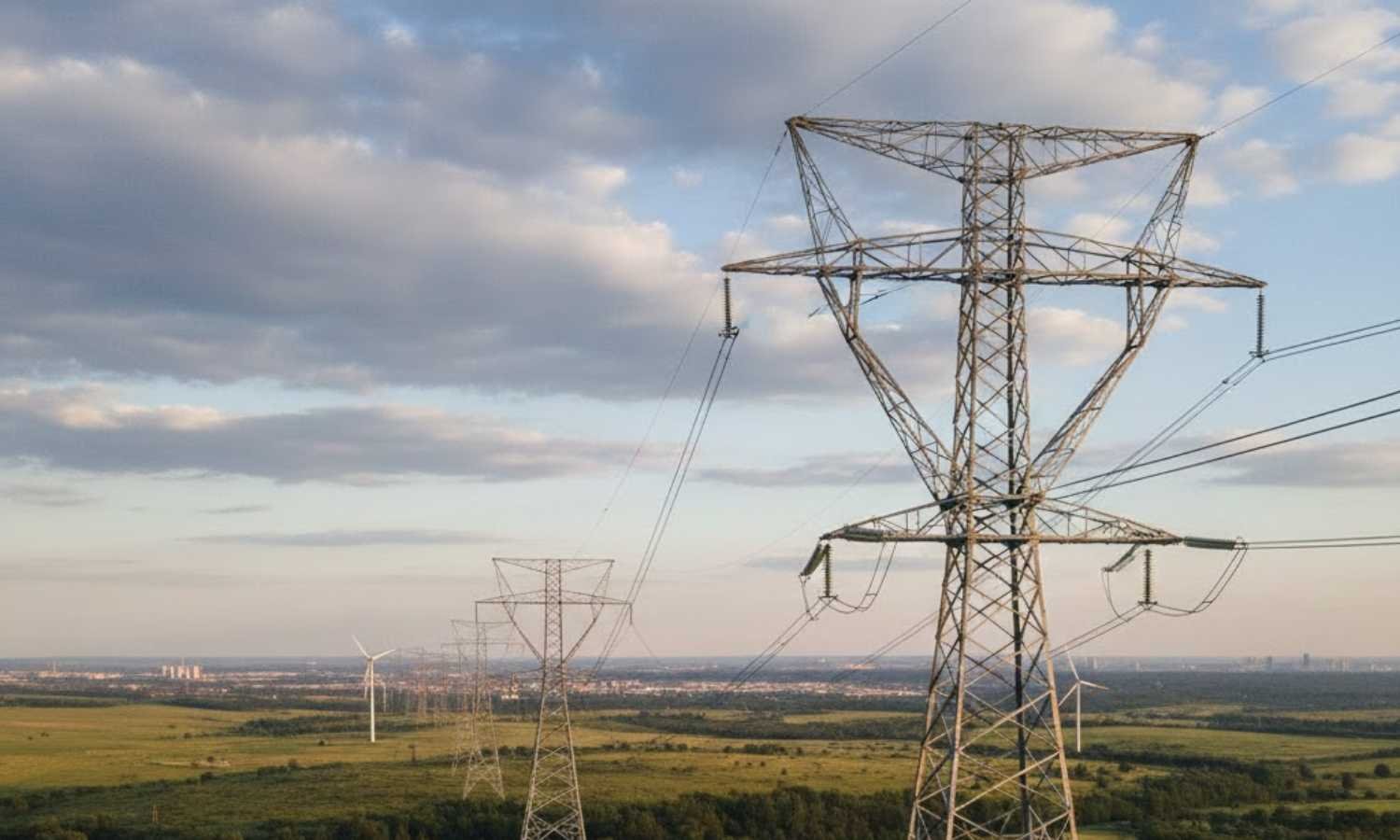
New Delhi: India’s power transmission network crossed the milestone of 5 lakh circuit kilometres, marking a major expansion of the national electricity grid, the Union government said on Thursday.
The network achieved the landmark on January 14, 2026, after authorities commissioned a 765 kV transmission line from Bhadla II to Sikar II in Rajasthan. The line enables evacuation of renewable power from the Rajasthan Renewable Energy Zone.
With this addition, India now operates over 5 lakh circuit kilometres of transmission lines of 220 kV and above. The grid also has a transformation capacity of 1,407 GVA at the same voltage level.
The newly commissioned line allows evacuation of an additional 1,100 MW of power. This electricity comes from the Bhadla, Ramgarh and Fatehgarh solar power complexes.
Since April 2014, the power transmission network has expanded by 71.6%. During this period, authorities added 2.09 lakh circuit kilometres of high-voltage lines and increased transformation capacity by 876 GVA.
Transmission expansion to support renewable energy targets
Officials said the inter-regional power transfer capacity now stood at 1,20,340 MW. As a result, the grid enables seamless electricity flow across regions and supports the vision of “One Nation – One Grid – One Frequency.”
Several transmission projects are currently under implementation to further strengthen the system. Inter-State Transmission projects will add about 40,000 circuit kilometres of lines and 399 GVA of transformation capacity.
In addition, Intra-State Transmission projects will contribute another 27,500 circuit kilometres and 134 GVA of capacity. Together, these projects will improve grid reliability and power evacuation.
Officials said the expanded power transmission network will help evacuate rising non-fossil power generation. India has set a target of achieving 500 GW of non-fossil energy capacity by 2030.
The government said the 5 lakh circuit kilometre milestone reflected sustained efforts to ensure reliable, affordable and secure electricity supply. It also underlined the focus on rapid renewable energy integration.
