

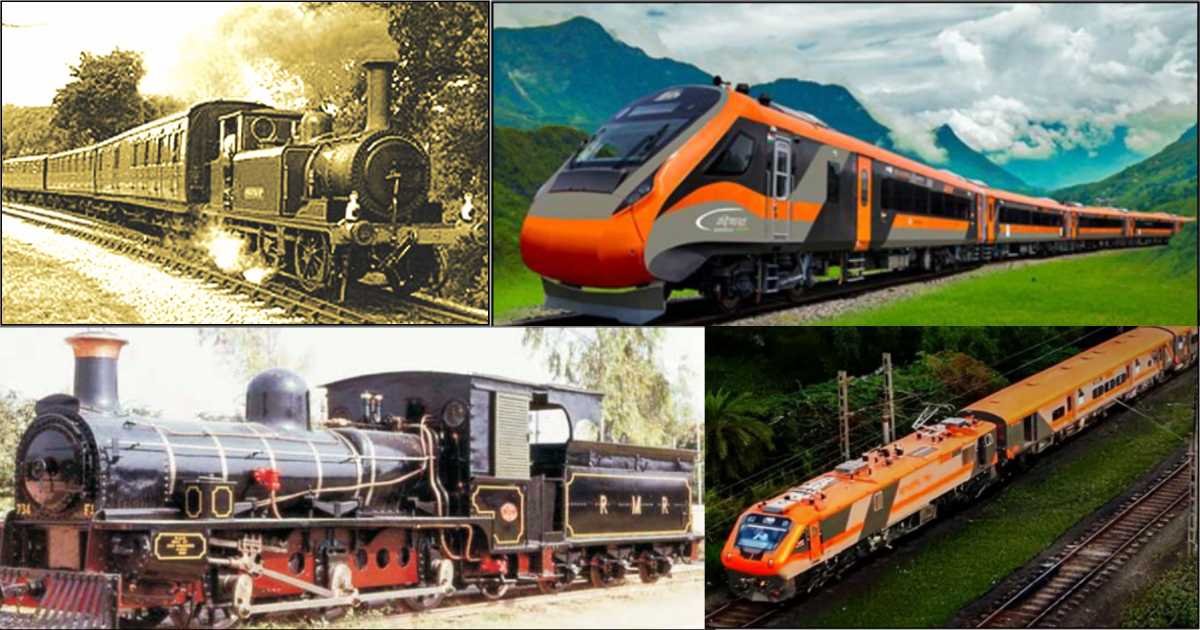
New Delhi: Indian Railways evolution marked 173 years of growth, with the network achieving near-total electrification and expanding modern services.
Officials said the journey began on April 16, 1853, when the first passenger train ran between Bombay and Thane. Since then, the network has grown into one of the largest railway systems globally.
Today, Indian Railways operates about 25,000 trains daily. It transported around 741 crore passengers in 2025–26, reflecting its vast reach and scale.
Moreover, electrification has reached 99.6% of the broad gauge network as of March 2026. This shift has improved efficiency, reduced diesel use, and lowered costs.
Railways also reported freight movement of 1,670 million tonnes during the year. Revenue reached about ₹80,000 crore, underlining its role in economic growth.
Indian Railways evolution drives modern technology adoption
The Indian Railways evolution has accelerated with the adoption of modern systems. Kavach safety technology has been deployed over 3,100 route kilometres, with further expansion underway.
In addition, the network has strengthened digital infrastructure across stations. Systems like real-time passenger information and AI-based surveillance have improved operations and safety.
Passenger services have also expanded with new trains. Vande Bharat Express has carried over 9.1 crore passengers since its launch. Meanwhile, Amrit Bharat Express provides affordable travel options.
Further, track upgrades have enabled higher speeds across more than 85,000 kilometres. Electrification has also saved significant fuel and reduced environmental impact.
The government has also prioritised high-speed rail corridors. Projects like the Mumbai–Ahmedabad corridor aim to transform inter-city travel with speeds up to 320 kmph.
Officials said Indian Railways evolution reflects continuous modernisation. They added that the network will remain central to connectivity, logistics, and national development.
