

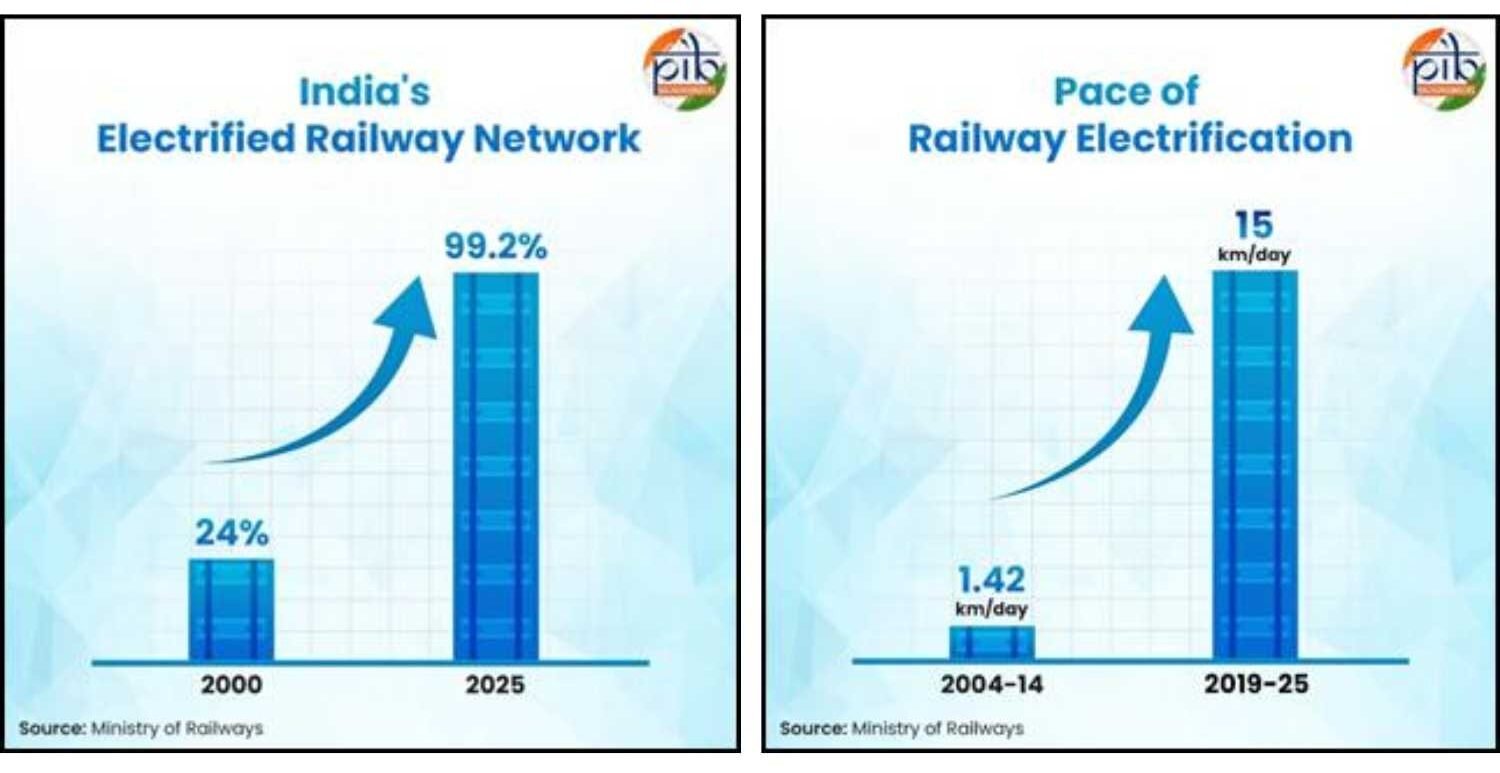
New Delhi: Indian Railways had electrified about 99.2% of its broad gauge network by November 2025, placing it among the world’s most extensively electrified railway systems and bringing Mission 100% Electrification close to completion.
According to official data, electrification now covers 69,427 route kilometres out of a total 70,001 route kilometres of the broad gauge network. The remaining 574 route kilometres, accounting for just 0.8%, are spread across five states, including Assam, Karnataka, Tamil Nadu, Rajasthan and Goa.
The pace of railway electrification has accelerated sharply over the past decade. Between 2004 and 2014, Indian Railways electrified an average of 1.42 kilometres per day. This rose to over 15 kilometres per day between 2019 and 2025, reflecting a major push towards modernisation and cleaner operations.
Railway electrification in India began in 1925 with the first electric train running between Bombay Victoria Terminus and Kurla Harbour. Progress remained slow for several decades, with only 388 route kilometres electrified at the time of Independence. However, electrified track share increased steadily from 24% in 2000 to over 96% by the end of 2024.
Solar power strengthens railway electrification drive
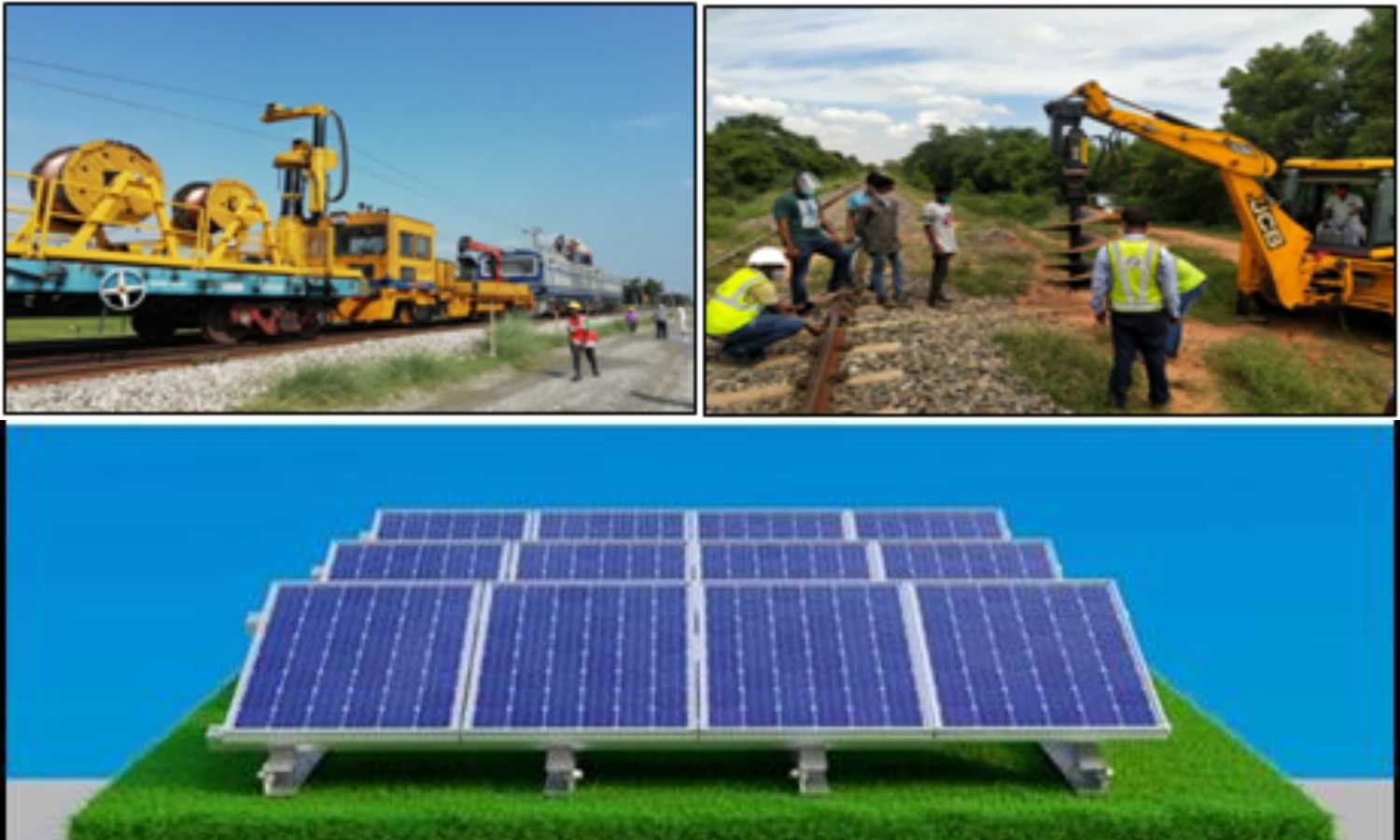
Indian Railways has also expanded the use of renewable energy to support railway electrification. As of November 2025, solar power capacity across the railway network stood at 898 MW, up from just 3.68 MW in 2014. Of this, around 629 MW is used directly for train traction, while the remaining capacity meets non-traction needs such as station lighting, workshops and railway quarters.
Solar installations now cover 2,626 railway stations, reducing dependence on conventional power sources and lowering operating costs. Officials said electric traction is about 70% more economical than diesel and significantly reduces emissions.
Indian Railways has adopted mechanised construction methods to speed up electrification. These include cylindrical mechanised foundations for overhead equipment and automatic wiring trains that install catenary and contact wires with precise tension control.
Globally, India’s electrification level compares favourably with major railway systems. According to international data, countries such as China, Japan and France have electrified between 60% and 82% of their networks, while India has crossed the 99% mark.
Officials said the near-completion of electrification would improve efficiency, enhance energy security and support India’s broader goals of sustainable and low-carbon transport.
