

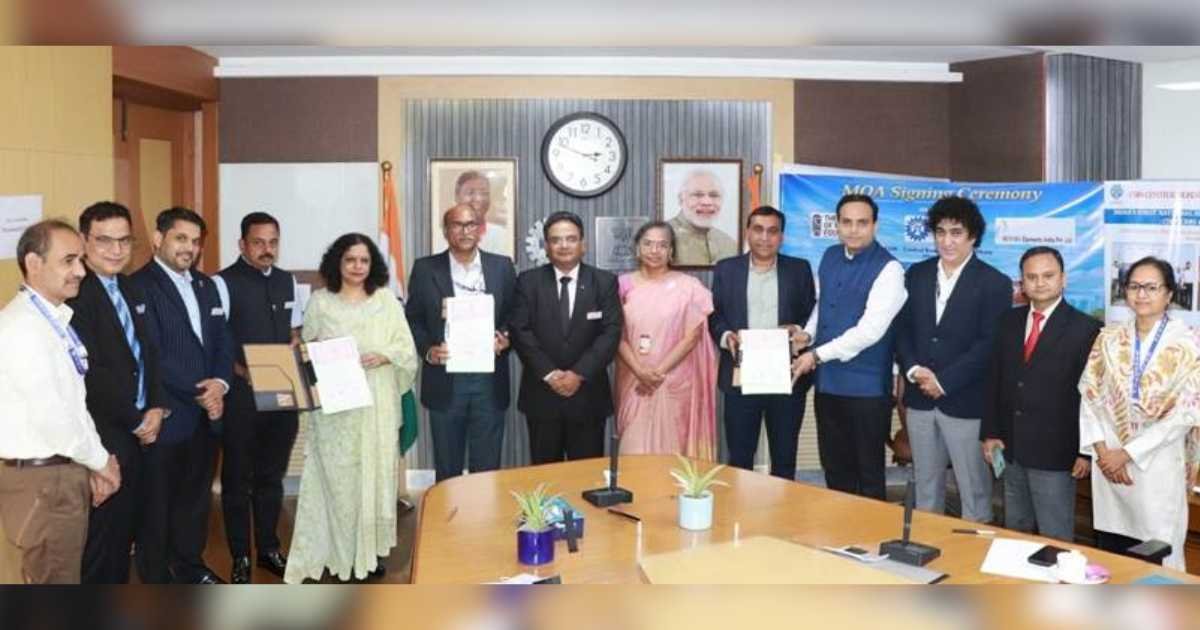
New Delhi: India is advancing its sustainability goals through industrial waste road construction, as government-backed institutions promote the use of foundry waste in infrastructure projects. This initiative supports the country’s broader circular economy vision.
At a recent event in New Delhi, Dr. N. Kalaiselvi highlighted the importance of converting industrial by-products into valuable resources. She stated that such efforts reflect a strong commitment to sustainable development.
Collaboration to reuse foundry waste
The initiative brings together CSIR-Central Road Research Institute, Institute of Indian Foundrymen, and Suyog Elements India Pvt Ltd. Together, they aim to develop scalable solutions for using Waste Foundry Sand (WFS) in road construction.
Moreover, the project focuses on the Coimbatore foundry cluster, which generates large quantities of industrial waste. By reusing this material, the collaboration seeks to address disposal challenges effectively.
Sustainable infrastructure and innovation
Experts emphasised that industrial waste road construction can significantly reduce dependence on natural aggregates. In addition, it promotes environmentally friendly practices in infrastructure development.
Dr. Ch. Ravi Sekhar noted that the institute continues to lead in developing innovative road technologies. He added that using foundry sand marks a major step toward sustainable construction.
Addressing environmental challenges
Waste Foundry Sand, a by-product of the metal casting industry, often creates disposal and environmental issues. However, its reuse in road building offers a practical solution.
According to Sushil Sharma, the Coimbatore cluster includes nearly 800–1000 foundry units. Therefore, scientific reuse of waste can transform a major environmental challenge into an infrastructure opportunity.
Research-driven implementation
The project includes detailed research on different types of foundry sand. Satish Pandey explained that scientists will develop customised processing methods for effective utilisation in roads.
Furthermore, the initiative aims to replicate successful models like steel slag road technology. This approach ensures that innovation remains practical and scalable.
Boost to circular economy vision
The industrial waste road construction initiative is expected to deliver multiple benefits. It will promote sustainable practices, improve waste management, and support green infrastructure growth.
Additionally, the collaboration strengthens industry-research partnerships. With scientific validation and industry support, the project is likely to accelerate adoption across India.
Overall, the initiative reflects a forward-looking approach to infrastructure development. By turning waste into valuable resources, India continues to move closer to its circular economy goals.
