

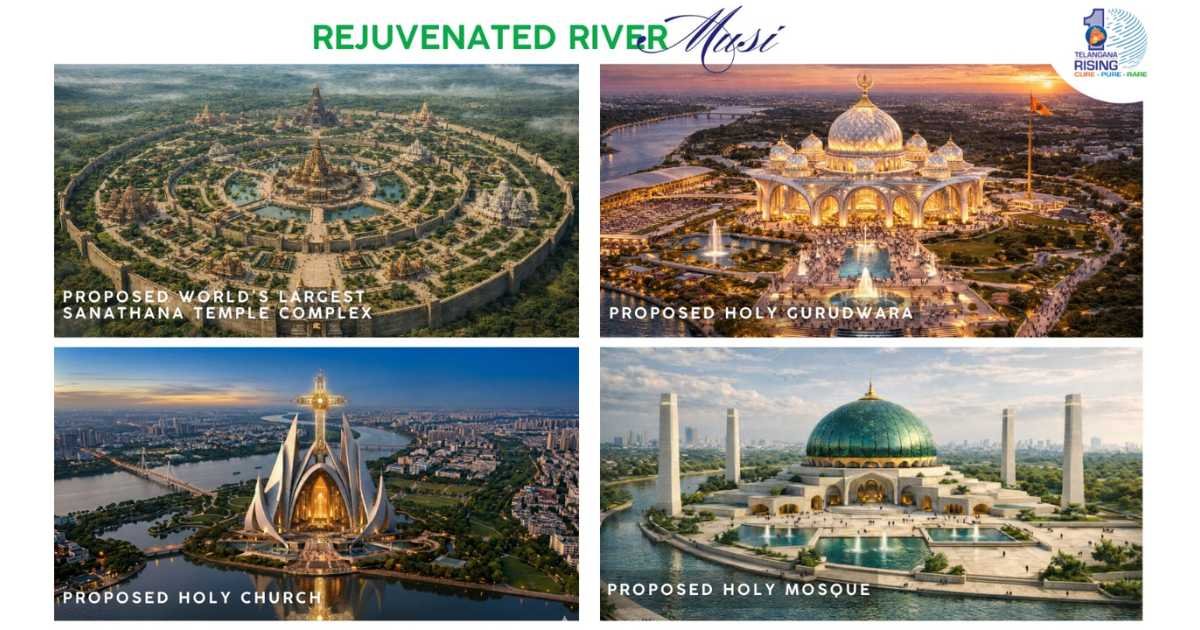
Hyderabad: In a major step toward integrating heritage with urban development, the Telangana government has unveiled an ambitious Musi Riverfront temple project aimed at transforming the river into a cultural and spiritual corridor. Anchored by a grand temple complex at Manchirevula, the initiative revives traditions that date back over 1,400 years.
The project centers on the redevelopment of the historic Sri Machileshwara and Sri Omkareshwara Swamy temples. These sites, deeply rooted in Shaivite traditions, are being reimagined as a prominent spiritual-tourism destination. The plan includes iconic temple architecture, a towering Shiva statue, and modern amenities designed to accommodate both devotees and visitors.
Musi Riverfront temple project blends heritage revival with modern infrastructure
The Musi Riverfront temple project is envisioned as more than a restoration effort. It seeks to reconnect Hyderabad with its civilizational roots while integrating contemporary urban features. As part of this transformation, the riverfront will include landscaped parks, promenades, boating facilities, and pedestrian-friendly zones.
In addition, the project reflects India’s pluralistic ethos. Plans include the construction of a mosque near Puranapul, a gurudwara at Gowliguda inspired by the Golden Temple, and a church at Nagole. These landmarks aim to create a shared sacred space where multiple faiths coexist.
The initiative is being spearheaded by A. Revanth Reddy, who has emphasized the integration of river rejuvenation with world-class infrastructure. River cleaning and environmental sustainability are key components of the broader plan.
Moreover, improved connectivity through major roads and the Outer Ring Road is expected to enhance accessibility. Public-private investments are also set to play a crucial role in boosting tourism and economic activity.
Overall, the Musi Riverfront temple project represents a comprehensive vision where heritage, spirituality, and modernity converge along the riverbanks of Hyderabad.
