

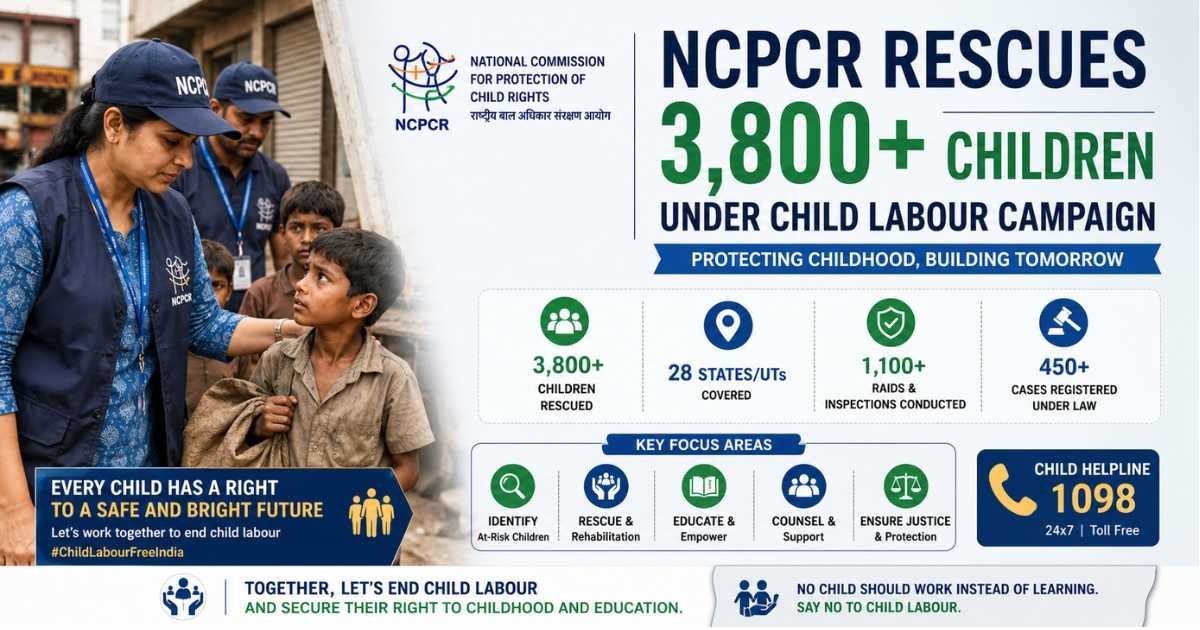
New Delhi: The child labour campaign by NCPCR rescued over 3,800 children across India and led to more than 575 FIRs.
The National Commission for Protection of Child Rights (NCPCR) launched the special campaign on June 12, 2026. The campaign continued until August 31.
NCPCR worked with State Governments and Union Territory administrations during the drive. It also coordinated with District Magistrates, Labour Departments and police authorities.
The campaign focused on identifying children involved in child labour. It also targeted children vulnerable to trafficking, exploitation and related risks.
NCPCR asked authorities to intensify rescue operations at child labour and trafficking hotspots. The Commission also sought regular updates from States and UTs.
These reports covered several stages of action. They included the number of children rescued, FIRs registered and rehabilitation measures. Authorities also reported on restoration, education and compensation.
The Commission monitored the campaign through meetings with district administrations. These meetings helped officials review rescue operations and address field-level problems.
They also focused on timely submission of Action Taken Reports. In addition, NCPCR sought stronger coordination among departments and agencies involved in child protection.
The child labour campaign also included public awareness efforts. NCPCR used social media and other communication platforms to spread information about the drive.
The outreach highlighted ways to report child labour cases. It also stressed the need for rehabilitation after rescue.
Child labour campaign strengthens rehabilitation efforts
NCPCR placed educational mainstreaming among the key follow-up measures. The approach aimed to help rescued children return to education after their removal from unsafe work.
The child labour campaign also sought sustained action rather than one-time rescue operations. Therefore, officials tracked rehabilitation and other steps after children were rescued.
NCPCR coordinated its work with State and district authorities throughout the campaign. This joint approach helped officials identify rescue locations and strengthen field-level action.
The Commission also monitored the response from authorities. As a result, the campaign recorded more than 3,800 child rescues across the country.
Officials registered over 575 FIRs during the campaign. The cases reflected the enforcement action taken alongside rescue and rehabilitation efforts.
NCPCR said proactive monitoring helped sustain the campaign. The Commission worked with State authorities to strengthen the identification and rescue of children engaged in child labour.
The campaign also addressed children facing possible trafficking and exploitation. By involving multiple departments, the Commission aimed to improve coordination during rescue operations and follow-up care.
The special drive ended on August 31, but the campaign’s reported actions covered rescue, legal action and rehabilitation. These measures formed part of the wider child protection effort led by NCPCR.
The Commission is a statutory body under the Ministry of Women and Child Development. Its role includes protecting the rights and welfare of children across India.
The latest campaign figures underline the scale of coordinated action against child labour. They also highlight the importance of continued rehabilitation, education and legal follow-up after rescue.
