
Commerce Department and EEPC India chart US$250 billion engineering exports plan

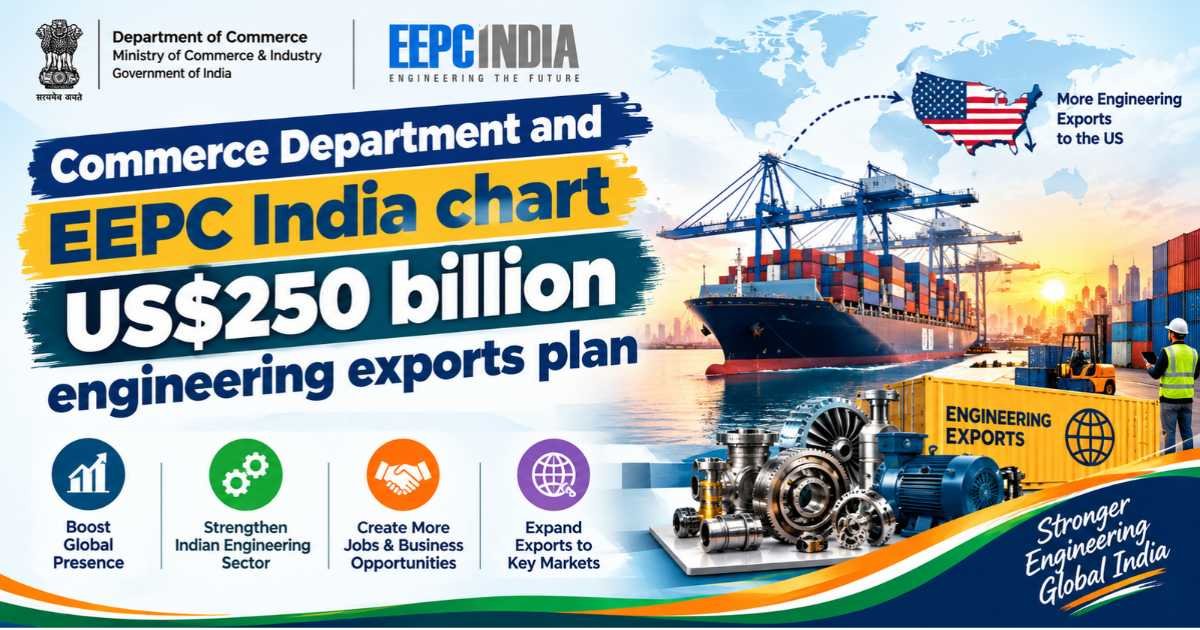
New Delhi: The Department of Commerce and EEPC India held a Chintan Shivir for the engineering sector on Friday to chart a strategy for US$250 billion in total engineering goods exports by 2030. EEPC India is the apex engineering exports promotion body. The brainstorming sessions also aimed to deepen market access through better use of free trade pacts. They further sought to improve the sector’s global competitiveness by securing long-term availability of key raw materials.
Top policymakers, industry leaders, sector experts and other stakeholders took part in the sessions. Discussions highlighted concerns about the availability of quality raw materials at competitive prices. Participants also stressed the need for a resilient, competitive supply chain to support long-term growth. They noted that volatile input costs, supply-chain disruptions, global overcapacity and trade-protective measures can hurt the competitiveness of Indian engineering exports.
In his keynote address, Commerce Secretary Rajesh Agrawal highlighted the resilience of India’s exports amid global uncertainties. India’s total merchandise and services exports grew 14 per cent year-on-year to US$476.20 billion during April–September 2026–27. During the same six months, engineering exports crossed US$70 billion. That marked nearly 20 per cent growth over the corresponding period of the previous year.
Agrawal also pointed to the potential to raise India’s share in global merchandise exports from approximately 2 per cent to 15–20 per cent. He stressed the need to leverage the country’s competitive advantages. Addressing emerging challenges, he cited Quality Control Orders (QCOs), sustainability-related trade measures and climate-linked requirements that affect market access. He emphasised the need for ambitious export targets to drive growth and strengthen global competitiveness.
Joint Secretary asks EEPC India to aim higher
Agrawal further stressed industry-wide collaboration to tackle common challenges and find practical solutions. He encouraged stakeholders to adopt relevant global best practices to strengthen India’s manufacturing ecosystem and enhance engineering export potential.
Joint Secretary Vimal Anand underscored the sector’s promising export performance. He called on EEPC India to revisit its ambition and aim for US$300 billion in engineering exports by 2030. With sustained efforts and continued industry–government collaboration, engineering exports could potentially reach that level, he observed.
Anand also asked EEPC India to prepare a comprehensive white paper on QCOs that apply to the engineering sector. It should examine the sectors and products covered, the rationale for introducing the orders and their impact on industry. Such a study would support a more nuanced, evidence-based understanding of what QCOs mean for the sector, he said.
He also urged EEPC India to seek feedback actively from members across all its engineering panels. This would ensure that the challenges and concerns of different segments are fully captured and represented in policy discussions.
EEPC India Chairman Pankaj Chadha expressed confidence that India’s engineering sector will keep scaling new heights through closer industry–government collaboration. “We are very much on track to surpass export numbers of the previous financial year,” he said. He added that the medium- and long-term growth outlook remains positive. Engineering exports are expected to cross US$140 billion in the current financial year, he said.
