
Rahul Gandhi alleges BJP plans to redraw electoral map through 850-seat Lok Sabha

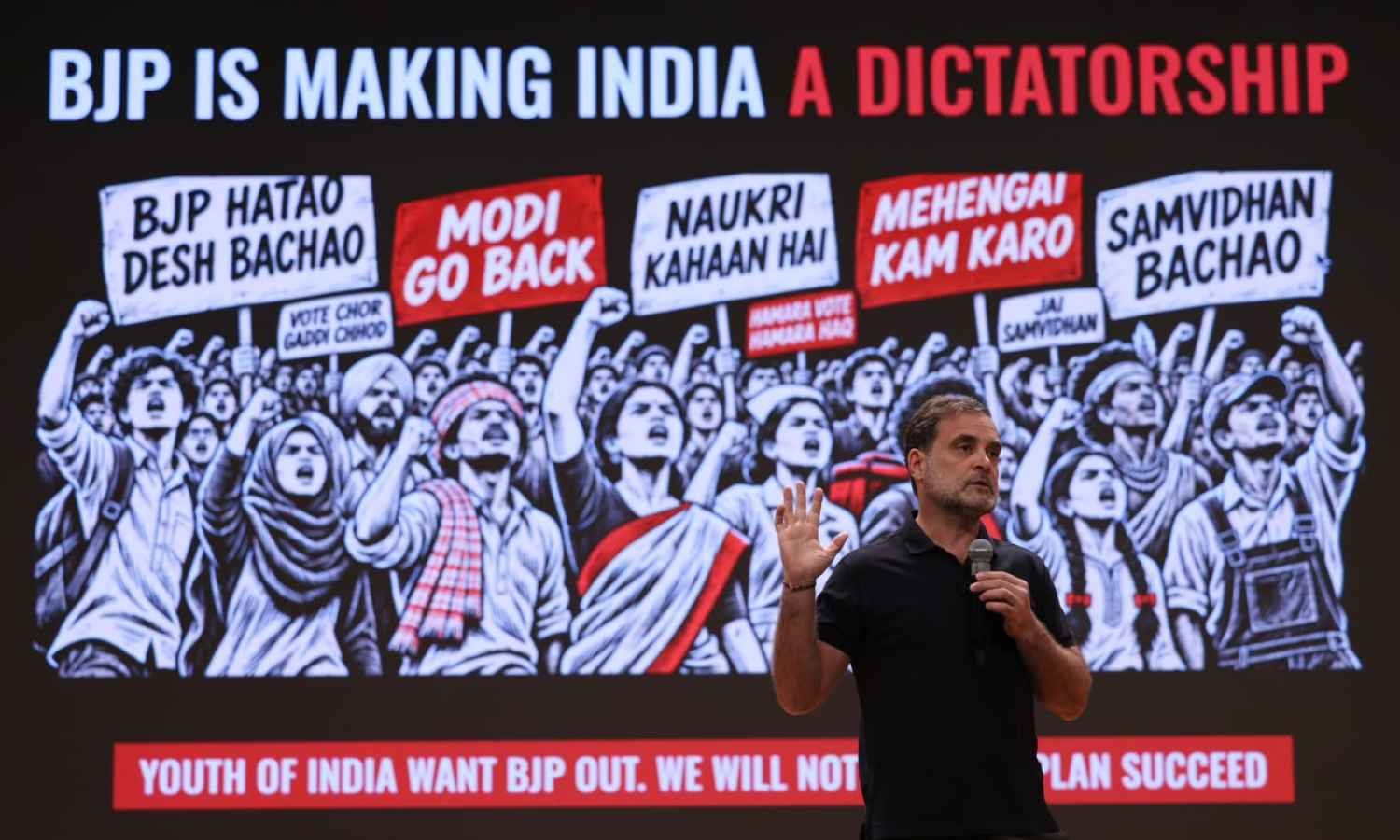
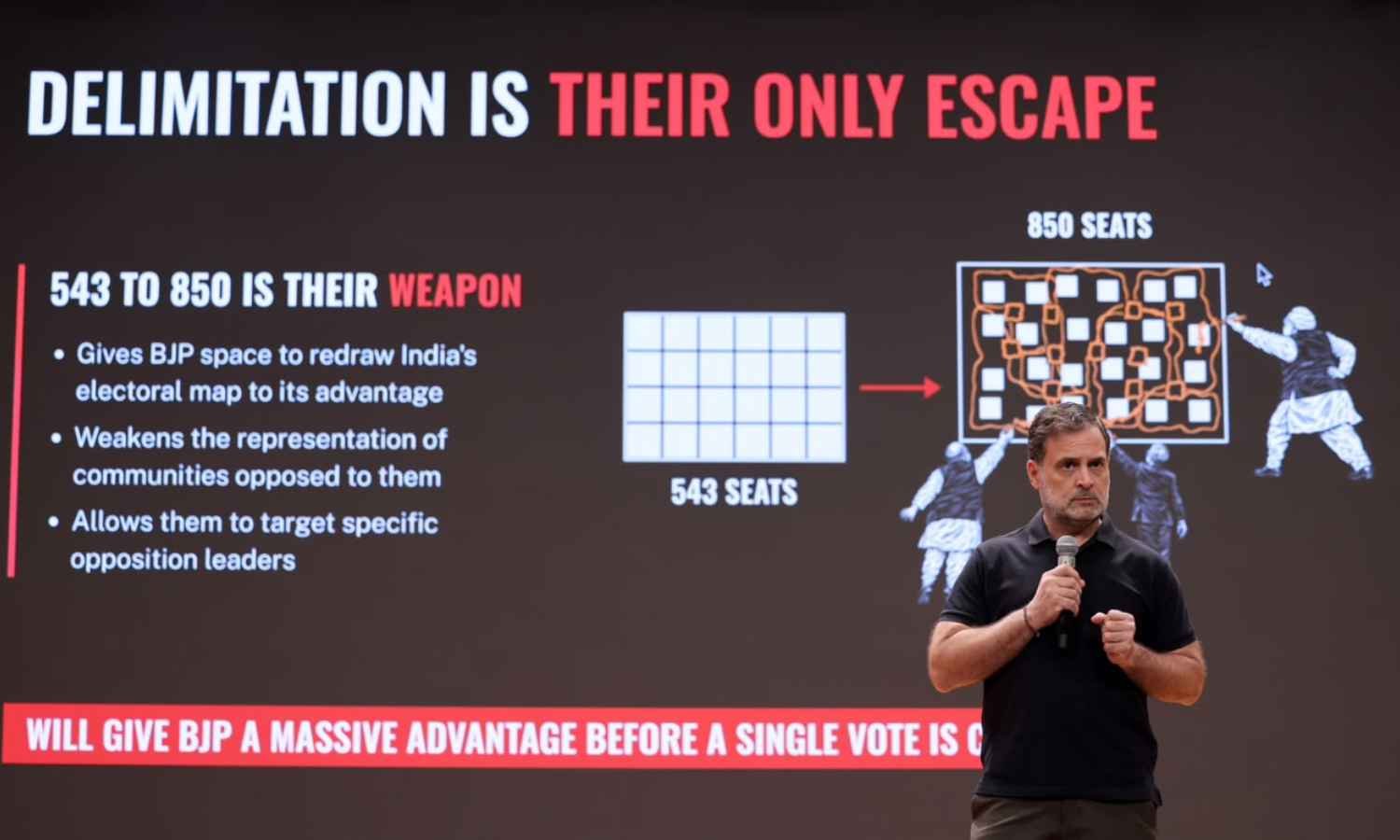
NEW DELHI: Leader of the Opposition in the Lok Sabha Rahul Gandhi on Saturday accused the BJP of planning to use the proposed expansion of the Lok Sabha from 543 to 850 seats to redraw India’s electoral map in its favour. He alleged that the proposed delimitation exercise would give the ruling party greater control over constituency boundaries and allow it to weaken the political representation of communities opposed to the BJP.
Addressing a press conference at the All India Congress Committee headquarters, Indira Bhawan, Rahul Gandhi questioned the government’s decision to link the expansion of parliamentary seats with the implementation of women’s reservation. He maintained that Parliament had already passed the women’s reservation legislation and that the government could implement it within the existing 543-seat Lok Sabha.
Rahul Gandhi alleged that Prime Minister Narendra Modi, Union Home Minister Amit Shah and Chief Election Commissioner Gyanesh Kumar were pursuing a new strategy after the Congress raised allegations of electoral irregularities in several states. He claimed that the BJP wanted to change the structure of constituencies rather than merely increase parliamentary representation.
The Congress leader repeatedly referred to the proposed figure of 850 seats as the central issue. He argued that a substantial expansion would create opportunities to redraw constituency boundaries, redistribute voters and alter the electoral composition of different regions. According to him, the BJP could use these changes to secure an advantage even before voters cast their ballots.
Rahul Gandhi said the debate should not be confined to whether individual states would retain their existing share of Lok Sabha seats. He maintained that the more important question was how the proposed delimitation exercise would affect the boundaries and demographic composition of constituencies across the country.
Rahul Gandhi questions need for 850 Lok Sabha seats
Rahul Gandhi said the BJP was presenting the proposed increase in Lok Sabha seats as a necessary step for implementing women’s reservation. However, he argued that the legislation providing reservation for women had already been passed and that increasing the House’s strength was unnecessary for implementing it.
He questioned why the government wanted to expand the Lok Sabha to 850 members instead of proceeding with the existing 543 seats. Rahul Gandhi alleged that the proposed increase would give the BJP much greater freedom to redesign the electoral map according to its political requirements.
The Congress leader compared the proposal to providing a blank canvas on which constituency boundaries could be redrawn without sufficient restrictions. He claimed that the ruling party could divide existing constituencies, combine different areas and redistribute voters to create favourable electoral conditions.
According to Rahul Gandhi, the larger number of constituencies would make it easier to alter the political composition of individual seats. He argued that such changes could weaken communities opposed to the BJP and affect the prospects of particular Opposition leaders.
He maintained that delimitation within the existing 543-seat structure would also permit changes to boundaries. However, he said the scope for extensive restructuring would be considerably greater if the number of seats increased to 850.
Rahul Gandhi urged younger voters, particularly Generation Z, to examine the implications of the proposed expansion. He argued that the issue concerned the future of electoral representation rather than a routine increase in the number of parliamentary constituencies.
Assam and Jammu and Kashmir cited as examples
The Congress leader referred to delimitation exercises in Assam and Jammu and Kashmir to support his allegations about the political consequences of changing constituency boundaries.
Rahul Gandhi claimed that the BJP had already used delimitation in these regions to alter the composition of constituencies. He alleged that the exercise involved shifting substantial numbers of voters between seats and redesigning boundaries to suit the ruling party.
Referring to Assam, he cited the configuration of constituencies such as Kaziranga and Mangaldoi. Rahul Gandhi questioned the geographical shape of the Mangaldoi Assembly constituency and alleged that its boundaries reflected political considerations.
He claimed that some constituencies had been designed in ways that divided or combined different areas to influence their electoral composition. According to him, changes involving several lakh voters could substantially alter the political character of a constituency.
Rahul Gandhi argued that the same approach could be extended across India if the Lok Sabha expanded to 850 seats. He alleged that the BJP would gain greater flexibility to redraw boundaries in areas where it faced strong Opposition.
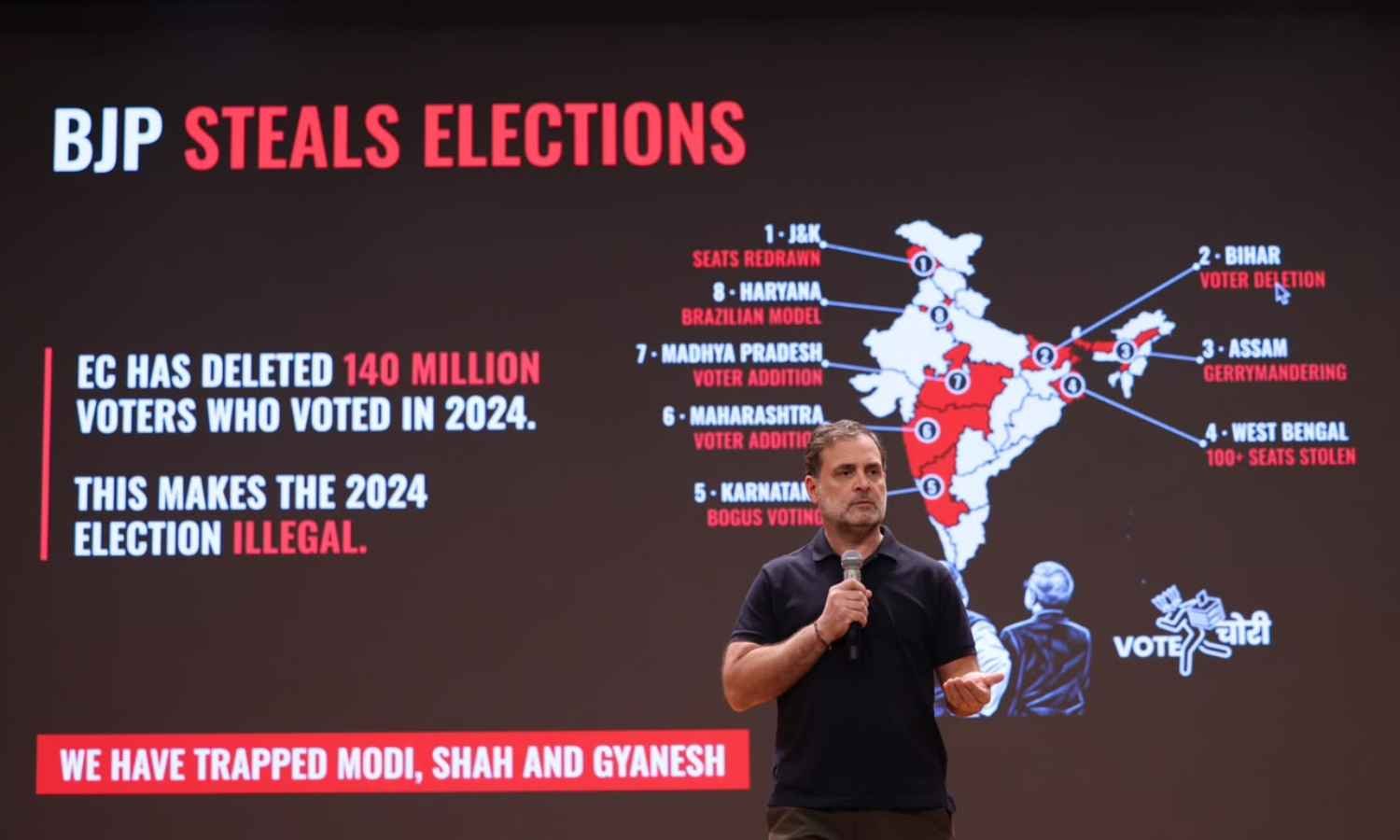
He also referred to the Congress’s allegations concerning voter deletions and additions in Bihar, Maharashtra, Madhya Pradesh and other states. Rahul Gandhi maintained that changes in electoral rolls and constituency boundaries formed part of what he described as a broader pattern of electoral manipulation.
Rahul Gandhi questions proposed Delimitation Commission
The Congress leader also raised objections to the proposed composition of the Delimitation Commission, alleging that the arrangement would place the exercise under the effective control of the BJP leadership.
According to his description, the proposed commission would have three members. He claimed that one would be a former Supreme Court judge selected by Modi and Shah, while Chief Election Commissioner Gyanesh Kumar would serve as another member. Rahul Gandhi further alleged that Kumar would choose the third member.
The Congress leader argued that such an arrangement would not provide sufficient independence for an exercise involving the redrawing of parliamentary constituencies. He claimed that the BJP leadership would exercise decisive influence over the commission through the proposed selection process.
Rahul Gandhi also alleged that the commission’s decisions would not be open to judicial challenge and that its members would enjoy immunity. He questioned how an exercise with such far-reaching consequences could proceed without what he considered adequate institutional safeguards.
The Congress leader demanded a bipartisan Delimitation Commission with representation from the Opposition. He also proposed the inclusion of a former Supreme Court judge and a government nominee, arguing that the commission should not function under the control of one political party.
He accused Gyanesh Kumar of facilitating electoral manipulation and claimed that the Congress possessed further information concerning his conduct. Rahul Gandhi said the party would release additional material later.
These allegations were made by Rahul Gandhi during the press conference. The AICC briefing did not include independent findings establishing criminal wrongdoing by the Chief Election Commissioner.
Congress demands use of 2027 Census data
Rahul Gandhi linked the proposed delimitation exercise to the question of social justice, arguing that the government should use updated population figures rather than rely on the 2011 Census.
He maintained that the 2027 Census would provide more recent demographic information, including data concerning caste populations. According to him, this information was essential for determining fair political representation for Scheduled Castes, Scheduled Tribes, Other Backward Classes and other communities.
The Congress leader alleged that the BJP wanted to use the 2011 Census because updated figures could reveal changes in the populations of disadvantaged communities. He claimed that the government was attempting to avoid the political implications of those changes.
Rahul Gandhi also questioned the proposal to freeze parliamentary representation until 2051. He argued that such an arrangement could prevent changes in population from receiving appropriate consideration for several decades.
He expressed particular concern about the representation of SC and ST communities. Rahul Gandhi claimed that their populations could increase during the proposed freeze without a corresponding increase in the number of reserved seats.
The Congress leader maintained that this would weaken the principles of social justice. He also alleged that the proposed framework would disadvantage OBCs and minorities by failing to account for updated demographic realities.
Rahul Gandhi demanded that the government use the latest Census and caste-related data before undertaking delimitation. He said the Congress wanted the exercise to reflect contemporary population figures rather than figures collected more than a decade earlier.
Women’s reservation can be implemented within 543 seats
Rahul Gandhi maintained that women’s reservation and the proposed expansion of the Lok Sabha were separate issues. He argued that the government was using women’s reservation to justify a much larger restructuring of parliamentary constituencies.
The Congress leader said Parliament had already passed the women’s reservation legislation. He demanded its implementation within the existing 543-seat Lok Sabha instead of linking it to the proposed increase to 850 members.
Rahul Gandhi also reiterated the Congress demand for a sub-quota for OBC women. He maintained that the government should address the representation of women from disadvantaged communities while implementing the reservation legislation.
According to him, the Congress supported women’s reservation but opposed the proposed expansion because of its potential effect on constituency boundaries. He argued that the government’s approach would provide the BJP with extensive opportunities to redraw the electoral map.
Rahul Gandhi said the Congress was not seeking a reduction in any state’s existing share of parliamentary representation. However, he maintained that protecting state-wise proportions alone would not address the concerns surrounding constituency restructuring.
He argued that the government should retain the existing Lok Sabha strength, use updated Census data and establish a bipartisan commission before proceeding with delimitation.
Rahul Gandhi repeats vote manipulation allegations
The Congress leader also used the press conference to repeat allegations concerning the conduct of elections and the functioning of the Election Commission.
Rahul Gandhi claimed that the Congress had exposed examples of voter deletions, additions and other irregularities in several states. He referred to Karnataka, Bihar, Maharashtra, Madhya Pradesh, Haryana and West Bengal while outlining his allegations.
He alleged that the Election Commission had acknowledged that approximately 14 crore people who voted in the 2024 Lok Sabha elections were not eligible to vote. Rahul Gandhi argued that such a figure raised fundamental questions about the legitimacy of the election.
He further claimed that the Congress had repeatedly sought answers from the Election Commission but had not received satisfactory explanations.
The AICC briefing did not include the Election Commission document supporting Rahul Gandhi’s interpretation of the 14-crore figure. His allegation about the validity of the 2024 election therefore remains a claim made during the press conference.
Rahul Gandhi also referred to polling conducted by the Congress. He claimed that 80 per cent of Indians and almost all Generation Z respondents believed that Modi, Shah and Kumar were involved in electoral manipulation.
However, he did not provide the sample size, survey methodology or other details of the polling during the briefing.
The Congress leader alleged that the BJP was now seeking to change constituency boundaries because its earlier methods of influencing elections had attracted public scrutiny. He maintained that the proposed expansion would give the ruling party another means of securing electoral advantages.
INDIA bloc partners free to support Bill
Responding to questions about differences within the Opposition alliance, Rahul Gandhi said INDIA bloc partners would not lose their position in the coalition merely because they supported the proposed delimitation legislation.
He maintained that the Congress’s concerns extended beyond the interests of individual political parties. According to him, the proposed expansion involved questions about the structure of parliamentary representation and the independence of institutions responsible for conducting delimitation.
When asked about the DMK, Rahul Gandhi said the debate concerned the future of Indian democracy rather than the position of any single alliance partner. He argued that political parties needed to examine the implications of the proposed changes before taking a final position.
The Congress leader also referred to Andhra Pradesh Chief Minister N. Chandrababu Naidu and YSRCP president Y.S. Jagan Mohan Reddy. He urged leaders across political parties to consider the possible consequences of the proposed delimitation framework.
Rahul Gandhi said the Congress wanted its allies and other parties to examine the issue from the perspective of democratic representation. He maintained that differences over the Bill would not automatically alter the position of INDIA bloc members within the alliance.
Rahul Gandhi appeals to Gen Z over democratic representation
Rahul Gandhi repeatedly addressed Generation Z during the press conference, urging younger citizens to scrutinise the proposed changes to parliamentary constituencies.
He argued that younger voters had a particular stake in the future of electoral representation because the proposed delimitation framework could influence elections for several decades.
The Congress leader claimed that the BJP was attempting to create a system in which constituency boundaries could be altered to secure political advantages. He maintained that the issue went beyond the immediate interests of the Congress or other Opposition parties.
Rahul Gandhi also spoke about the role of young people in challenging political authority. He said he had observed growing resistance among younger citizens and expressed confidence in their willingness to question developments affecting democratic institutions.
He argued that the country’s democratic structure depended on public confidence in elections and parliamentary representation. According to him, any perception that constituency boundaries were being manipulated could undermine that confidence.
Rahul Gandhi said the Congress would continue opposing the proposed 850-seat framework and demanding safeguards for a fair delimitation exercise.
He reiterated that the party wanted the existing 543 Lok Sabha seats retained, the latest Census data used, a bipartisan Delimitation Commission constituted and women’s reservation implemented without expanding the House to 850 members.
The Congress leader maintained that the proposed increase in seats remained the central point of disagreement. He urged political parties and citizens to examine whether the government’s delimitation plan would protect fair representation or provide opportunities to alter the electoral map for partisan purposes.
