

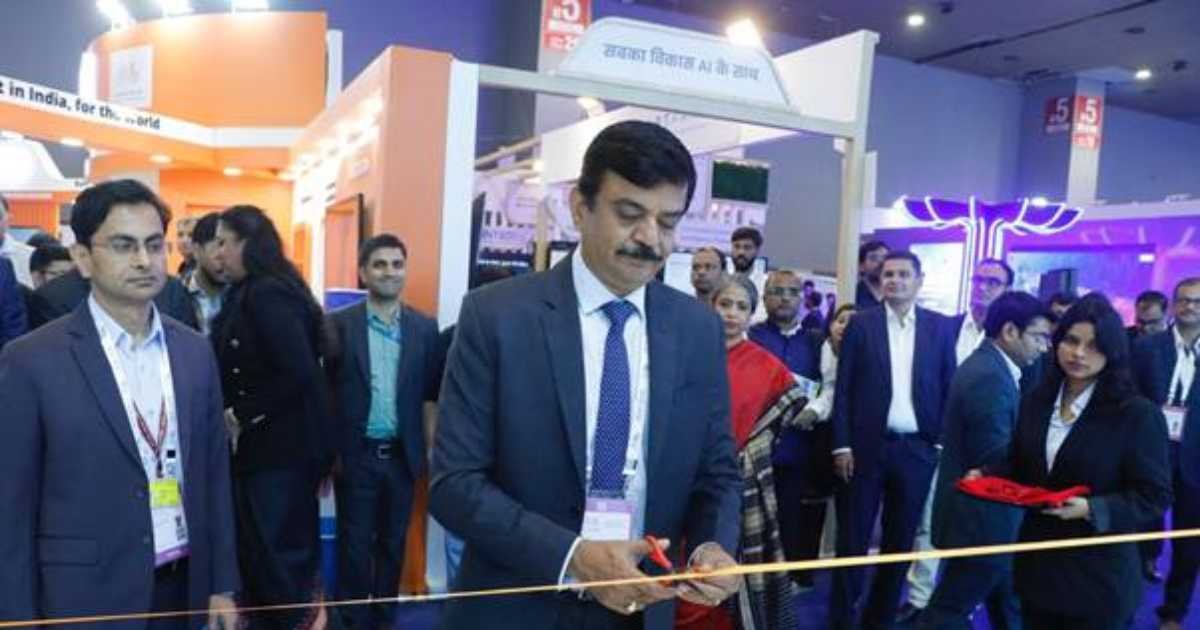
New Delhi: The Ministry of Steel unveiled a comprehensive roadmap to embed AI in steel operations at the India AI Impact Summit 2026, positioning digital intelligence as central to achieving a 400 million tonne capacity target by 2035-36.
The announcement was made at Bharat Mandapam during the summit. The roadmap outlines digital opportunities across mining, logistics, production, quality control and governance. Officials said future growth in steel will depend not only on capacity expansion but also on intelligent systems and predictive analytics.
At the centre of the strategy is the AI in Steel Pavilion. This platform showcases real-time industry problem statements and invites startups and technology firms to develop scalable solutions. Unlike conventional exhibitions, it operates as a problem-to-solution marketplace. As a result, companies can directly match operational challenges with AI capabilities.
The Pavilion highlights issues in safety, logistics, sustainability and marketing. Moreover, it signals a shift from isolated pilot projects to mission-mode integration of AI in steel value chains. Officials stressed that the sector must move toward systemic transformation.
AI in steel to support 400 MT capacity expansion
During a high-level session, major steel producers, miners and AI innovators discussed digital roadmaps. Industry leaders identified priority use cases such as predictive maintenance, computer vision and supply chain optimisation. They also highlighted needs in energy management and emissions reduction.
The Secretary, Ministry of Steel, outlined the sector’s growth trajectory. Steel consumption rose from 77 million tonnes in 2014-15 to 152 million tonnes in 2024-25. Going forward, crude steel capacity will increase from about 200 million tonnes to 300 million tonnes by 2030-31 and 400 million tonnes by 2035-36.
Such expansion requires efficient capital use and real-time monitoring. Therefore, AI in steel will function as a strategic enabler rather than a peripheral tool. Intelligent automation, digital twins and advanced analytics will help improve productivity and sustainability.
Industry representatives also sought domain-specific AI solutions and cybersecurity resilience. In response, the Ministry invited startups and research institutions to use the Steel Research and Technology Mission of India as a live sandbox. Officials said the next phase of industrial growth will combine metallurgy with data-driven innovation.
The Ministry asserted that digital intelligence will define competitiveness, resilience and environmental responsibility as India scales steel production to meet domestic and global demand.
