

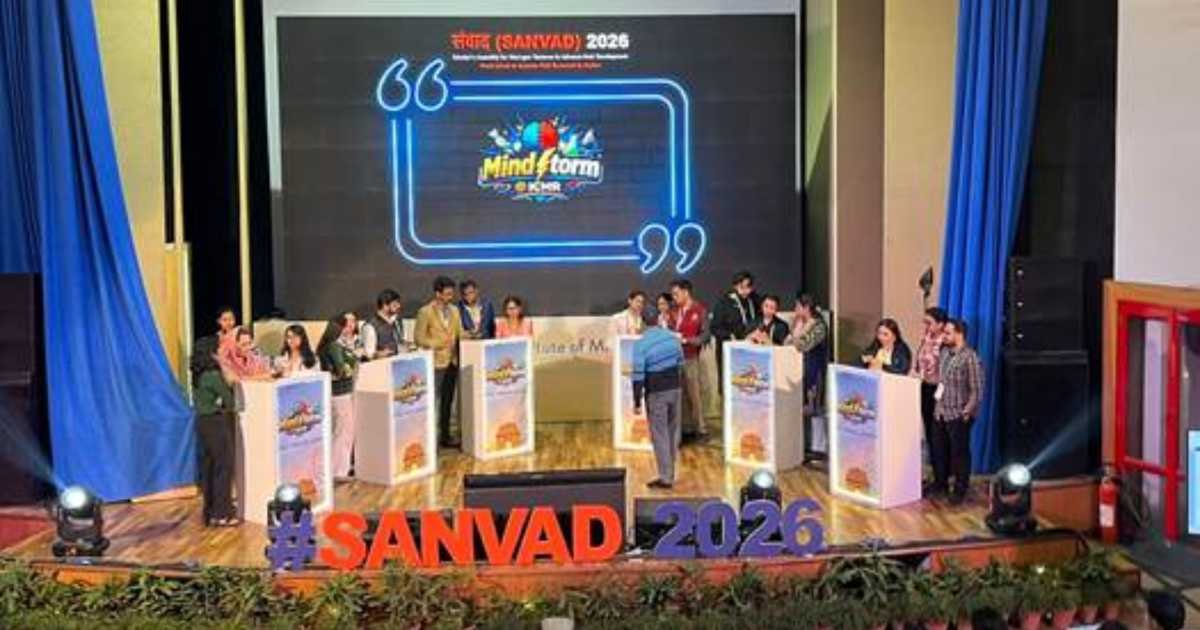
New Delhi: ICMR SANVAD 2026 convened nearly 400 doctoral scholars and senior experts in New Delhi to strengthen research quality, innovation and leadership in India’s health ecosystem.
The Indian Council of Medical Research organised the three-day conclave from February 19 to 21 at the ICMR–National Institute of Malaria Research. The annual initiative rotates among ICMR institutes to deepen engagement with Ph.D. scholars and expand collaboration across research centres.
ICMR SANVAD 2026 aimed to enhance doctoral rigour, innovation orientation and leadership readiness. Moreover, the platform created structured opportunities for networking with senior scientists, policymakers and industry leaders.
Padma Shri Prof. Anil Kumar Gupta encouraged scholars to align research with societal needs and grassroots innovation. In addition, Dr. Vishwajeet Kumar stressed translating knowledge into community impact. Padma Shri Prof. Kameshwar Prasad highlighted the need to bridge laboratory research and clinical practice.
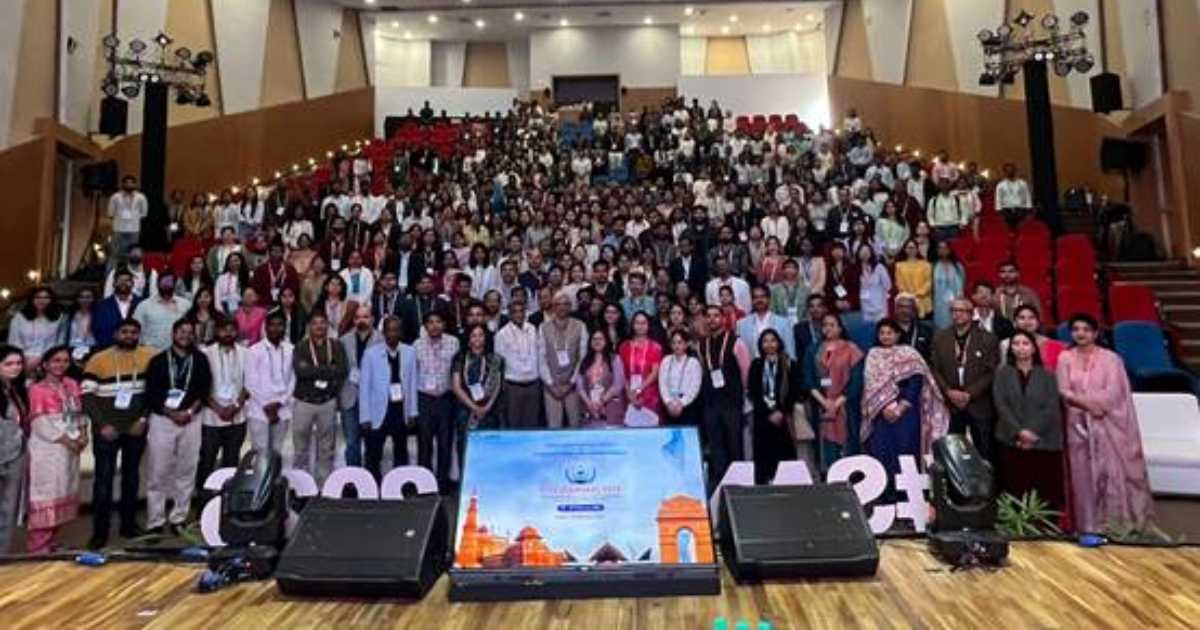
ICMR SANVAD 2026 highlights science-policy dialogue
A key session focused on health communication and translating science for impact. Speakers underlined that research must inform policy and build public trust beyond academic publication.
The final day featured a town hall with Dr. Rajiv Bahl, Secretary, Department of Health Research and Director General, ICMR. He urged scholars to pursue meaningful research beyond minimum Ph.D. requirements and to contribute high-quality publications. He also advised young investigators to manage professional pressure constructively.
Industry and academic leaders shared perspectives on global health research, pharmaceutical innovation and interdisciplinary careers. Furthermore, technical sessions on systematic reviews, national research resources and post-Ph.D. pathways equipped scholars with practical tools.
Participants also engaged in the “Mindstorm@ICMR” Research Quiz 2026 and presented oral and poster papers. These platforms promoted peer learning, expert feedback and interdisciplinary exchange.
In his concluding remarks, Dr. Anup Anvikar, Director, ICMR–NIMR, described the conclave as a visionary platform for research networking and collaborative growth. The event closed with a valedictory session and awards ceremony recognising outstanding scholarly contributions.
