

New Delhi: Indian scientists have overturned the long-accepted sigma cycle model of bacterial gene regulation, challenging a textbook concept that stood for nearly 50 years.
Researchers from the Bose Institute, an autonomous institute under the Department of Science and Technology, collaborated with Rutgers University on the study. They published their findings in the Proceedings of the National Academy of Sciences.
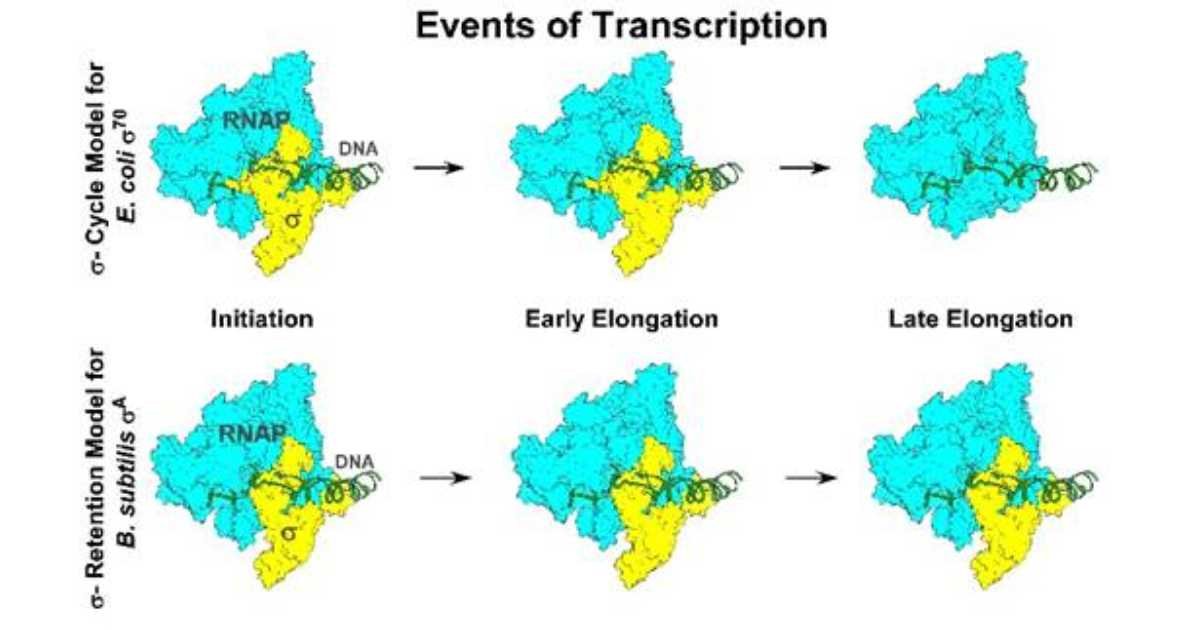
For decades, biology textbooks stated that sigma factors bind RNA polymerase to initiate transcription and then detach during elongation. This understanding was largely based on studies of the Escherichia coli σ70 factor. However, the new research shows that the sigma cycle model does not apply universally across bacteria.
The team reported that in Bacillus subtilis, the principal transcription initiation factor σA remains bound to RNA polymerase throughout transcription. Similarly, a modified version of the E. coli σ70 factor also stayed attached during the entire process.
“Our work shows that in Bacillus subtilis, the σA factor stays attached to RNA polymerase all the way through transcription,” said Dr. Jayanta Mukhopadhyay of the Bose Institute. He added that this finding changes current understanding of bacterial gene regulation.
Study shows sigma cycle model not universal
Using biochemical assays, chromatin immunoprecipitation and fluorescence-based imaging, the researchers tracked sigma factor behaviour in real time. They found that Bacillus subtilis σA and an E. coli σ70 variant lacking the 1.1 region remained stably associated with transcription complexes. In contrast, full-length E. coli σ70 detached stochastically during elongation.
Co-author Aniruddha Tewari said the findings provide strong evidence that the sigma cycle model does not apply to all bacteria. Therefore, the study opens new avenues to understand bacterial gene regulation and its evolution.
The discovery may influence research on bacterial physiology and stress response. Moreover, it could help scientists design better antibiotics or regulatory inhibitors that block infection mechanisms. It may also support efforts to engineer microorganisms for biofuels, biodegradable plastics and therapeutic compounds.
