

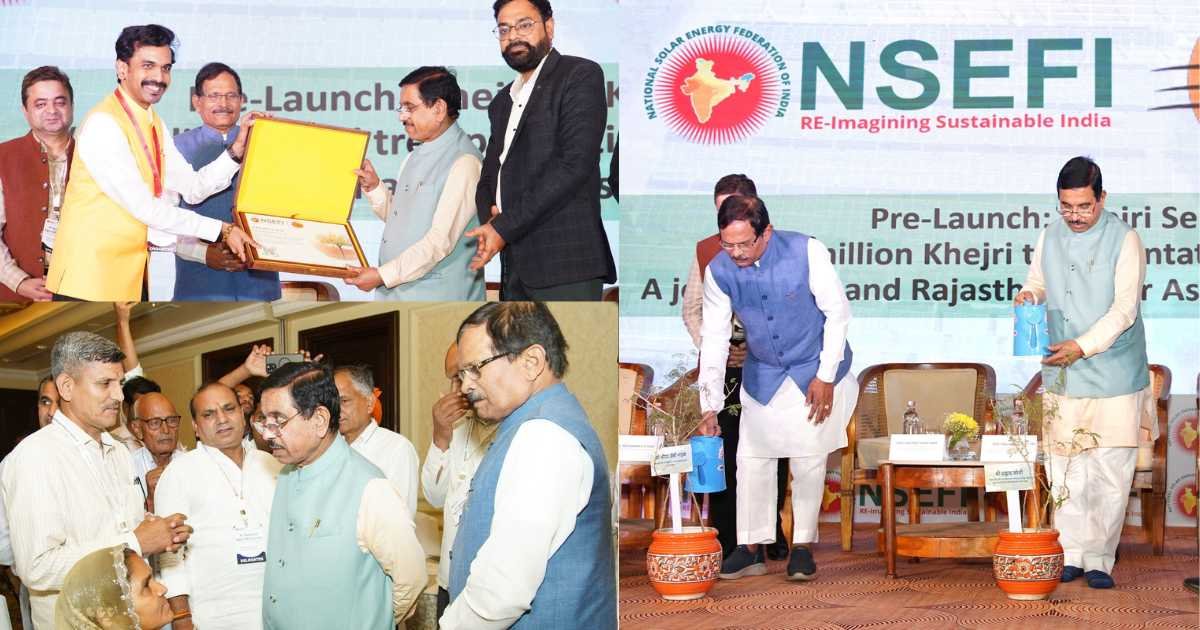
New Delhi: Pralhad Joshi said agri renewable energy is strengthening India’s rural economy by providing reliable electricity to farms and lowering irrigation costs. He made the remarks while addressing the 4th National Agro-RE Summit in New Delhi.
He said renewable technologies were increasingly reaching farms and rural households. As a result, farmers are gaining access to reliable power while reducing energy expenses and improving productivity.
The minister said solar irrigation pumps are playing a major role in agriculture. Farmers who earlier depended on diesel pumps can now irrigate fields using solar power during the daytime.
According to him, diesel irrigation can cost nearly ₹6,790 per acre for wheat and over ₹8,000 per acre for crops such as cotton. However, solar pumps can reduce irrigation costs by ₹5,000 to ₹6,500 per acre each year.
Under the PM-KUSUM scheme, more than 10 lakh standalone solar pumps have already been installed. In addition, authorities have solarised over 13 lakh grid-connected agricultural pumps across the country.
Agri renewable energy expansion through PM-KUSUM 2.0
Joshi said the government is preparing the next phase of the scheme. The proposed PM-KUSUM 2.0 will include a dedicated 10 GW agri photovoltaic component.
The initiative will allow farmers to generate solar power while continuing crop cultivation on the same land. As a result, the model can create decentralised renewable energy systems in rural areas.
The minister said agrivoltaic systems could significantly improve land productivity and farmers’ income. Estimates suggest India’s agrivoltaic potential could range from 3,000 GW to nearly 14,000 GW.
Studies indicate that farmers using such systems may see annual income increase from about ₹60,000 per acre to over ₹1 lakh per acre.
Joshi also highlighted progress under the PM Surya Ghar Muft Bijli Yojana. More than 31 lakh households have already installed rooftop solar systems under the programme.
He said India’s non-fossil fuel energy capacity has grown from about 81 GW in 2014 to nearly 275 GW today. Solar capacity increased from about 2.8 GW to nearly 143 GW during the same period.
Meanwhile, Shripad Yesso Naik said agrivoltaics can transform both agriculture and clean energy generation. He called for stronger collaboration between government, industry and research institutions to expand such systems across India.
The summit was organised by the National Solar Energy Federation of India in collaboration with the India Agrivoltaics Alliance.
