

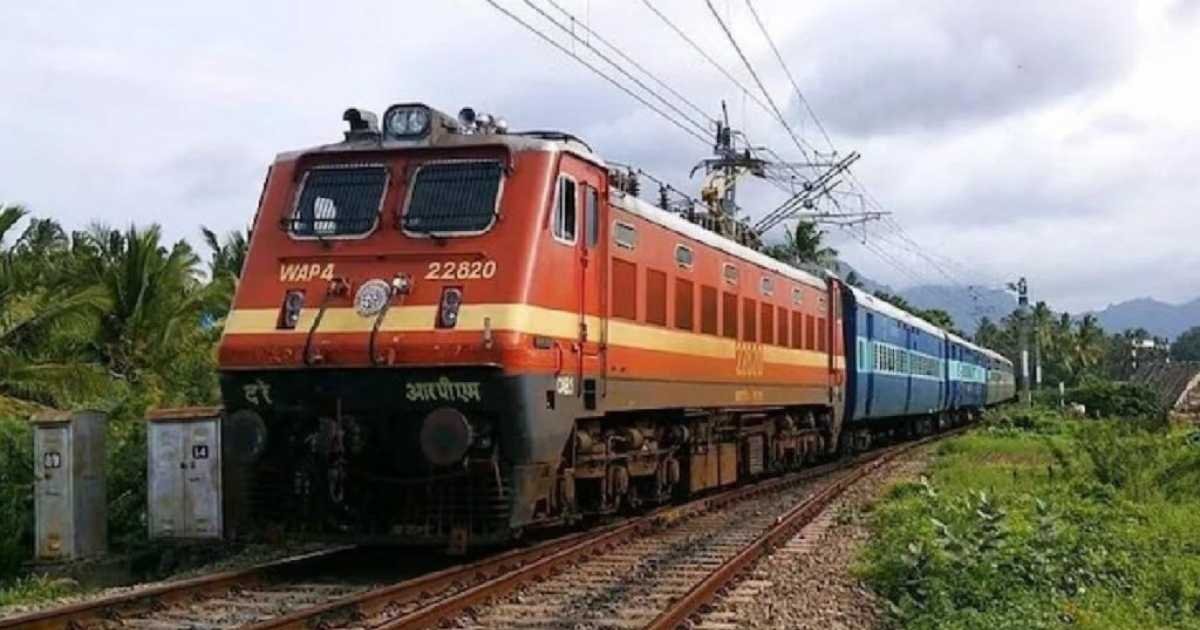
New Delhi: Railway Minister Ashwini Vaishnaw said Kavach 4.0 has been successfully commissioned on 1,452 route kilometres of Indian Railways, covering the high-density Delhi–Mumbai and Delhi–Howrah routes.
The minister said the move strengthens safety systems on two of the country’s busiest railway corridors. The project forms part of broader efforts to modernise railway safety infrastructure.
According to the Railway Ministry, 8,570 kilometres of optical fibre cable have been laid to support the system. Authorities also installed 1,100 telecom towers along the routes.
In addition, engineers deployed 6,776 route kilometres of trackside equipment required for the functioning of Kavach 4.0. Officials also established 767 station data centres to strengthen monitoring and communication across the railway network.
Kavach 4.0 is an indigenously developed Automatic Train Protection system designed to improve railway safety.
The technology assists locomotive pilots by ensuring trains operate within specified speed limits. If a pilot fails to control speed, the system automatically applies brakes to prevent accidents.
The technology also allows trains to operate safely during poor visibility or adverse weather conditions.
Indian Railways began field trials of the Kavach system on passenger trains in February 2016. Based on operational experience and safety assessments, three firms were approved in 2018–19 to supply Kavach version 3.2.
Kavach 4.0 rollout expands across major railway corridors
Indian Railways adopted Kavach as the national Automatic Train Protection system in July 2020.
Officials said trackside implementation of Kavach 4.0 is currently underway on 24,427 route kilometres. This rollout covers the entire Golden Quadrilateral, the Golden Diagonal, the high-density rail network, and other identified railway sections.
Implementation of the system requires multiple infrastructure components across railway routes.
These include installing station Kavach equipment at every station and block section. Authorities must also place RFID tags along the entire track network.
The system further requires telecom towers across railway sections to maintain communication between trains and signalling infrastructure.
Engineers also lay optical fibre cables along railway tracks to ensure reliable connectivity. In addition, each locomotive operating on these routes must be equipped with a Loco Kavach unit.
The Railway Minister said investment in safety-related activities has increased significantly over the past decade.
According to him, expenditure on railway safety rose more than three times. It increased from ₹39,200 crore in 2013–14 to ₹1,20,389 crore in the 2026–27 financial year.
Officials said the expansion of Kavach 4.0 remains a key part of efforts to improve safety standards and reduce accidents on Indian Railways.
