
Railway track renewal: Indian Railways upgrades 54,600 km tracks since 2014

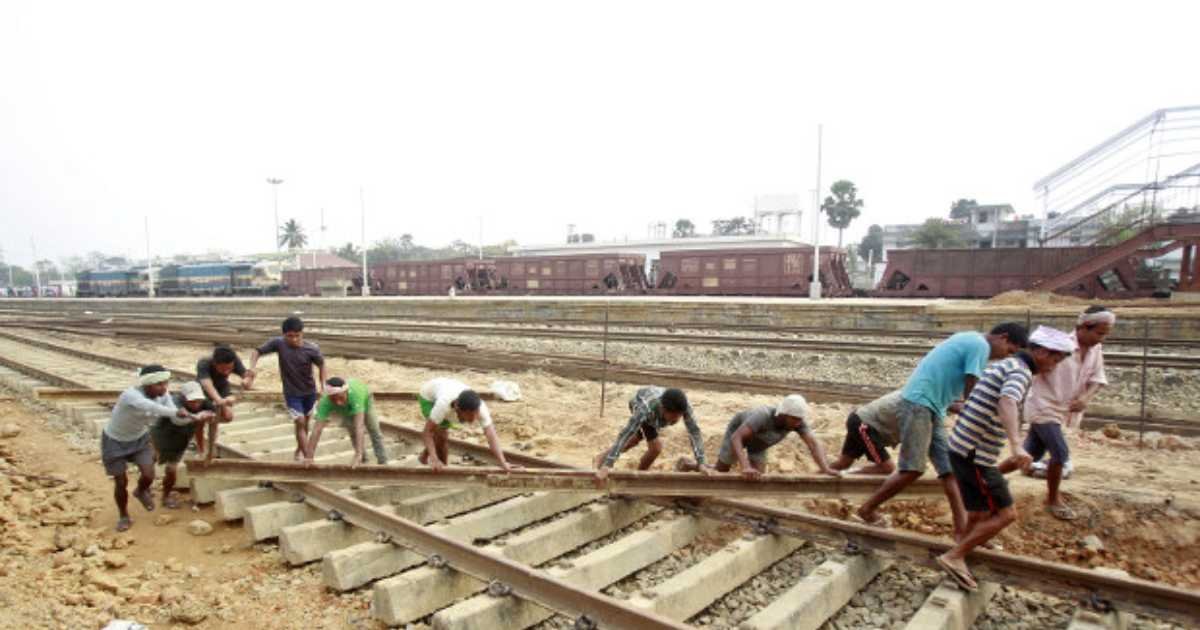
New Delhi: Union Railway Minister Ashwini Vaishnaw said Indian Railways completed railway track renewal on about 54,600 kilometres of tracks between 2014 and February 2026 to ensure safe train operations.
He told the Lok Sabha that track renewal remains a continuous process based on the age, traffic load, and condition of railway lines.
Officials plan and execute railway track renewal works by prioritising sections that require urgent improvement. The aim is to maintain safe operations while allowing trains to run at permitted speeds.
The Railway Ministry said safety remains the top priority in train operations across the national network.
Indian Railways follows a well-established inspection and maintenance system described in the Permanent Way Manual.
Officials inspect tracks regularly through several methods. These include daily patrolling, on-foot inspections, trolley inspections, and footplate or rear-window checks by railway staff.
In addition, engineers monitor track geometry using specialised systems such as Track Recording Cars and the Oscillation Monitoring System.
These systems operate at scheduled intervals across the entire railway network. Based on inspection findings, authorities take corrective action within defined timelines to maintain track safety.
Railway track renewal boosts speed capacity across rail network
Railway track renewal and infrastructure upgrades have significantly improved the speed potential of railway lines.
The Railway Ministry said more than 80 per cent of the network can now support sectional speeds of 110 kmph or higher. In 2014, only about 40 per cent of tracks had this capability.
Tracks capable of supporting speeds of 130 kmph or more also increased sharply during the period.
In 2014, only 5,036 kilometres of track, or 6.3 per cent of the network, supported speeds above 130 kmph.
By February 2026, this figure rose to 23,713 kilometres, or 22.4 per cent of the railway network.
Tracks capable of speeds between 110 kmph and 130 kmph also increased significantly. They expanded from 26,409 kilometres in 2014 to 62,036 kilometres in 2026.
At the same time, the share of tracks supporting speeds below 110 kmph dropped sharply.
Such tracks covered 47,897 kilometres in 2014, representing more than 60 per cent of the network.
By 2026, the length of such sections declined to 19,923 kilometres, or about 18.9 per cent of the railway network.
The Railway Ministry attributed these improvements to several modernisation measures.
Indian Railways has introduced stronger rails, heavier pre-stressed concrete sleepers, and improved turnout layouts in track renewal works.
Authorities also adopted advanced welding technologies such as flash butt welding to enhance rail durability.
Engineers now use mechanised track maintenance systems and modern machines, including rail grinding equipment, to improve reliability.
In addition, the Railways use digital systems such as the Integrated Track Monitoring System and Track Management System to analyse inspection data and guide maintenance planning.
