

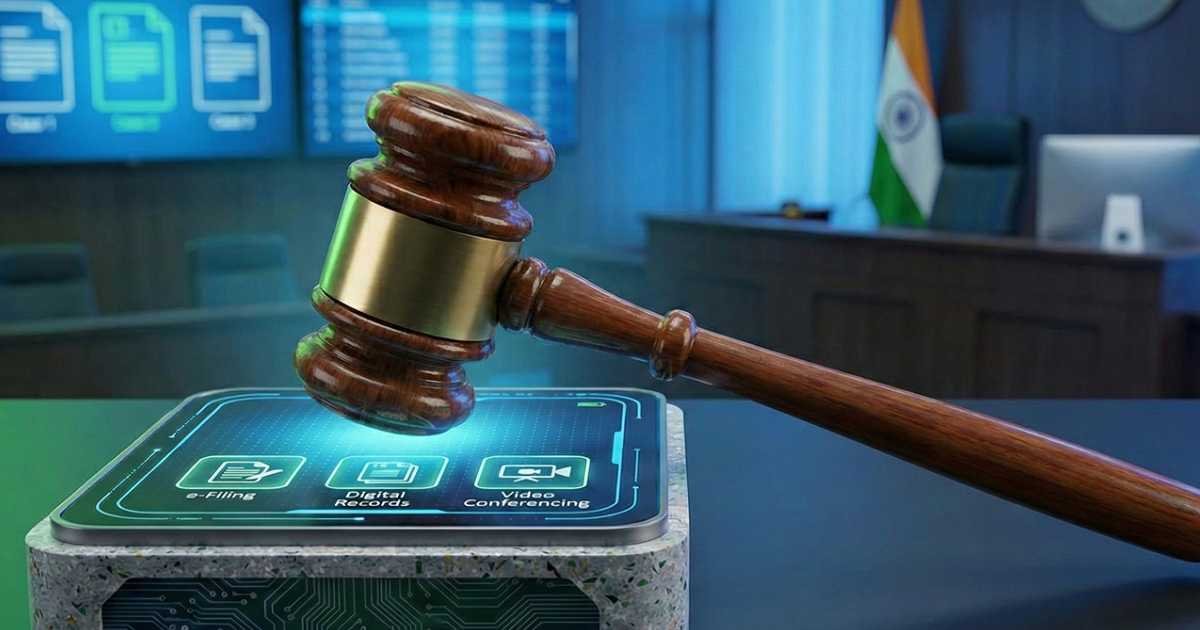
Hyderabad: The Centre said the e-Courts project has digitized more than 660.36 crore pages of court records and established 2,444 eSewaKendras to improve access to justice and citizen services.
Minister of State for Law and Justice Arjun Ram Meghwal shared the details in a written reply in the Rajya Sabha.
He said the government launched several initiatives to accelerate case disposal and improve transparency in the judicial system.
These efforts include the use of advanced technology under the e-Courts Mission Mode Project. The programme also supports state governments in improving infrastructure for district and subordinate courts.
Officials said the digital justice system has simplified court procedures and increased transparency in the justice delivery system.
The first phase of the project began in 2011 with an outlay of ₹935 crore. It focused on creating the basic digital infrastructure of the judiciary.
During this phase, authorities computerized 14,249 district and subordinate courts. They also installed local area networks in 13,683 courts and enabled software-based case management in 13,672 courts.
Video conferencing facilities were introduced in 493 courts and 347 jails during the first phase.
e-Courts project expands digital services and infrastructure
The second phase of the e-Courts project ran from 2015 to 2023 with a budget of ₹1,670 crore.
This phase expanded the focus from basic computerisation to citizen-oriented digital services.
The number of computerized courts increased to 18,735, marking a rise of over 31 per cent compared with the first phase.
Video conferencing facilities also expanded significantly. Authorities installed them in 3,240 courts and 1,272 jails.
Network connectivity improved across the judiciary as well. Wide Area Network connectivity reached 99.5 per cent of court complexes.
During this phase, authorities also introduced several key digital platforms.
These include the Case Information System, the National Judicial Data Grid and eSewaKendras that provide front-end services to citizens and lawyers.
The government significantly increased funding for Phase III of the project. The third phase runs from 2023 to 2027 with an outlay of ₹7,210 crore.
Officials plan to transform Indian courts into digital and paperless courts during this stage.
The programme includes digitising legacy records and expanding video conferencing facilities to courts, jails and hospitals.
Authorities also aim to expand online courts beyond traffic violation cases.
Currently, courts have conducted more than 3.97 crore hearings through video conferencing facilities.
Around 1.07 crore cases have been filed electronically through the eFiling platform.
Live streaming of court proceedings has expanded to additional High Courts including Uttarakhand, Calcutta, Telangana and Meghalaya.
All eCourts portals now operate on the National Informatics Centre cloud infrastructure.
Officials also upgraded the Case Information System to version 4.0 to improve transparency and speed in case management.
Advanced technologies such as artificial intelligence and optical character recognition are also being integrated into judicial processes.
