

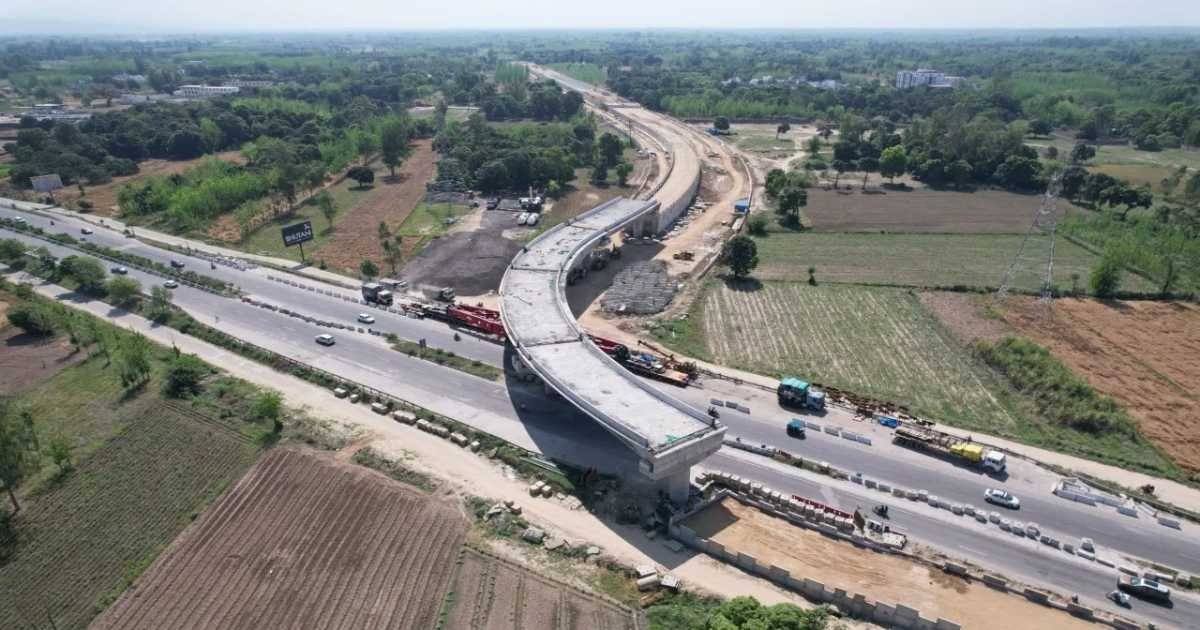
New Delhi: The Dehradun bypass project is progressing at pace, with 44% work completed on a 12 km greenfield highway aimed at reducing congestion and improving connectivity.
The National Highways Authority of India is constructing the four-lane access-controlled bypass at a cost of ₹716 crore. Officials said the project is expected to be completed by April 2027.
The Dehradun bypass project will connect Jhajhra to the Delhi-Dehradun Economic Corridor near Asharori Check Post. It will link the Paonta Saheb–Ballupur section of NH-7 and provide an alternate south-western route.
Once operational, the bypass will divert non-destined traffic away from the city. This will reduce congestion and vehicular pollution in Dehradun. It will also improve connectivity to areas such as Selaqui, Vikasnagar, Herbertpur, and Paonta Sahib.
Dehradun bypass project includes eco-friendly design features
The highway has been designed with sustainability measures. While the design speed is set at 100 kmph, some stretches will have a regulated speed of 80 kmph to protect forest areas.
Authorities have reduced the right of way to 30 metres to minimise impact on trees. This is lower than the conventional 60 metres used in similar projects.
To protect wildlife, the project includes a 350-metre vehicular overpass and a cattle overpass. In addition, seven minor bridges and 21 box culverts will support animal movement.
Five dedicated pipe culverts will allow smaller species such as reptiles and amphibians to cross safely. Continuous fencing and signage will further reduce human-wildlife conflict.
Officials said the Dehradun bypass project will also improve access to tourist destinations like Mussoorie. This is expected to support tourism growth in the region.
Upon completion, the bypass is likely to ease traffic pressure in the city and improve overall urban mobility.
