

New Delhi: The India steel sector recorded sustained growth and strengthened self-reliance through rising production, exports and policy support, according to official data released on Tuesday.
India retained its position as the world’s second-largest steel producer since 2018. At the same time, consumption more than doubled over the past 12 years, reflecting strong demand from infrastructure and manufacturing. As a result, exports increased while imports declined, improving domestic capacity and reducing dependence on foreign supply.
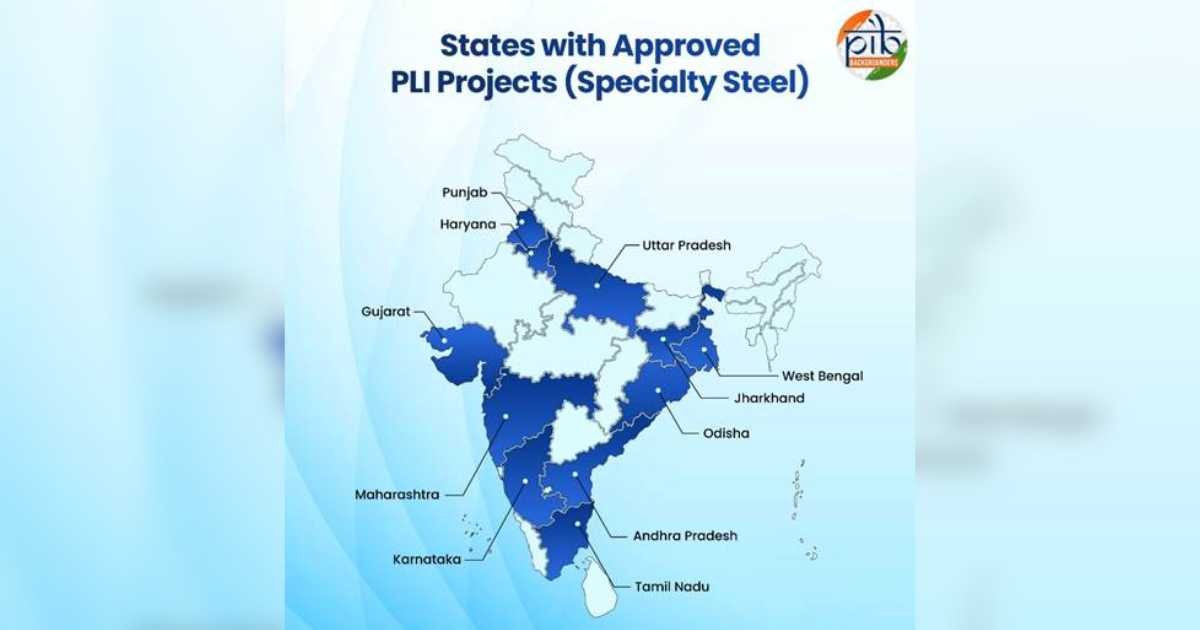
The government supported this expansion by ensuring raw material availability and lowering production costs. Moreover, policy measures improved global market access for domestic producers. Under the Production Linked Incentive scheme, investments of ₹23,022 crore boosted specialty steel output and created over 13,000 jobs.
India’s finished steel consumption rose from 77 million tonnes in 2014–15 to 163.7 million tonnes in 2025–26. Meanwhile, crude steel production reached 168.4 million tonnes, achieving about 66% of the National Steel Policy target.
India steel sector strengthens exports and domestic capacity
Exports of steel increased significantly, including a 29.1% rise in March 2026 compared to the previous year. In contrast, imports declined sharply, indicating stronger domestic production. Key export destinations included Vietnam, Belgium and Taiwan.
Production of finished steel also grew to 160.9 million tonnes in 2025–26, marking a 9.7% increase. Additionally, core segments such as hot metal, pig iron and sponge iron reported steady growth, reflecting broad-based expansion.
The government introduced multiple reforms to support the sector. These included the Domestically Manufactured Iron and Steel Products policy, reduced customs duty on key raw materials, and safeguards against cheap imports. Furthermore, initiatives like the Steel Scrap Recycling Policy and Mission Coking Coal aimed to improve resource security.
India also advanced its sustainability goals by promoting green steel and decarbonisation. The sector targets net-zero emissions by 2070, with a focus on renewable energy, hydrogen-based production and carbon capture technologies.
Officials said continued reforms, rising demand and technological adoption would position the India steel sector as a key driver of industrial growth and global competitiveness in the coming years.
