

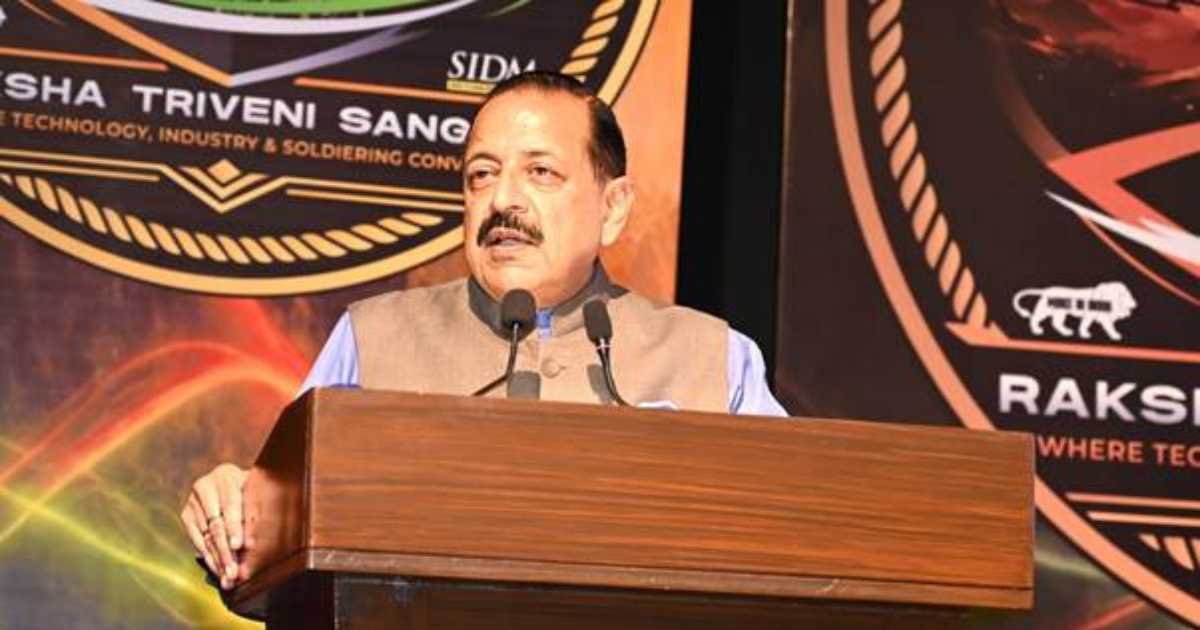
New Delhi: Union Minister Dr. Jitendra Singh said India’s defence production growth reflected a major shift towards technology, innovation, and private sector participation at the North Tech Symposium in Prayagraj.
He stated that India had entered a decisive phase where advanced technologies and indigenous capabilities were reshaping military strength. Moreover, he said warfare now relied more on data systems, automation, and emerging technologies than traditional methods.
The Minister noted that defence production reached ₹1.54 lakh crore, marking a 174% rise over a decade. At the same time, defence exports climbed to ₹23,622 crore, recording a 34-fold increase. He added that private companies contributed nearly ₹15,000 crore to exports, indicating stronger industry participation.
He said the Union Budget for 2026–27 allocated ₹6,81,000 crore for defence, which is 9.5% higher than the previous year. This increase, he explained, would support research, development, and deployment of modern technologies.
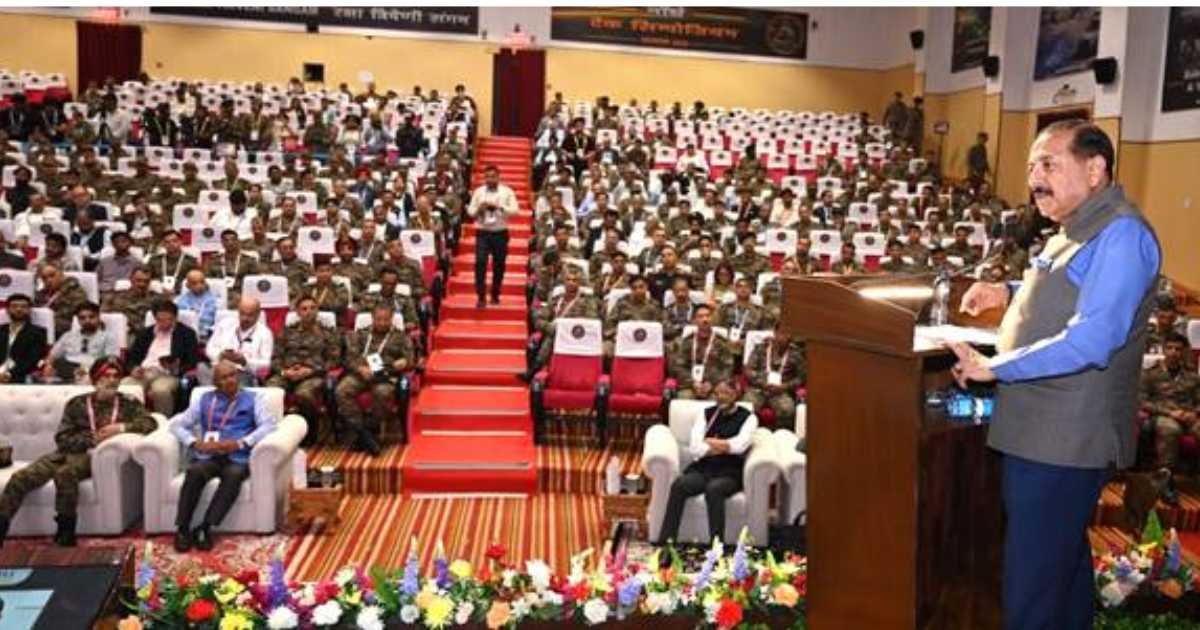
Defence production growth driven by innovation and industry
Dr. Jitendra Singh emphasised that sectors such as artificial intelligence, quantum technology, space, and atomic energy now played a key role in defence preparedness. He added that India had made progress in quantum-secure communication, which would strengthen future warfare systems.
He highlighted that policy reforms had opened new opportunities for industry. As a result, companies could innovate faster and scale indigenous technologies. He also stressed the need to align defence requirements with scientific research and industrial capabilities.
The Minister called for faster timelines from design to deployment. He said reliability and scalability must remain priorities in building a strong defence ecosystem.
He also noted that the Armed Forces continued to play a critical role beyond security, including disaster response and humanitarian operations. Therefore, he said, strengthening defence capabilities would benefit multiple sectors.
The symposium, held from May 4 to 6, brought together the Armed Forces, industry, academia, and start-ups. It focused on areas such as artificial intelligence, unmanned systems, robotics, and cyber warfare.
More than 280 companies participated, showcasing advanced technologies and solutions. The event aimed to accelerate indigenous innovation and strengthen operational readiness.
