

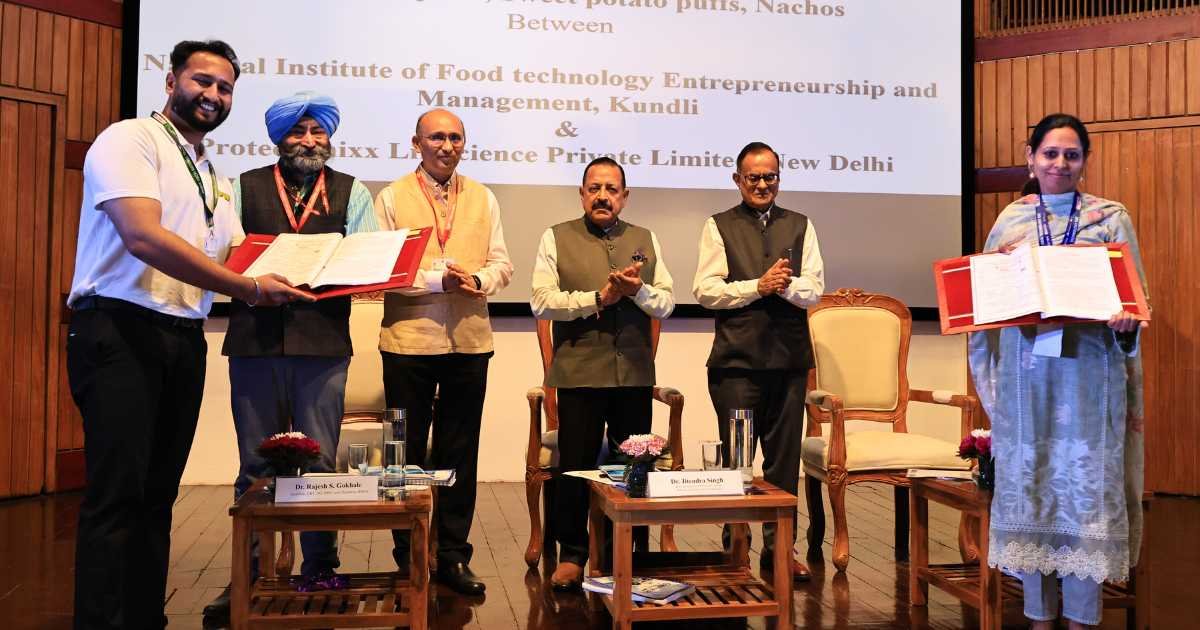
Hyderabad: The Government highlighted NIFTEM-K technologies at Vigyan TECH 2026, held at BRIC-NII in New Delhi on the occasion of National Technology Day. The event focused on strengthening India’s innovation ecosystem under the theme “Building India’s Innovation Ecosystem for Viksit Bharat.”
Union Minister Dr. Jitendra Singh inaugurated the programme. He said India has expanded its startup ecosystem significantly since 2014. He noted the country’s rise in global innovation rankings and patent filings. The event brought together 14 Science and Technology Ministries on a single platform. Therefore, it marked a major step in coordinated innovation efforts.
Prime Minister Narendra Modi conveyed a message through Dr. Rajesh S. Gokhale. The message greeted participants on National Technology Day and praised multi-ministerial collaboration. Officials also released the compendium “TECH-संग्रह,” which features indigenous technologies from autonomous institutions.
NIFTEM-K technologies drive food processing innovation
Under the leadership of Dr. H. S. Oberoi, NIFTEM-K showcased significant achievements at the exhibition. The institute contributed 23 innovations to the compendium Vigyan Sangraha. Out of 293 total technologies, NIFTEM-K technologies formed a notable share.
Three major technologies from NIFTEM-K were transferred to industry partners and start-ups. These included hybrid dryer systems, protein-rich granola bar technology, and extruded millet-based products. The transfers strengthened collaboration between research institutions and industry.
The hybrid dryer systems include evacuated tube solar hybrid dryers and greenhouse solar dryers. These systems support clean-energy-based food processing. In addition, the granola bar technology targets the growing health and wellness market. The extruded products promote value addition in millets, pulses and tubers.
Officials also highlighted ten additional NIFTEM-K technologies at the exhibition. These included rapid detection methods for contaminants and adulterants in water, tea leaves and paneer. They also included methods to detect fruits ripened using calcium carbide. Furthermore, the institute presented gluten-free products, probiotic kanji powder, vitamin D enriched mushroom flour and healthy snacks.
The rapid detection kits attracted strong attention from dignitaries and visitors. These innovations aim to improve food safety and consumer protection. Therefore, they support India’s focus on quality standards in the food processing sector.
In his concluding remarks, Prof. Ajay Kumar Sood described the event as a whole-of-government initiative. He said technological convergence across ministries will help address challenges in health, climate, agriculture and food systems. The programme concluded with a commitment to accelerate innovation and advance India’s development goals.
