

New Delhi: Researchers have found evidence of Himalayan air pollution in the remote high-altitude region of Munsyari, indicating that even pristine parts of the Himalayas are experiencing the effects of human activity. The study identified measurable impacts on air quality and highlighted potential long-term health concerns.
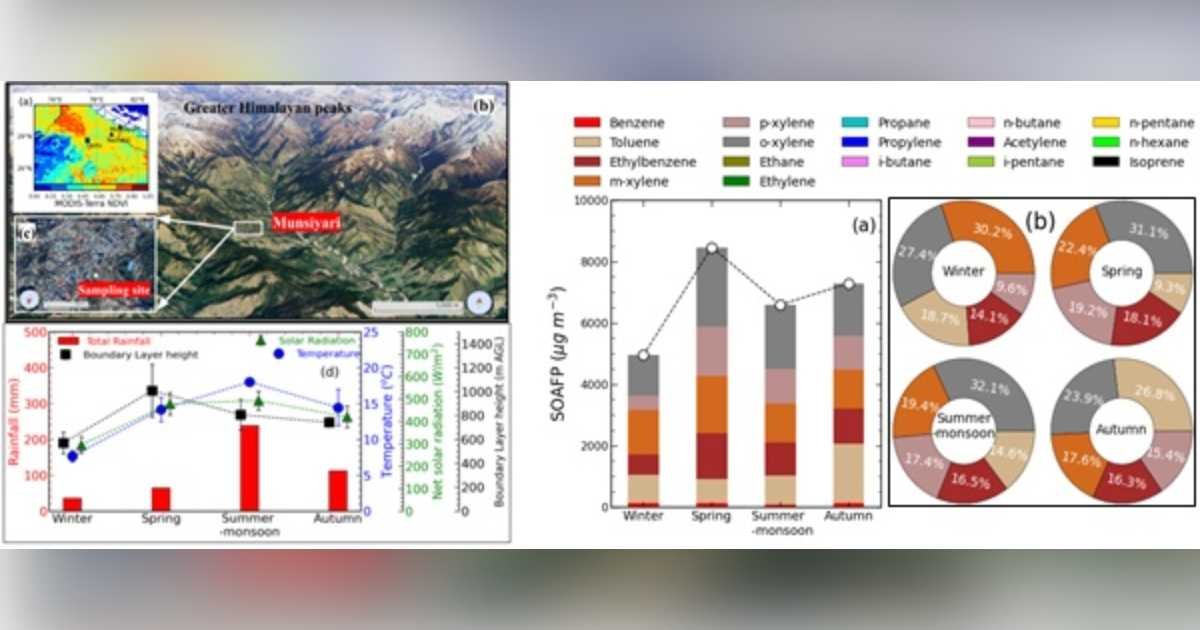
Scientists from the Aryabhatta Research Institute of Observational Sciences conducted year-long observations between 2022 and 2023. They monitored non-methane hydrocarbons, a group of reactive gases that contribute to the formation of ozone and secondary aerosols.
The researchers selected Munsyari because it offers an opportunity to study the effects of tourism, fuel use and regional pollution transport. They observed lower concentrations during winter and the monsoon season. However, levels increased significantly during spring and autumn.
The study identified fuel consumption, vehicle emissions and construction activities as the main sources of pollution. In particular, aromatic hydrocarbons such as benzene and xylene played a major role in the formation of secondary pollutants.
Himalayan air pollution linked to human activities
Researchers found that pollutant levels in Munsyari exceeded those recorded at another high-altitude site in Nainital. However, the levels remained lower than those reported in urban centres such as Haldwani and Delhi.
Furthermore, the study showed that pollution from human activities is spreading into environmentally sensitive Himalayan regions. The findings suggest that changing land use and increasing tourism are contributing to declining air quality.
Although immediate health risks remain low, researchers warned about the long-term impact of exposure to benzene. They noted that prolonged exposure could raise cancer risks beyond accepted safety limits.
In addition, the study stressed the need for continuous monitoring of air quality in mountain ecosystems. Researchers also called for targeted mitigation measures to prevent further deterioration of environmental conditions.
The findings underline the growing challenge of protecting fragile Himalayan regions from pollution and maintaining sustainable development in high-altitude areas.
