

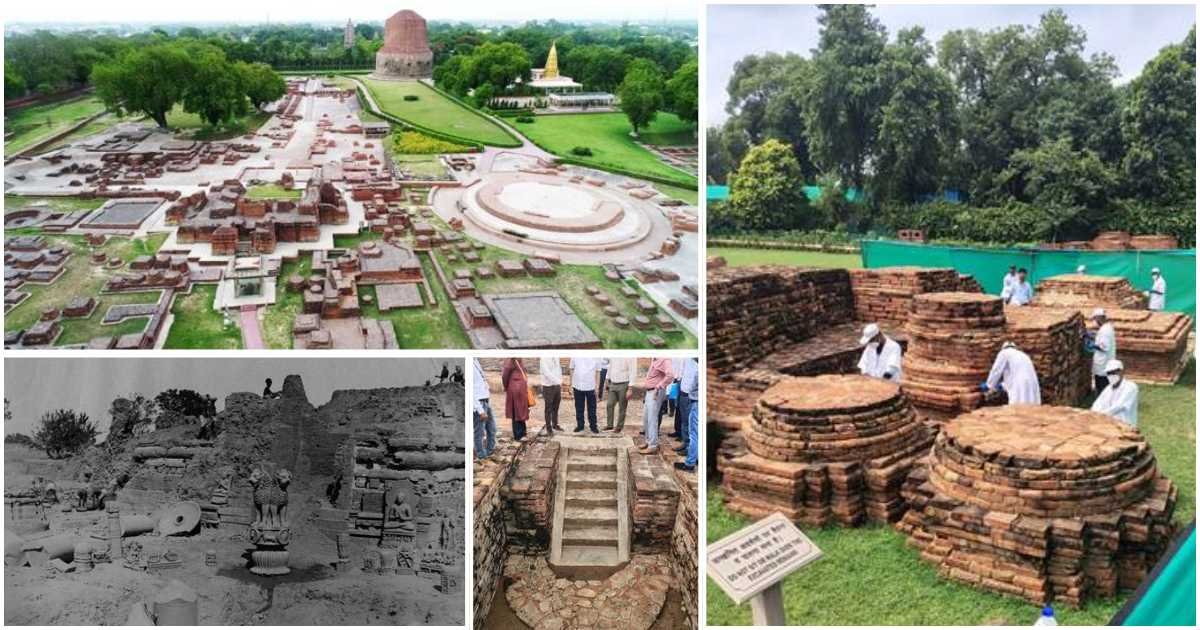
New Delhi: Sarnath UNESCO nomination was approved at the 48th Session of the World Heritage Committee in Busan, South Korea, making the Ancient Buddhist Site of Sarnath India’s 45th property on the UNESCO World Heritage List.
The decision came after India’s nomination for the 2025-26 cycle completed an 18-month evaluation process. Prime Minister Narendra Modi, Union Culture Minister Gajendra Singh Shekhawat and Uttar Pradesh Chief Minister Yogi Adityanath welcomed the inscription and congratulated the people of India.
The serial property includes the Chaukhandi Stupa and the Archaeological Remains of Sarnath, comprising the Dhamekh Stupa, Dharmarajika Stupa, Mulagandhakuti Vihara, the Ashokan Pillar and other monuments in Varanasi, Uttar Pradesh.
According to the Archaeological Survey of India (ASI), Sarnath is the place where Gautama Buddha delivered his first sermon, known as the Dharmachakra Pravartana, after attaining enlightenment. The event marked the beginning of the Buddhist Sangha and the teaching of the Noble Eightfold Path.
The site developed over centuries through royal, monastic and public patronage before declining in the 12th century. It was rediscovered in the 18th century and has since become one of the ASI’s most extensively excavated archaeological sites.
Sarnath UNESCO inscription recognises Buddhist heritage
The World Heritage Committee inscribed the property under UNESCO criteria (iii) and (vi). The listing recognises Sarnath’s enduring spiritual significance and its direct association with the life and teachings of the Buddha.
The Centre said the nomination was submitted in January 2025 after Sarnath remained on UNESCO’s Tentative List since 1998. The proposal underwent technical evaluations, including an ICOMOS mission before receiving final approval.
With Sarnath’s inclusion, three of Buddhism’s four principal pilgrimage sites now enjoy UNESCO World Heritage status. They are Lumbini in Nepal, the Mahabodhi Temple at Bodh Gaya in Bihar and Sarnath in Uttar Pradesh.
The government said the recognition strengthens India’s position as the birthplace of Buddhism and will support cultural diplomacy with Buddhist-majority nations. It added that the status would also boost heritage conservation, sustainable tourism and international engagement.
India now has 45 UNESCO World Heritage properties, ranking sixth globally and second in the Asia-Pacific region. The country also has 69 sites on UNESCO’s Tentative List for future consideration.
The Archaeological Survey of India, the nodal agency for World Heritage matters, said it will continue conservation efforts while ensuring sustainable tourism and protecting the site’s Outstanding Universal Value.
